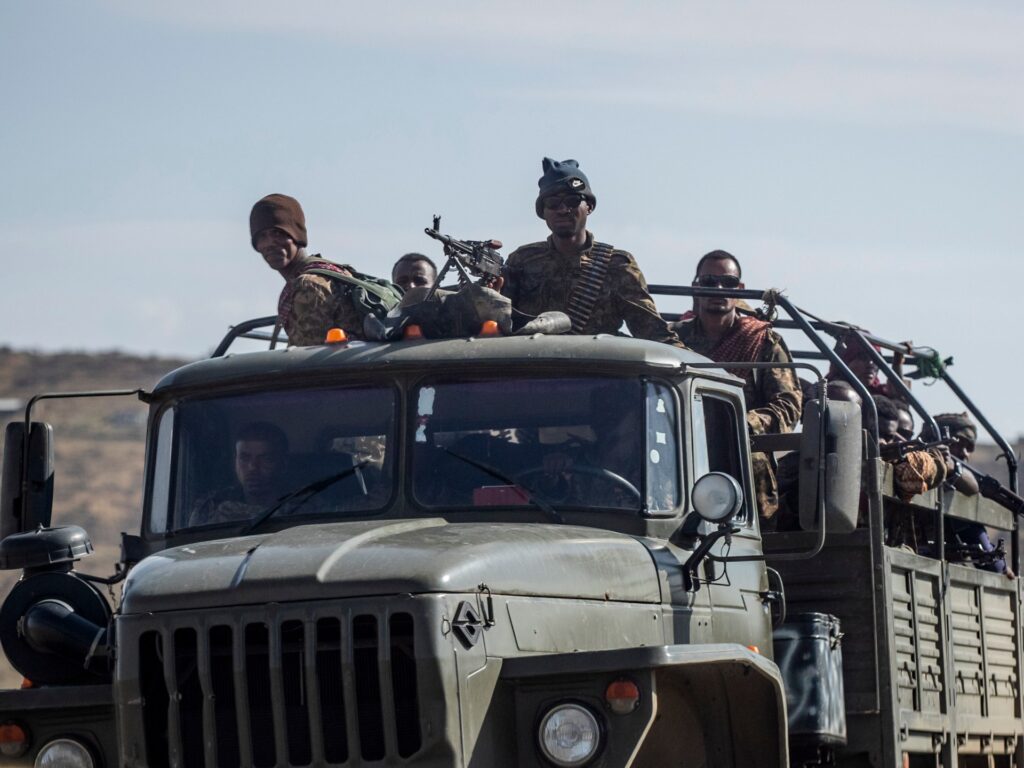
Northern Ethiopia is witnessing a significant shift in its complex network of alliances amid ongoing conflict and instability. The Tigray People’s Liberation Front (TPLF), the Fano militias, and Eritrean forces are key players in this rapidly changing landscape, which is redrawing battle lines and reshaping the region’s political and military dynamics.
The TPLF, historically a dominant political force in Ethiopia, has been at the center of the conflict in the northern Tigray region. Following escalating tensions with Ethiopia’s federal government, the TPLF engaged in a brutal conflict that drew international attention for its humanitarian impact. Despite military setbacks, the TPLF remains a cohesive and significant armed group, leveraging local support and strategic alliances to sustain its position.
Fano militias, composed primarily of ethnic Amhara fighters, have emerged as powerful actors in the northern conflict. Originally forming as community defense groups, these militias have grown in size and influence, often cooperating with the Ethiopian National Defense Forces (ENDF) but also pursuing their own territorial and political interests. Their participation has added complexity to the conflict, especially concerning contested areas between Amhara and Tigray regions.
Eritrea’s involvement further complicates the northern Ethiopian conflict. Eritrean troops have been accused of participating in operations alongside Ethiopian federal forces and militias, targeting TPLF positions and civilian populations. Eritrea’s strategic interest lies in weakening the TPLF, which historically opposed the Eritrean government, and in securing its border areas.
The shifting alliances are driven by a mixture of ethnic tensions, political ambitions, and regional security concerns. The collaboration between Fano militias and Eritrean forces against the TPLF marks a significant recalibration of loyalties and military cooperation. At the same time, the TPLF has sought new alliances and support among local and international actors to counterbalance its adversaries.
These evolving alliances have led to a highly fragmented conflict landscape, complicating peace efforts and prolonging instability in northern Ethiopia. Civilians bear the brunt of the fighting, with widespread displacement, human rights abuses, and a dire humanitarian crisis unfolding.
Analysts highlight that understanding the motivations and relationships among the TPLF, Fano militias, and Eritrean forces is essential for any diplomatic intervention. The competing interests and historical grievances make straightforward solutions elusive, requiring nuanced and inclusive approaches from Ethiopian leaders and the international community.
In conclusion, the conflict in northern Ethiopia is no longer a simple two-sided war but a multifaceted struggle involving shifting alliances and competing agendas. The TPLF, Fano militias, and Eritrean forces are actively redrawing the battle lines, underscoring the need for comprehensive efforts toward conflict resolution and peacebuilding in the region.