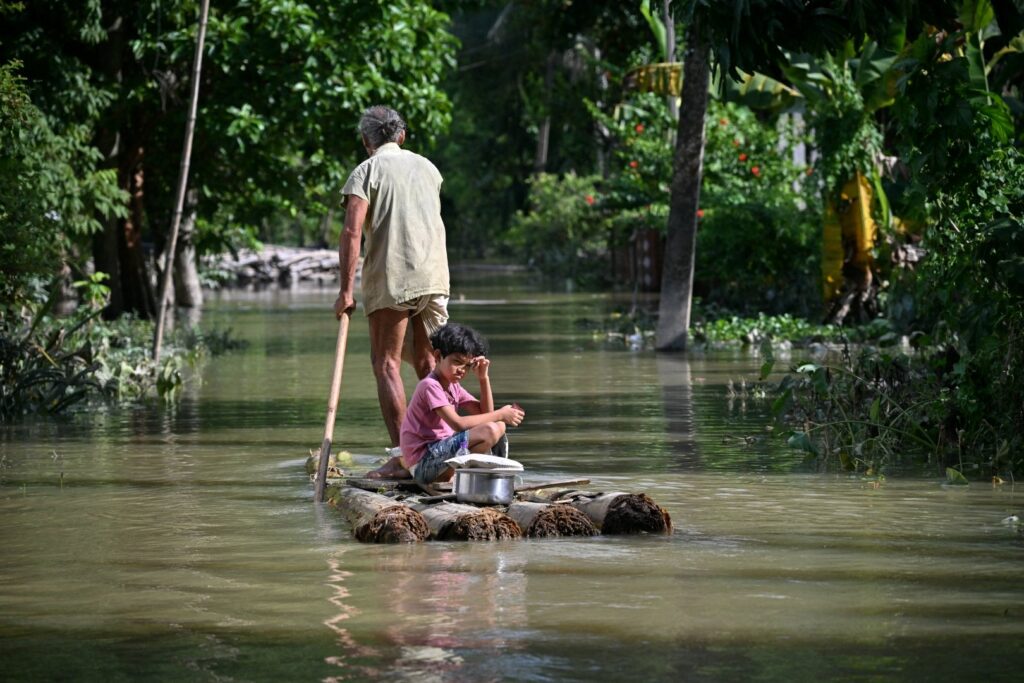
Since July, severe monsoon rains have caused devastating floods in the Indian state of Assam, affecting more than one million people. The relentless rains have led to widespread flooding, resulting in the displacement of thousands of residents across multiple districts. Assam, located in northeastern India, is prone to flooding during the monsoon season, but this year’s floods are reported to be among the worst in recent memory.
According to local authorities, the heavy rainfall has caused several rivers in the region to overflow their banks, inundating villages, agricultural lands, and urban areas. The floodwaters have submerged homes, disrupted transportation networks, and caused damage to critical infrastructure such as roads, bridges, and public utilities.
Emergency response teams have been deployed to assist affected communities, providing relief materials including food, clean drinking water, and medical aid. Rescue operations are ongoing, with officials using boats and helicopters to reach stranded individuals and evacuate them to safer locations and temporary shelters.
The flooding has also taken a toll on local agriculture, as standing water has damaged crops and farmland, threatening the livelihoods of many farmers. The government and relief agencies are working together to assess the full extent of the damage and coordinate aid for recovery and rehabilitation efforts.
Health concerns have been raised due to the potential spread of waterborne diseases in flood-affected areas, prompting health officials to increase surveillance and initiate vaccination campaigns where necessary. The monsoon season, which typically lasts from June to September, often brings heavy rains to the region, but the intensity and duration of the recent downpours have exacerbated the impact.
Communities in Assam are bracing for further challenges as the monsoon continues, while efforts to strengthen flood management and improve early warning systems are being prioritized to mitigate future disasters. The state government has urged residents to remain vigilant and adhere to safety advisories issued by officials.
Overall, the floods in Assam highlight the ongoing vulnerabilities faced by populations in monsoon-affected regions and underscore the urgent need for comprehensive disaster preparedness and resilient infrastructure development to safeguard lives and livelihoods against climatic extremes.