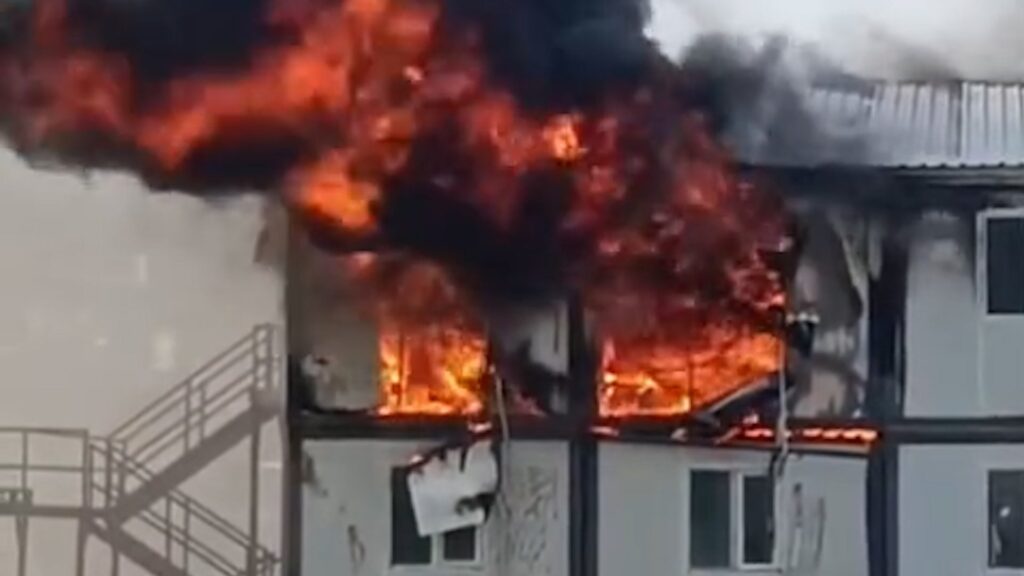
A significant fire recently erupted at a workers’ accommodation camp located within a construction site for earthquake housing in Hatay, Turkiye. The incident has raised immediate concerns about the safety measures and the potential impact on the ongoing housing project aimed at supporting communities affected by previous earthquakes.
Hatay, a region which has experienced devastating seismic activities, is actively engaged in rebuilding efforts to provide secure and stable housing for disaster-affected families. The construction site in question serves as a critical hub where workers reside while contributing to these urgent reconstruction initiatives.
The fire broke out during the early hours, quickly engulfing the accommodation camp where construction workers were staying. Emergency services responded swiftly to contain the blaze and prevent it from spreading to the nearby construction facilities and other temporary housing units.
Initial reports indicate that the cause of the fire is under investigation, with officials examining potential sources such as electrical faults, cooking accidents, or negligence. Despite the rapid response, the fire led to significant damage to the living quarters and disrupted the daily operations of the reconstruction project.
Authorities have confirmed that there were no casualties among the workers, thanks to the prompt evacuation and rescue operations carried out by local emergency teams. However, some residents have suffered minor injuries and are receiving medical attention.
The local government and construction managers have expressed their commitment to ensuring the safety and well-being of the workers, promising a thorough inquiry into the incident. They also assured that reconstruction efforts will continue without delay to meet the urgent housing needs of those displaced by the earthquakes.
This fire incident highlights the challenges faced in disaster recovery zones, where the urgency of rebuilding often coincides with vulnerabilities in temporary living conditions for construction workers and displaced populations.
Safety protocols are now under review to prevent such incidents in the future, with plans to enhance fire prevention training, improve infrastructure, and implement stricter supervision at all reconstruction sites.
Meanwhile, authorities are coordinating with humanitarian organizations to provide temporary accommodation and support services for those affected by the fire, ensuring that the workers can return to their duties as soon as possible.
The resilience of the Hatay community remains strong as they navigate the complexities of rebuilding after catastrophic earthquakes. This latest setback serves as a reminder of the importance of rigorous safety standards and solidarity in recovery efforts.
As investigations continue, updates will be provided to keep the public informed about the findings and the measures being taken to safeguard the reconstruction process.
The incident has drawn attention to the broader scope of challenges in disaster-affected areas, including occupational safety for workers engaged in high-risk rebuilding projects and the need for comprehensive emergency preparedness.
Lessons learned here will hopefully lead to improved policies and practices that protect the workforce at the heart of rebuilding lives and communities in Turkiye and other earthquake-prone regions worldwide.