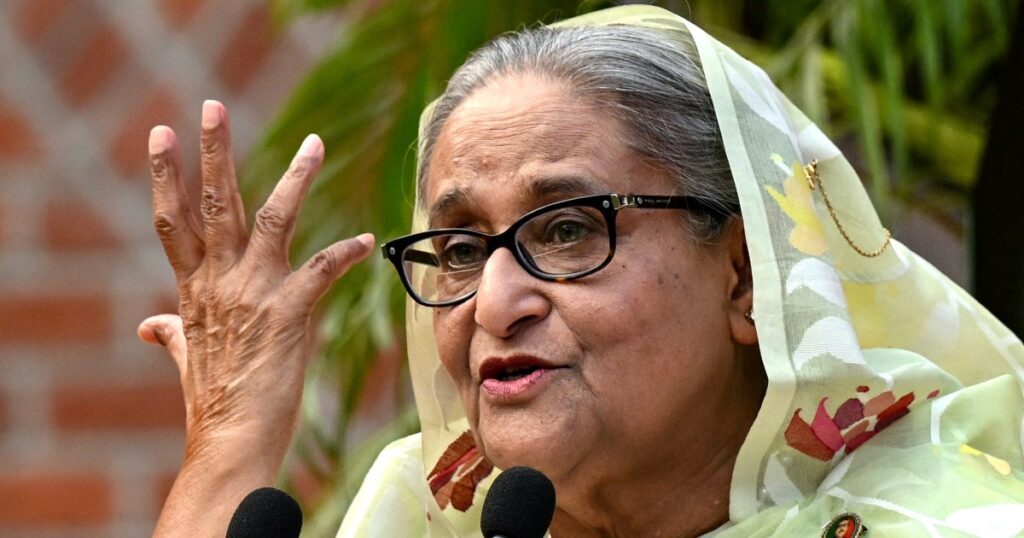
In a dramatic turn of events, former Bangladeshi Prime Minister Sheikh Hasina is set to make a significant public address today, marking her first major speech since being ousted from power. Reports indicate that Sheik Hasina, who has been in exile in India, is poised to announce her return to Bangladesh despite facing a potential death penalty in absentia.
Sheikh Hasina, a towering figure in Bangladeshi politics, has long been a polarizing leader with a strong base of support as well as fierce opposition. Her tenure as prime minister was marked by both economic development and accusations of authoritarianism. Following her removal from office, accusations and legal actions have escalated against her, raising fears about political stability and justice within the country.
The upcoming speech is being widely interpreted as a bold move to reclaim her political standing and rally her supporters at a critical juncture. Observers expect her to outline a vision for the future of Bangladesh that challenges the current ruling establishment, calling for national unity and democratic restoration.
Political analysts anticipate that Sheik Hasina may also address the charges against her, presenting her narrative and rejecting the legitimacy of the death sentence levied against her. This could spark a wave of political mobilization among her followers, potentially leading to increased tensions within the nation.
Furthermore, her declaration of intent to return could have significant implications for Bangladesh’s diplomatic relations, particularly with India, where she has been residing. It will be crucial for regional actors to monitor developments closely as the situation evolves.
The Bangladeshi public and international community alike wait with bated breath for this speech, which could mark a pivotal moment in the country’s turbulent political landscape. Security measures across Bangladesh have been heightened in anticipation of possible demonstrations or unrest following her address.
Sheikh Hasina’s return, if it materializes, could redefine the country’s political dynamics and influence the trajectory of democracy and stability in Bangladesh for years to come. Her speech today is not just a political statement but a potential catalyst for significant change.