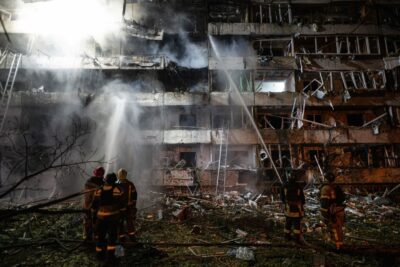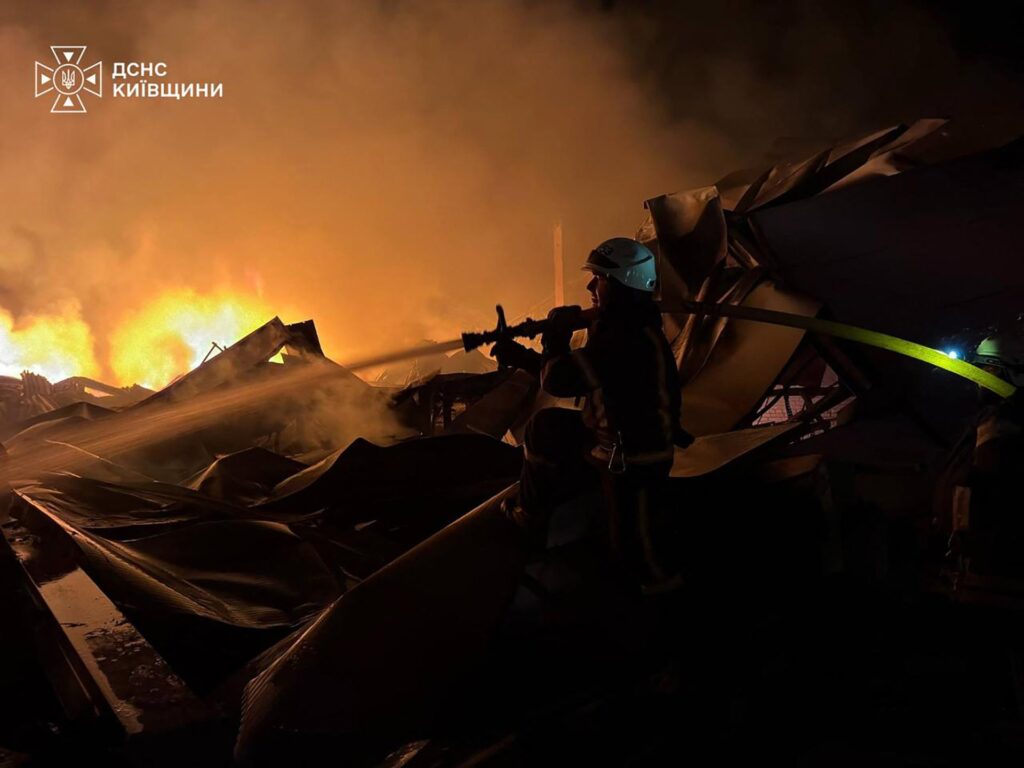
In a devastating escalation of conflict, Russian forces launched a major assault on Ukraine, resulting in at least 17 fatalities. Ukrainian President Volodymyr Zelenskyy reported that the offensive involved the use of 29 missiles and 115 drones, highlighting the intensity and scale of the attack.
The attack exposed critical vulnerabilities in Ukraine’s air defense system, particularly its limited number of missile interceptors. This shortage has made it increasingly difficult for Ukrainian forces to effectively counter the onslaught of aerial assaults from Russian forces.
President Zelenskyy emphasized the threat posed by the combined missile and drone attack, which overwhelmed Ukraine’s defensive capabilities. The use of drones in combination with missiles marks a new and more complex phase in the conflict, presenting significant challenges for Ukraine’s military.
The casualty figure of 17 dead underscores the human cost of this intensified military campaign. Reports indicate that civilians and military personnel alike have been affected, raising concerns about humanitarian conditions in the affected regions.
Military analysts note that the strategic deployment of drones alongside missiles serves to confuse and deplete missile interceptors, creating openings for successful strikes. This tactic complicates the defense strategy of the Ukrainian forces, forcing them to allocate resources to multiple threat vectors simultaneously.
Ukraine has been struggling to replenish its stockpile of missile interceptors, with international aid efforts working to supply necessary defense equipment. However, the scale of recent attacks suggests that current support might be insufficient to meet the growing demands of the battlefield.
Further complicating Ukraine’s defense efforts is the rapid advancement of Russian drone technology and tactics, which have evolved to evade conventional detection and interception methods.
The international community has responded with concern to the escalation, as it signals both a technological and tactical shift in the ongoing conflict. Diplomatic efforts continue to seek a resolution amid rising casualties and infrastructural damage.
In his address, President Zelenskyy called for increased international assistance to bolster Ukraine’s air defense capabilities. He highlighted the urgent need for more sophisticated missile interceptors to protect civilian populations and maintain Ukraine’s territorial integrity.
Experts stress that strengthening missile defense is critical not only for immediate conflict mitigation but also for the long-term stability of the region. Enhanced interceptor systems could significantly reduce the effectiveness of future rocket and drone attacks.
As the conflict persists, the situation remains fluid. The effectiveness of Ukraine’s response hinges on the timely provision of advanced defense technologies and the resilience of its armed forces and civilian population.
The toll of 17 lives lost is a stark reminder of the ongoing violence and the necessity for urgent, coordinated efforts to address the vulnerability created by the scarcity of missile interceptors.
This recent attack underscores the evolving nature of warfare in the region, with unmanned aerial systems playing an increasingly prominent role alongside traditional missile attacks.
The conflict between Russia and Ukraine continues to evolve, with each side adapting to new realities on the battlefield. The Ukrainian government remains committed to defending its sovereignty despite the challenges posed by sophisticated Russian military tactics and equipment.
In conclusion, the deadly assault involving 29 missiles and 115 drones highlights critical gaps in Ukraine’s defense infrastructure. It draws urgent attention to the need for enhanced missile interception capabilities and sustained international support to prevent further loss of life and escalation of the conflict.