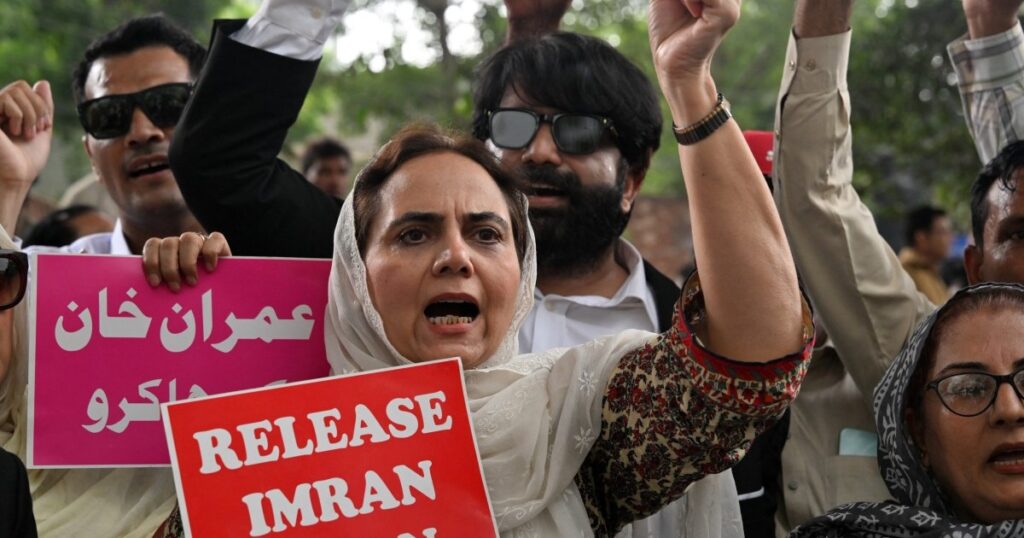
In a significant political development, former Pakistani Prime Minister Imran Khan has been sentenced to three years in jail, sparking widespread unrest and massive rallies led by his party, the Pakistan Tehreek-e-Insaf (PTI). Thousands of fervent supporters have taken to the streets across various cities in Pakistan to protest what they describe as an ‘arbitrary detention’ of their leader. The rallies, marked by vibrant demonstrations and emotional speeches, underscore the deep political divisions currently prevailing in the country.
Imran Khan, a charismatic and influential figure in Pakistani politics, has faced various legal challenges since his ouster from office. His supporters maintain that the charges against him are politically motivated and accuse the ruling establishment of attempting to suppress dissent.
The sentencing and incarceration of Khan have intensified the political crisis in Pakistan, with PTI mobilizing millions of supporters nationwide. The party’s leadership has called for peaceful demonstrations demanding Khan’s immediate release, asserting that his detention undermines democratic norms and threatens political stability.
Across the nation, crowded rallies have convened in major urban centers, with supporters chanting slogans, waving party flags, and expressing steadfast loyalty to Khan. The demonstrations reflect not only support for the former prime minister but also wider concerns about political freedoms and justice in Pakistan.
Government officials have condemned the protests, labeling them as disruptive, while promising to maintain law and order. Security forces have been deployed in sensitive areas to prevent any potential escalation of violence.
Political analysts observe that Khan’s imprisonment could either deepen existing fissures within Pakistani society or galvanize his party’s base to further political activism. The opposition views this moment as critical for Pakistan’s democratic trajectory.
International observers and human rights organizations have called on Pakistan to ensure fair judicial processes and protect the rights of all political figures, emphasizing the importance of dialogue over confrontation in resolving political disputes.
As the situation unfolds, the eyes of the world remain focused on Pakistan, watching how it navigates this complex intersection of law, politics, and popular will. The coming weeks are expected to be crucial in determining the future political landscape of the country and the legacy of Imran Khan’s leadership.