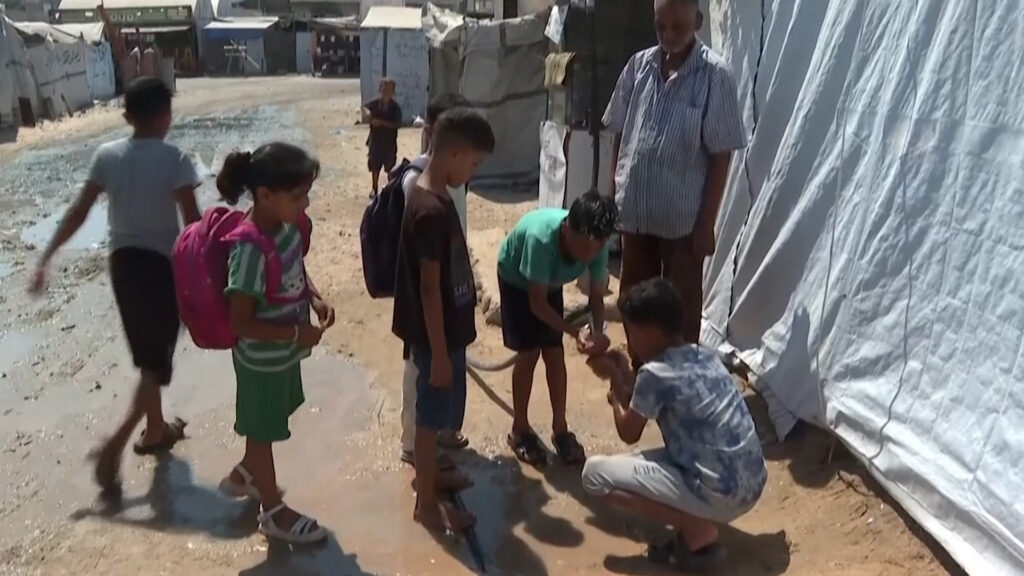
A severe heatwave has swept through Gaza, exacerbating the already dire humanitarian situation faced by Palestinians in the region. With temperatures soaring above 40 degrees Celsius (104 Fahrenheit), the heatwave poses a significant health risk, especially to vulnerable populations such as children, the elderly, and those with preexisting medical conditions.
The Gaza Strip, a densely populated area home to over two million people, is experiencing critical shortages of electricity and water, further worsening the impact of the heatwave. Power outages have become frequent and prolonged, hampering the operation of healthcare facilities and limiting access to clean water, vital for coping with extreme heat.
Hospitals and clinics are struggling to manage increased cases of heat-related illnesses, including dehydration, heat exhaustion, and heat strokes. The lack of reliable electricity also disrupts the operation of equipment necessary for patient care and the refrigeration of vaccines and medicines.
Water scarcity, already a chronic problem in Gaza, has been intensified by the soaring temperatures. The demand for drinking water has surged while supply remains limited, creating a public health crisis. Many families rely on water deliveries or unsafe sources, which heightens the risk of waterborne diseases.
The humanitarian agencies operating in Gaza have issued urgent appeals for more aid and resources to help mitigate the crisis. They emphasize the need for increased water supplies, medical support, and cooling solutions to protect the population from the harsh conditions.
The blockade and restrictions imposed on Gaza complicate the delivery of aid and infrastructure repair, leaving the population even more vulnerable. International calls for easing these restrictions have been renewed in light of the extreme weather conditions.
In addition to the physical health challenges, the mental health impact on Gaza’s residents is significant. The relentless heat added to ongoing conflict, displacement, and economic hardship is taking a serious toll on the psychological wellbeing of the population.
Experts warn that climate change will likely increase the frequency and intensity of heatwaves in the region, making it imperative to address both immediate humanitarian needs and long-term resilience strategies.
As the heatwave continues, Palestinians in Gaza face an escalating crisis that demands urgent global attention and support to alleviate their suffering and prevent further tragedy.