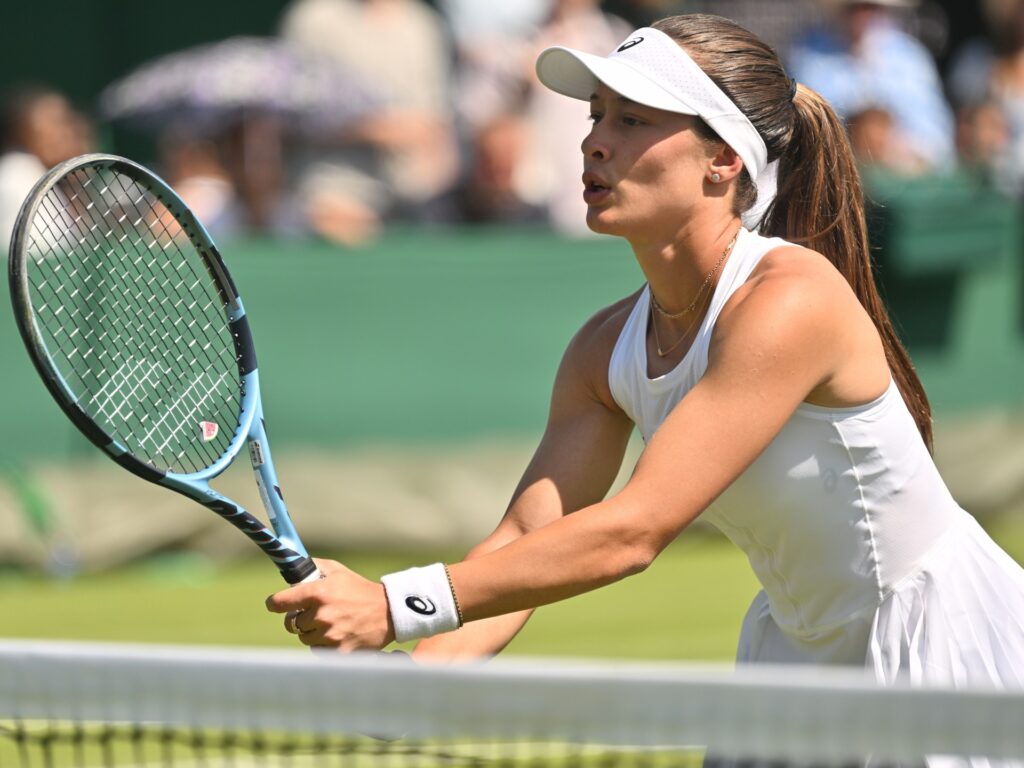
Zeynep Sonmez, a rising Turkish tennis player, has recently captured global attention not only for her skill and determination on the court but also for a bold and symbolic act of solidarity. At the prestigious Wimbledon tournament, Sonmez defied expectations and a strict ban by displaying a unique tennis racket adorned with a ‘Palestine’ watermelon design, a symbol rich with political and cultural significance.
The story of Zeynep Sonmez is one of passion, resilience, and courage. Hailing from Turkey, she has steadily ascended the ranks of professional tennis, known for her aggressive baseline play and sharp tactical mind. However, it is her off-court choices that have ignited conversations worldwide about sportsmanship, politics, and activism.
Wimbledon, one of tennis’s most iconic championships, typically enforces a strict dress code and regulates players’ on-court accessories meticulously. Unofficially, political expressions have often been discouraged or outright banned to maintain the event’s focus on sport. Against this backdrop, Sonmez’s decision to use a racket emblazoned with Palestinian symbolism was both daring and impactful.
The watermelon motif is a recognized emblem used to symbolize Palestinian identity and resistance. By showcasing this on a tennis racket, Sonmez transformed a piece of sports equipment into a statement of solidarity, bringing attention to the ongoing struggles faced by Palestinians.
This act was not merely symbolic but a statement of conscience. Sonmez’s move challenged the neutrality often expected from athletes, advocating that sports figures can and perhaps should use their platforms to highlight social issues. Her stance has sparked debates within the tennis community and among global audiences about the role of athletes in political discourse.
The reaction to Sonmez’s Wimbledon appearance has been mixed but passionate. Supporters laud her bravery, calling her a trailblazer who uses her athletic platform responsibly. Critics, however, argue that sports should remain apolitical arenas focused solely on competition and entertainment.
Despite facing potential sanctions or backlash, Sonmez remained resolute. Her Wimbledon match, marked by this powerful visual message, attracted significant media coverage, amplifying the conversation far beyond the usual tennis circles.
Sonmez’s action shines a light on the growing trend of athletes intersecting with activism. In an era where social justice movements gain momentum globally, sports personalities are increasingly stepping into the role of advocates and agents of change.
Beyond the political implications, Sonmez’s performance at Wimbledon demonstrated her commitment to her sport and her desire to compete at the highest levels. Balancing her athletic aspirations with her political expressions, she embodies a new model of what a sports star can represent in the 21st century.
Her story invites broader reflections on how international sports events can become platforms for important societal conversations. It challenges the status quo and encourages fans, organizers, and athletes alike to reconsider the boundaries between sports and political expression.
Zeynep Sonmez continues to train and compete, with many eyes now watching her both for her athletic prowess and her distinctive voice in social advocacy. Her journey is emblematic of a changing sporting world, where identities, causes, and talents intersect in complex and powerful ways.
In summary, Zeynep Sonmez, with her ‘Palestine’ watermelon racket, is more than a Wimbledon participant; she is a symbol of courage and solidarity, using tennis to shine a spotlight on important global issues, inspiring dialogue, and perhaps paving the way for future athlete-activists across all sports.