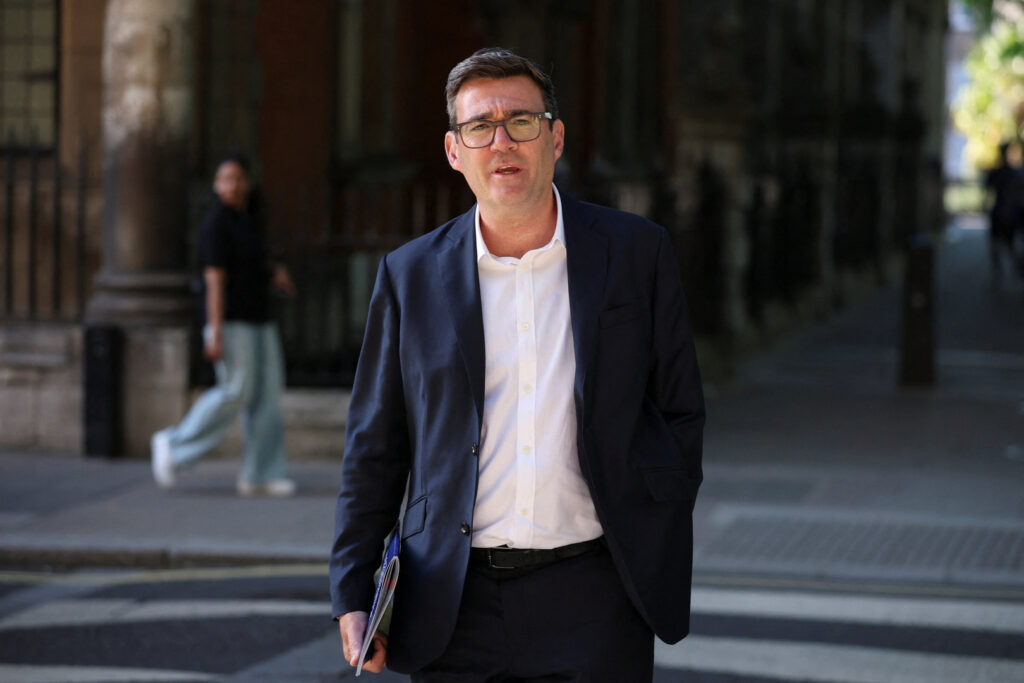
Andy Burnham, British member of parliament (MP) for Makerfield, arrives for a radio interview on LBC's "Tonight with Andrew Marr", in London, Britain, July 2, 2026. REUTERS/Isabel Infantes
Andy Burnham, poised to become Britain’s next Prime Minister, has expressed a strong commitment to addressing and mitigating the humanitarian crisis in Gaza. In a heartfelt message shared on social media, Burnham acknowledged the Labour Party’s earlier responses and issued an apology for their initial stance concerning the Israeli attacks in the region.
The escalating conflict in Gaza has drawn international attention, with numerous calls for intervention to ease civilian suffering. Burnham’s declaration signifies a significant policy shift and a deeper empathy towards the affected Palestinian population. His statement highlighted the urgency of stopping the ongoing violence and providing immediate relief to those enduring hardship.
Burnham’s apology came after considerable criticism from various quarters, both within the UK and from international observers, over Labour’s perceived reluctance to condemn the Israeli military actions decisively. This moment of introspection and accountability shows the evolving dynamics within the party as it prepares to lead the nation.
Political analysts suggest that Burnham’s approach might recalibrate the UK’s foreign policy stance concerning the Middle East conflict. His promise to “stop the suffering” aligns with broader humanitarian principles and a call for renewed diplomatic efforts to achieve peace.
The Labour leader’s message has resonated with many, especially those advocating for human rights and the protection of civilians in conflict zones. However, it also poses challenges for diplomatic relations, as balancing support for Israel’s security concerns against the need to safeguard Palestinian lives remains delicate.
As Britain looks toward a potential change in leadership, the focus on Gaza underscores the complexities the new government will face in international affairs. Burnham’s commitment suggests a prioritization of humanitarian aid and conflict resolution, aiming to bring some measure of relief to a region ravaged by ongoing violence.
In summary, Andy Burnham’s public apology and pledge reflect a conscientious effort to amend past oversights and establish a compassionate approach to the crisis in Gaza. This development may signal a shift toward more active engagement and responsibility in addressing global conflicts under his prospective leadership.