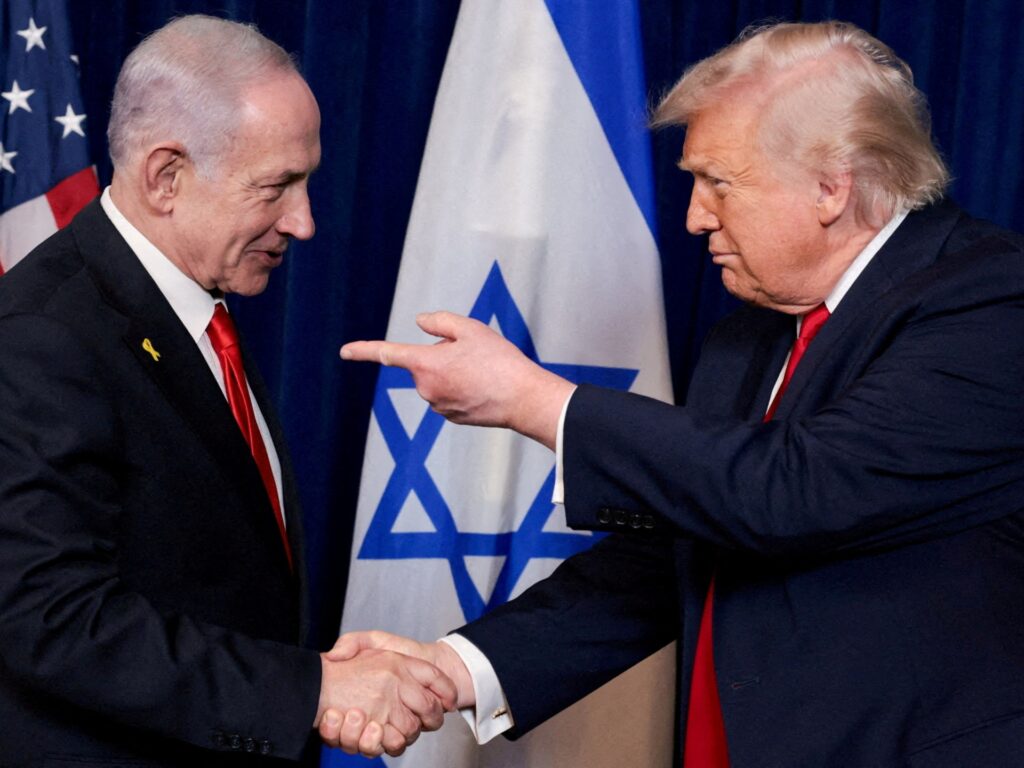
Amid growing international attention and strategic discussions, former U.S. President Donald Trump has hinted that Israeli Prime Minister Benjamin Netanyahu may visit the United States as early as next week. This potential visit would be significant as it marks Netanyahu’s seventh trip to the U.S. during Trump’s second term in office.
The relationship between the U.S. and Israel has long been a focal point of geopolitical discourse, and meetings between these leaders often draw considerable interest. Netanyahu’s visits have traditionally been moments to consolidate diplomatic ties, discuss regional security, and address key bilateral issues.
Trump’s indication of Netanyahu’s arrival underscores the ongoing collaboration between the two nations. It suggests that important issues might be on the agenda, potentially including matters related to Middle East peace processes, defense cooperation, and economic partnerships.
While official details of the visit have yet to be confirmed by either administration, the timing aligns with increased diplomatic activity in the region. Analysts suggest that Netanyahu’s visit could also be a platform to discuss recent developments and future strategies involving the United States and Israel.
The historic alliance between the U.S. and Israel often finds expression in high-profile meetings such as this. Previous visits by Netanyahu during Trump’s presidency were characterized by robust discussions on security concerns, joint military initiatives, and mutual support on the international stage.
Observers of international relations note that such visits are not only symbolic but also practical, facilitating direct communication between world leaders in an increasingly complex global landscape. Netanyahu’s potential U.S. trip is expected to reinforce the long-standing partnership and address the evolving challenges faced by both countries.
This would not be the first time Netanyahu has sought to strengthen ties with the U.S. under Trump’s administration. Past visits have included deliberations on counter-terrorism efforts, shared intelligence, and economic collaboration in technology sectors.
Trump’s role as a former president continues to influence U.S.-Israel relations, and his suggestion of Netanyahu’s imminent visit fuels speculation about the ongoing dynamics between political figures from both nations.
As preparations for this visit unfold, global diplomatic circles are keenly watching for outcomes that might impact the broader Middle East region and international security arrangements.
Stakeholders in both countries anticipate that Netanyahu’s journey, if confirmed, will further solidify the strategic alliance and help navigate the complex geopolitical environment that characterizes the Middle East today.
In summary, the potential visit of Israeli Prime Minister Benjamin Netanyahu to the United States next week, as hinted by Donald Trump, underscores the importance of continued dialogue and partnership between the two nations. It highlights the significance of U.S.-Israel relations and reinforces the commitment to cooperation on shared interests and challenges in a rapidly changing world.