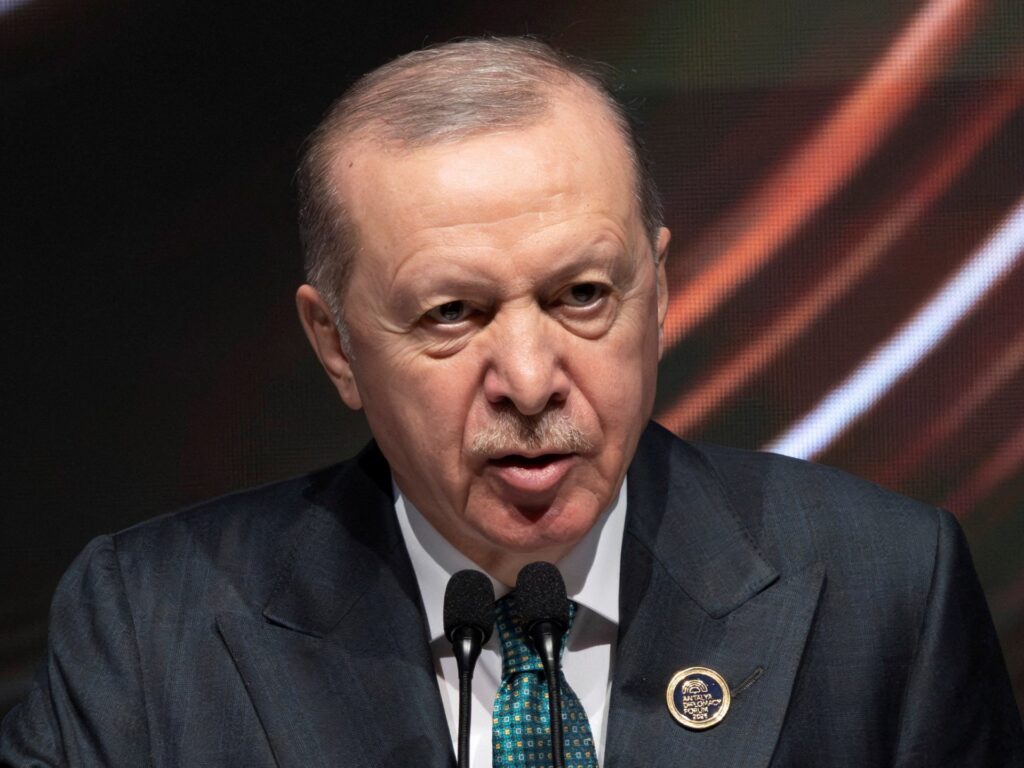
Turkiye’s President Recep Tayyip Erdogan has voiced strong concerns over Israel’s actions regarding the US-Iran nuclear agreement. Erdogan accused Israel of attempting to destabilize and ‘dynamite’ the memorandum of understanding between the United States and Iran. The US-Iran deal, aimed at curbing Iran’s nuclear capabilities in exchange for lifting sanctions, has been a critical component in international efforts to maintain peace and security in the Middle East.
Erdogan’s statements come amid ongoing tensions in the region, where Israel has expressed significant opposition to the agreement, arguing that it does not sufficiently prevent Iran from developing nuclear weapons capabilities. Israel’s concerns have included intelligence assessments and regional security threats, leading to its repeated calls for a firmer stance on Iran.
The Turkish president’s remarks highlight Turkiye’s diplomatic position as a mediator in regional affairs. Erdogan emphasized that undermining the US-Iran deal could escalate conflicts and destabilize the already fragile geopolitical balance in the Middle East. He urged all parties, including Israel, to respect the agreement and engage in constructive dialogue to ensure long-term stability.
Turkiye has been advocating for peaceful resolution of conflicts and has maintained relations with both Western countries and Iran, positioning itself as a key player in diplomatic negotiations. Erdogan’s criticism of Israel reflects Turkiye’s broader foreign policy strategy of supporting multilateral agreements that promote dialogue over confrontation.
This recent statement adds to the complex dynamics of Middle Eastern politics, where alliances and enmities often shift. It also underscores the challenges faced by the international community in securing and maintaining agreements aimed at nuclear non-proliferation.
Observers note that Erdogan’s public stance may influence other regional actors and international mediators involved in the deal. The emphasis on preventing any party from sabotaging diplomatic efforts underscores a shared interest in avoiding escalation and fostering peaceful cooperation.
As discussions continue, the international community watches closely to see whether the US-Iran deal can withstand internal and external pressures, including opposition voiced by influential regional countries such as Israel. Turkiye’s vocal defense of the agreement marks a significant moment in the ongoing effort to stabilize the region through negotiated settlements rather than military or covert actions.