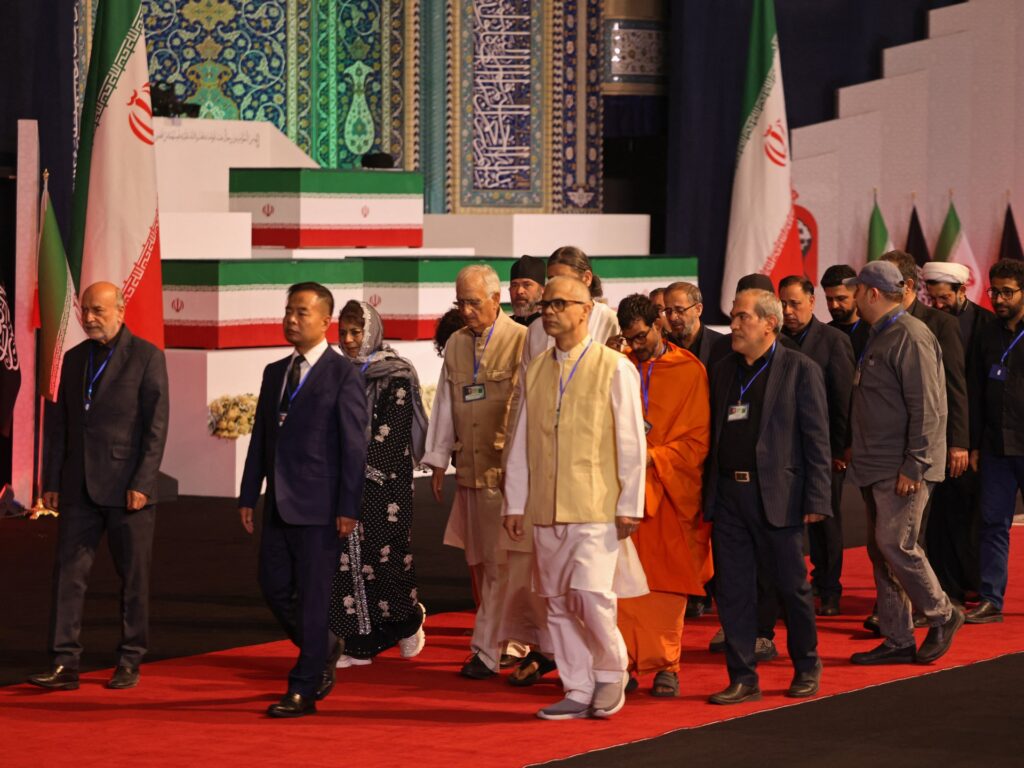
Tehran is currently hosting several prominent heads of state and government officials as they gather for the state funeral of Iran’s Supreme Leader Ayatollah Ali Khamenei. The event marks a significant moment in Iran’s contemporary history, drawing international attention due to the political and religious importance of Khamenei’s leadership spanning several decades.
Several world leaders from neighboring countries, as well as representatives from key regional powers, are attending the funeral. These attendees reflect the broad geopolitical relationships Iran has maintained throughout Khamenei’s tenure as Supreme Leader.
The funeral procession and memorial services are being held in the capital city of Tehran, with large crowds of mourners present to pay their respects. The event is tightly controlled with heightened security measures in place given the presence of high-profile dignitaries and ongoing regional tensions.
Among the world leaders attending, notable figures include presidents, prime ministers, and foreign ministers from Iran’s closest regional allies. This includes representatives from countries such as Iraq, Syria, Lebanon, and Venezuela. Their attendance underscores the influence Iran has wielded in shaping political dynamics across the Middle East and beyond.
This gathering is also significant because it reflects the alliances and diplomatic connections Iran has forged, which have often been a source of friction with Western countries. Security concerns have led to a considerable deployment of police and military personnel to ensure the safety of both attendees and the general public.
The funeral ceremonies feature traditional religious rites according to Shia Islamic customs, reflecting Khamenei’s role not just as a political leader, but also as a religious figure. His death marks the end of an era in Iranian politics, bringing an imminent succession challenge and questions about the future direction of the country.
Observers are closely watching the proceedings, as the event may offer insights into future political alignments and the potential new leadership within Iran. The global diplomatic community is particularly interested in understanding how Iran’s next Supreme Leader will navigate ongoing international sanctions, regional conflicts, and internal reforms.
Overall, the attendance of these world leaders at Khamenei’s funeral highlights the deep and complex interplay of religion, politics, and international relations that have defined Iran under Khamenei’s rule. The coming weeks and months will be critical in observing the transition of power and its implications for both Iran and the broader region.