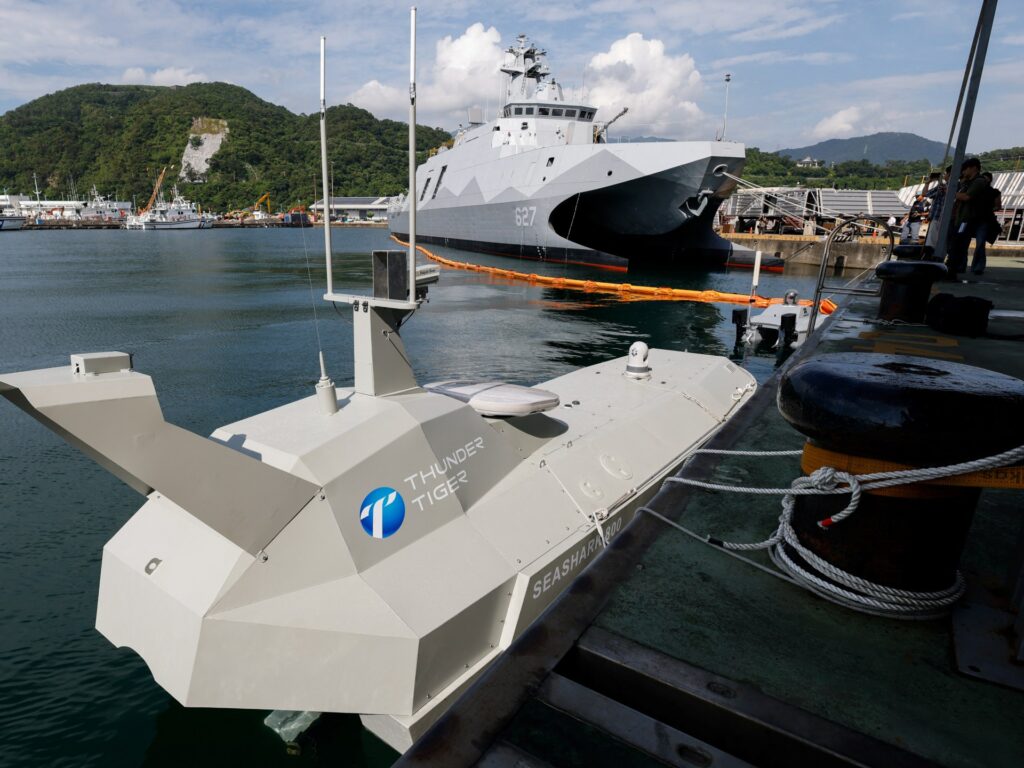
In a recent statement, Raymond Greene, the de facto US ambassador to Taiwan, emphasized the strategic importance of drones in enhancing Taiwan’s defense capabilities. Greene described an ambitious vision where Taiwan becomes a “hornet’s nest” of drones, signifying a robust network of unmanned aerial vehicles (UAVs) providing substantial security advantages.
Highlighting drones as a “game-changing opportunity,” Greene stressed that these technologies could significantly elevate Taiwan’s ability to monitor and respond to potential threats. Given the geopolitical tensions in the Asia-Pacific region, especially involving Taiwan and China, drones offer tactical flexibility and affordability that traditional defense systems may lack.
Taiwan has been exploring various measures to improve its defensive posture amid rising military activities nearby. The incorporation of drones enables rapid reconnaissance, intelligence gathering, and even offensive operations without risking human pilots. This paradigm shift in military technology allows for persistent surveillance and quicker deployment responses.
Greene’s call to transform Taiwan into a drone hub reflects broader US strategic interests in the region. By supporting Taiwan’s technological advancements, the US aims to strengthen deterrence against aggressive maneuvers and assure allies of its commitment to security in the Indo-Pacific.
The vision includes not just the deployment but also the development and manufacturing of drones, fostering a domestic industry that could sustain and innovate local defense capacities. This industrial growth would stimulate economic benefits while reinforcing national security.
Experts note that while drones offer numerous advantages, challenges such as cybersecurity, electronic warfare resistance, and integration with existing military infrastructure need addressing. Strategic investments in research and development will be crucial to maximize the benefits of drone technology.
Taiwan’s geographic and political context makes the deployment of a diverse range of drones particularly attractive. From small surveillance drones capable of discrete operations to larger armed UAVs, the country could tailor its drone arsenal to suit multiple defense scenarios.
Furthermore, collaboration with international partners, including the United States, could facilitate access to advanced drone systems and training programs, enhancing operational effectiveness.
As tensions persist across the Taiwan Strait, bolstering drone capabilities represents a proactive measure for Taiwan to assert its security independently. This approach aligns with modern warfare trends where unmanned systems play a increasingly pivotal role.
The US diplomatic endorsement also signals a shift in foreign policy, prioritizing support for Taiwan’s technological edge as part of a broader strategy to counterbalance regional threats. This development may influence how Taiwan’s military and civil sectors cooperate to integrate advanced drone technologies.
In conclusion, Raymond Greene’s advocacy for Taiwan to become a “hornet’s nest” of drones encapsulates a forward-looking defense strategy aimed at harnessing innovative technologies to safeguard sovereignty. As drone technology continues to evolve, Taiwan’s move toward establishing a comprehensive UAV presence could serve as a model for other nations confronting similar security challenges.