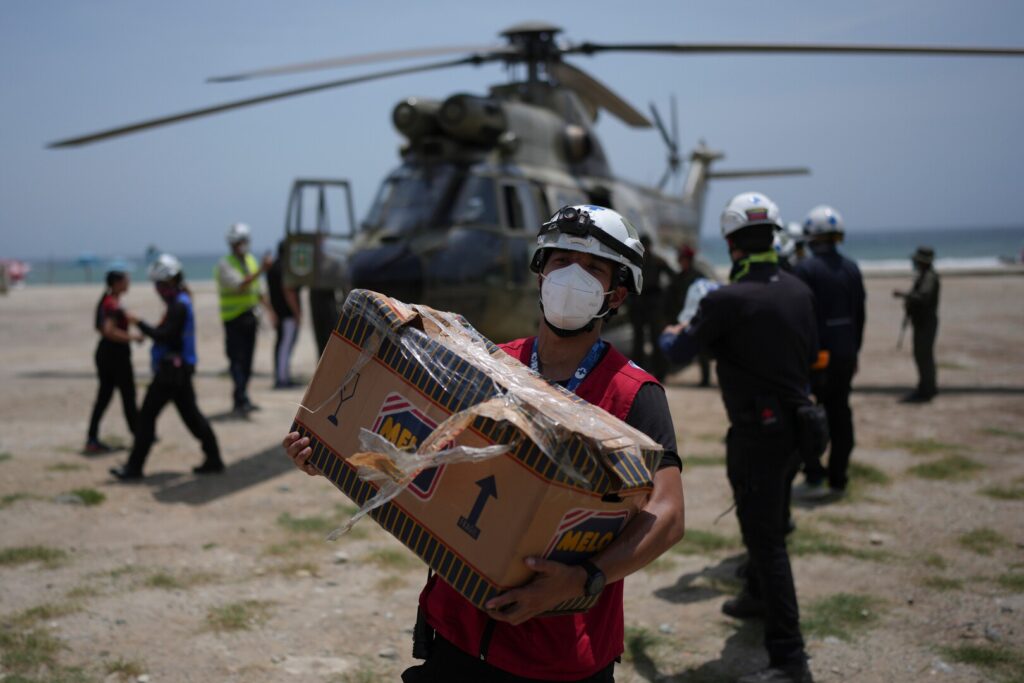
Rescue workers unload humanitarian aid for earthquake survivors in La Guaira, Venezuela, Thursday, July 2, 2026. (AP Photo/Matias Delacroix)
In the wake of a devastating earthquake in Venezuela’s La Guaira state, relief efforts have taken a critical turn towards emergency aid distribution as survivors grapple with the aftermath. The tremor, which struck the region without warning, left countless families displaced and in desperate need of basic necessities.
Aid stations swiftly mobilized to provide much-needed food supplies, water, and medical assistance to survivors struggling to recover from the disaster. Relief workers and volunteers have been working tirelessly to ensure that those affected receive prompt support amidst challenging conditions.
The earthquake’s impact has underscored the vulnerability of the region’s infrastructure, with many homes and public buildings suffering significant damage or collapse. This has heightened the urgency of relief operations as residents contend with insecurity, shortages, and the ongoing threat of aftershocks.
Local and international organizations have stepped up their efforts, coordinating to deliver aid efficiently. Food distribution centers have become crucial hubs where survivors line up to receive essential rations, including non-perishable items and clean drinking water.
Medical teams are also on the front lines, addressing injuries and preventing the spread of illness in overcrowded temporary shelters. Mental health support is being recognized as another priority, as trauma from the disaster takes a toll on many survivors.
Authorities have urged the community to remain patient and cooperative as relief operations continue to expand in scope and reach. They emphasize the importance of equitable distribution to ensure aid reaches the most vulnerable populations, including children, the elderly, and persons with disabilities.
Efforts are also underway to assess the full extent of the damage to infrastructure and the environment, informing reconstruction plans and long-term recovery strategies. Engineers and disaster response experts are evaluating roads, bridges, and utility networks essential for restoring normalcy.
Despite the daunting challenges, the resilience and solidarity among the people of La Guaira have been a source of hope. Community groups and local leaders have rallied together, providing support and advocating for continued assistance.
The evolving nature of the emergency requires adaptable and sustained relief initiatives. Continued funding, logistical coordination, and international collaboration remain pivotal in addressing the immediate needs and fostering recovery in the quake-affected zones.
As relief operations progress, stories of survival and generosity emerge, underscoring the human spirit’s capacity to endure and rebuild in the face of adversity. The situation remains fluid, with officials monitoring for further seismic activity and adjusting response plans accordingly.
In sum, the focus in La Guaira is on delivering timely emergency relief, ensuring that quake survivors receive critical aid, and laying the groundwork for the robust rehabilitation of the community. The concerted efforts of relief agencies, government authorities, and affected populations are vital in navigating the path toward recovery and resilience.