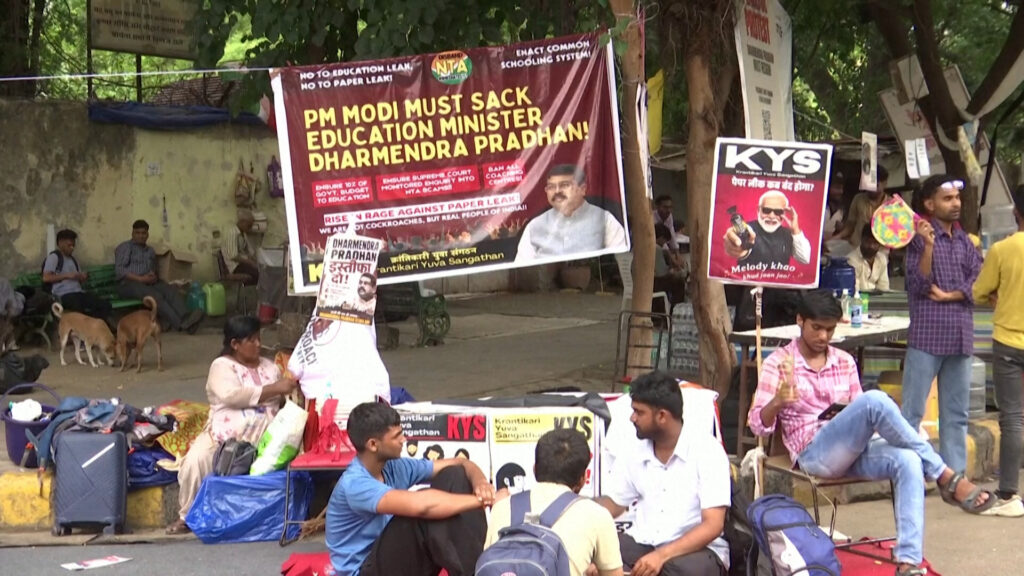
In recent weeks, India has witnessed a remarkable surge in youth activism with the emergence of the Cockroach Janta Party, a viral student-led movement that has captured national attention. This youth group has been engaged in a sustained protest for nearly two weeks, demanding the resignation of the country’s Education Minister.
The movement began as a social media phenomenon, quickly spreading across campuses and communities, fueled by frustration over educational policies and governance. The protesters accuse the Education Minister of failing to address critical issues such as declining education quality, inadequate infrastructure, and lack of access to resources for underprivileged students.
Their signature protest — characterized by creative slogans, symbolic cockroach imagery, and spirited demonstrations — has resonated with a broad demographic of young people. Students, educators, and families have expressed solidarity, amplifying the movement’s message and calling for accountability from government officials.
Key demands of the Cockroach Janta Party include a complete overhaul of educational reform policies, increased funding for public schools, and greater transparency and responsiveness from the ministry. The protestors argue that the Education Minister’s policies have exacerbated educational inequality, particularly during the COVID-19 pandemic, where digital access and learning became even more critical.
Over the course of their two-week-long protest, the group has organized peaceful rallies, online campaigns, and sit-ins at key public locations. Their non-violent approach and use of social media to engage a wider audience have garnered widespread attention from national and international media outlets.
Government officials have so far been cautious in their response. While some have acknowledged the importance of engaging with youth voices, official statements have stopped short of offering any immediate concessions or commitments to the protestors’ demands.
Educators and policy analysts have weighed in, highlighting that the protest reflects a larger global trend of youth-led activism advocating for systemic change in education. The demonstrators’ ability to mobilize and maintain momentum underscores the urgency felt by young Indians for a more equitable and effective educational system.
The Cockroach Janta Party’s ongoing presence in India’s political landscape demonstrates the power of youth engagement in democracy. Their campaign not only puts pressure on political leaders but also sparks broader conversations about the role of education in shaping the nation’s future.
As protests continue, observers are watching closely to see if the government will respond with meaningful dialogue or reforms, or if the movement will escalate its efforts. Regardless of the outcome, the viral youth party has solidified its position as a significant force advocating for educational justice in India.
This emerging chapter of activism illustrates how creativity, resilience, and collective action among young citizens can challenge established political structures and demand tangible change. India’s viral youth party remains a symbol of hope and determination, inspiring a new generation to take charge of their future through democratic engagement.