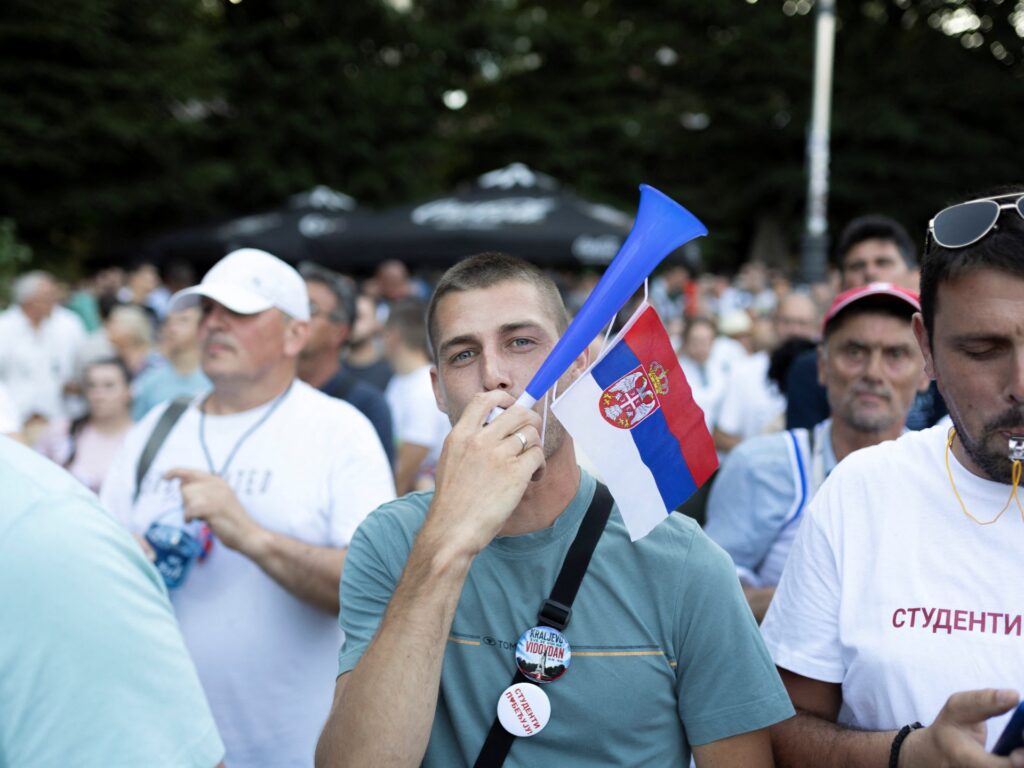
Thousands of protesters gathered in the Serbian city of Kraljevo, expressing deep skepticism about President Aleksandar Vucic’s recent pledge to resign. The demonstration reflects widespread public doubt that Vucic’s departure from office will lead to meaningful political change or address the broader issues facing Serbia.
The protests in Kraljevo, a significant urban center in central Serbia, have attracted a diverse group of citizens united by dissatisfaction with the current government. Demonstrators voiced concerns about corruption, economic stagnation, and the lack of democratic reforms despite Vucic’s promise to step down.
Many protesters perceive the resignation pledge as a political maneuver rather than a genuine commitment to reform. “We have heard such promises before,” said one demonstrator. “The system remains the same, and real change is absent.”
The atmosphere of distrust is rooted in Serbia’s recent political history, where opposition movements often face significant challenges, and the ruling party maintains substantial control over the media and institutions. Critics argue that Vucic’s resignation would create a power vacuum potentially exploited by the ruling elite to maintain their influence.
Opposition leaders participating in the protests have called for comprehensive changes beyond leadership turnover, demanding electoral reforms, judicial independence, and increased transparency in governance.
International observers monitoring the situation note that while Vucic’s pledge to resign is unusual for the region, the persistence of protests indicates a deep-rooted frustration among the populace.
The government has sought to assure citizens that any transition will be peaceful and orderly. However, the demonstrators remain wary, emphasizing that only systemic change can satisfy their demands.
The protests in Kraljevo add to a series of demonstrations across Serbia, reflecting ongoing political tensions and the complexities of democratic progress in the country.
As the situation develops, the international community watches closely, emphasizing the importance of peaceful dialogue and respect for democratic principles in resolving the crisis. Meanwhile, the people of Serbia continue to express their desire for a future marked by transparency, accountability, and genuine political reform.