In Iran, Ashura ceremonies are not only a significant religious observance but also a platform that deeply intertwines faith with state ideology and political messaging. The Ashura event, commemorating the martyrdom of Imam Hussein—an emblematic figure in Shia Islam who stood against oppression—serves as a powerful symbol of resistance and sacrifice.
State-backed Ashura ceremonies in Iran have evolved to include narratives that extend beyond religious history to incorporate contemporary political symbolism. The events prominently feature portrayals of leaders who have been killed in conflicts involving the United States and Israel, presenting them as modern-day martyrs akin to Imam Hussein himself.
This alignment serves to reinforce nationalistic sentiments and legitimizes the state’s stance against perceived foreign adversaries. Leaders who have lost their lives in struggles against US and Israeli forces are depicted as heroic figures whose sacrifices uphold the same values of justice and resistance that Imam Hussein championed.
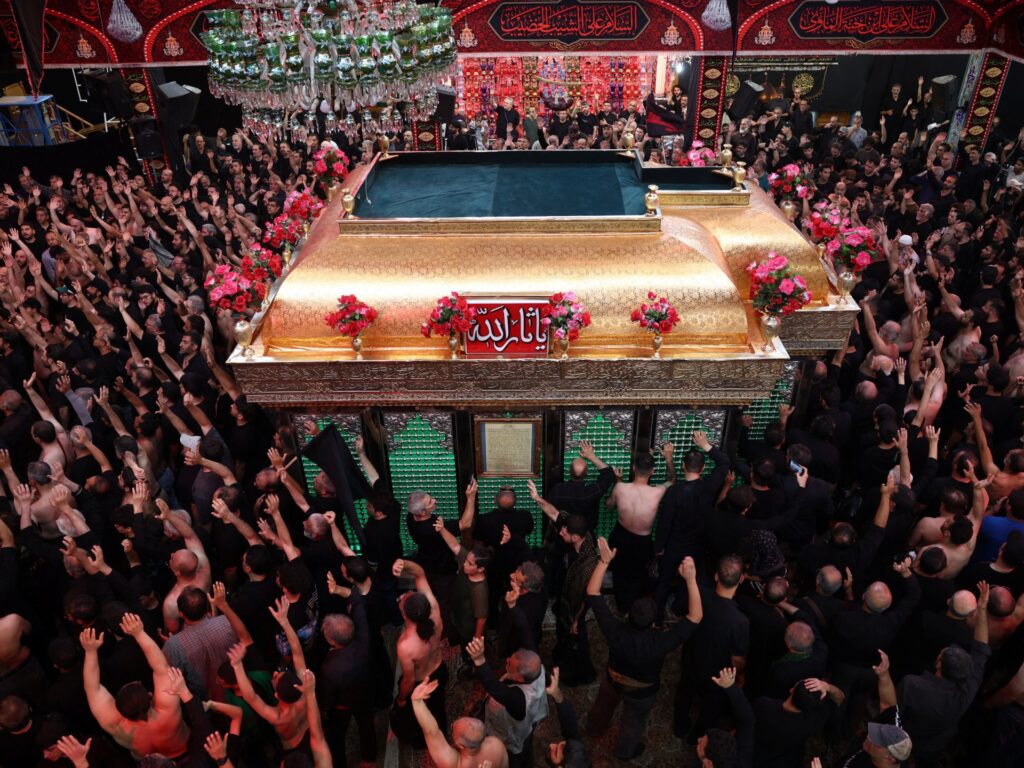
These state-endorsed ceremonies are marked by large public gatherings, theatrical reenactments, and speeches that emphasize themes of martyrdom, loyalty, and resistance. The reenactments artistically narrate the martyrdom of Imam Hussein while drawing parallels to the sacrifices made by contemporary leaders. This fusion of religion and politics aims to galvanize public support for the government and its policies, framing ongoing conflicts in the context of a spiritual and moral battle.
Participants in the ceremonies engage in various ritualistic acts such as chest beating and lamentation, which are expressions of grief and solidarity with Imam Hussein and the modern martyrs. The state’s active involvement in organizing and promoting these events underscores its intent to harness religious devotion as a means to foster unity and support for its political objectives.
Furthermore, the Ashura ceremonies serve as a platform to broadcast the state’s narrative of victimhood and resistance against external aggressors. By elevating recently killed leaders to the status of martyrs, the government galvanizes public opinion against foreign powers, bolstering a collective identity rooted in faith and defiance.
This phenomenon reflects a broader strategy employed by the Iranian state, where religious symbolism is used to maintain social cohesion and justify political actions. Ashura, therefore, is not only a religious commemoration but a potent instrument of political messaging and statecraft.
In conclusion, Ashura ceremonies in Iran exemplify the fusion of deep religious faith with the state’s political agenda. The portrayal of US and Israeli-targeted leaders as martyrs in the mould of Imam Hussein reinforces themes of sacrifice, resistance, and national pride, illustrating how religious tradition is being mobilized to support contemporary political narratives.