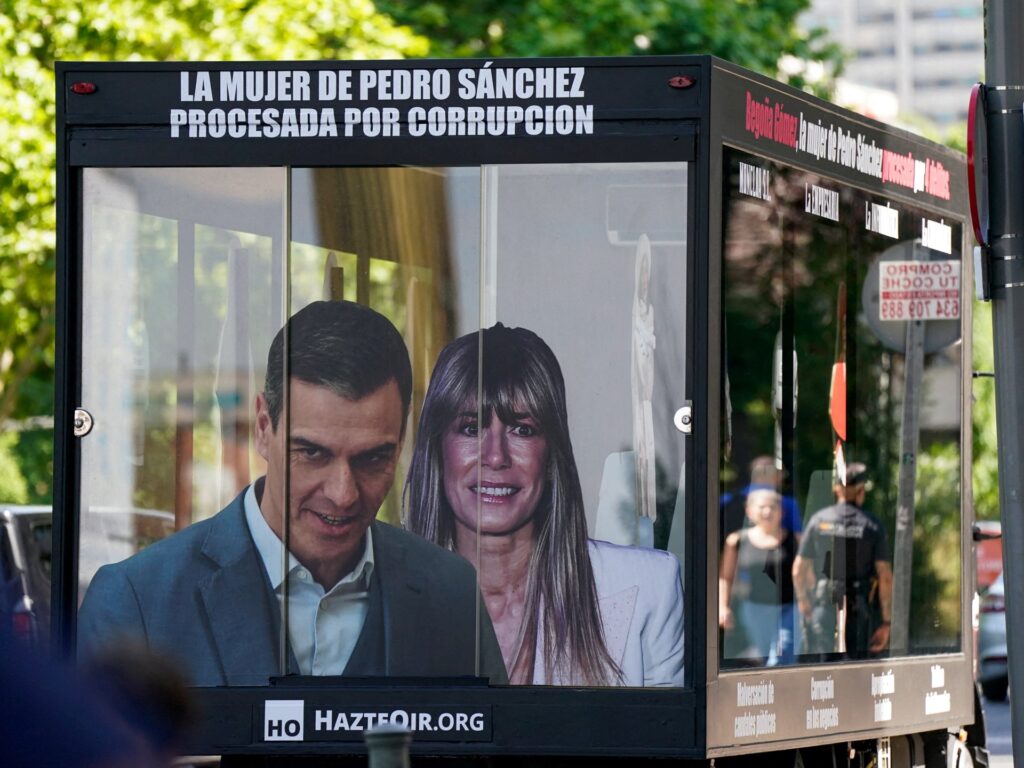
In a significant development in Spain’s ongoing corruption investigations, Begona Gomez, wife of the Spanish Prime Minister, has been legally barred from leaving the country. This move comes as a part of an intensive probe into allegations that Gomez used her unique position as the spouse of the nation’s leader to secure lucrative work contracts.
The court’s decision underscores the seriousness of the inquiry, signaling the judiciary’s commitment to thoroughly investigating potential abuses of power at the highest levels. Begona Gomez, a figure of growing public interest, is now under stringent scrutiny as authorities seek to determine the extent of her involvement in the purported corruption scheme.
The charges suggest that Gomez may have leveraged her proximity to the prime minister not merely for personal gain but for securing contracts that otherwise would have been inaccessible. This reflects a broader concern in Spain and internationally about the misuse of political influence and the blending of personal and political interests.
Details on the nature of the contracts or the entities involved have yet to be fully disclosed, but sources indicate that the contracts pertain to substantial business dealings spanning several sectors. The investigation is part of a larger clampdown on political corruption, which has seen several high-profile figures across Europe being implicated in similar controversies.
The restriction on Gomez’s travel is likely intended to prevent any attempt to evade justice or interfere with the investigation. It is a precaution often employed in cases where there is a risk of flight or tampering with evidence.
Spain’s Prime Minister, while not directly accused, faces mounting pressure as the public and political opponents call for transparency and accountability. The situation poses significant political ramifications, with opposition parties demanding thorough explanations and possible resignations if wrongdoing is confirmed.
Legal experts note that banning an individual from leaving the country is a strong but necessary step when dealing with high-stake corruption cases. It ensures that the individual remains available for questioning, hearings, and any ensuing judicial processes.
This case adds to a worrying pattern where political figures’ families sometimes become entangled in scandals that damage governmental reputations and undermine public trust. It also serves as a reminder of the importance of robust checks and balances within democratic institutions.
As the investigation continues, officials assure the public that no individual is above the law, and justice will be pursued diligently. The outcome of this probe could have lasting impacts on Spain’s political landscape, potentially prompting reforms aimed at preventing such issues in the future.
International observers are watching closely, as transparency and rule of law are critical benchmarks in Spain’s governance, especially within the European Union framework. The country’s handling of the case may influence perceptions of its commitment to combating corruption.
For now, Begona Gomez remains bound by the court’s travel ban as her legal team prepares to respond to the allegations. The coming weeks will likely see increased media coverage and public debate over the implications of the case.
This situation is evolving, with new information expected as investigations proceed, marking a pivotal moment in Spain’s fight against corruption and the quest for political integrity.