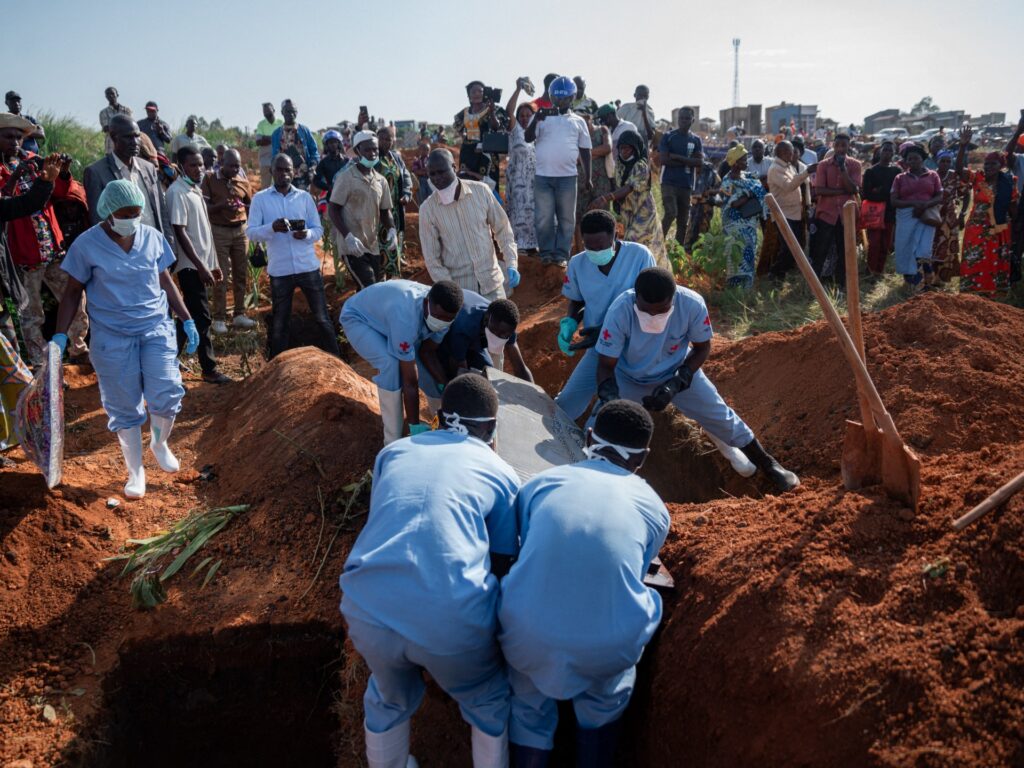
The Ebola outbreak in the Democratic Republic of Congo (DR Congo) is escalating at an alarming rate, with the Africa Centres for Disease Control and Prevention (Africa CDC) issuing a stark warning that it could become the worst in history. The number of confirmed Ebola cases has surged to 837, and tragically, the death toll has risen to 196.
This outbreak poses a severe threat not only to DR Congo but also to the broader African continent, highlighting the urgent need for intensified intervention efforts. Ebola, a highly contagious and often fatal virus, spreads through direct contact with bodily fluids of infected individuals or contaminated surfaces, making containment challenging in affected areas.
Health authorities in DR Congo and international organizations are working tirelessly to control the outbreak, but numerous obstacles hamper these efforts. Difficult terrain, ongoing conflicts, weak health infrastructure, and community mistrust are significant barriers to effective response and containment measures.
The Africa CDC’s warning emphasizes that without adequate resources and coordinated action, the epidemic could spiral out of control, causing catastrophic health, social, and economic consequences. The organization calls for increased funding, deployment of trained healthcare workers, and strengthening of surveillance and contact tracing mechanisms.
Efforts are also underway to educate communities about preventive measures, symptoms to watch for, and the importance of seeking immediate medical attention. Vaccination campaigns have been launched in affected regions, aiming to inoculate frontline workers and high-risk populations against the virus.
The situation remains fluid, and continuous monitoring is essential to track the outbreak’s progression. Global health partners, including the World Health Organization (WHO), have mobilized support, providing expertise, funding, and logistical assistance to DR Congo.
The international community’s concerted response will be critical in curbing this epidemic. There is a collective responsibility to assist DR Congo in mitigating this health crisis to prevent further loss of lives and avoid a broader humanitarian emergency across the region.
The Africa CDC’s alert serves as a crucial reminder of the persistent threat posed by emerging infectious diseases and the importance of preparedness, rapid response, and sustained investment in public health infrastructure. As DR Congo confronts this devastating Ebola outbreak, the global health community watches closely, hoping that immediate, collaborative action will avert a historical health catastrophe.