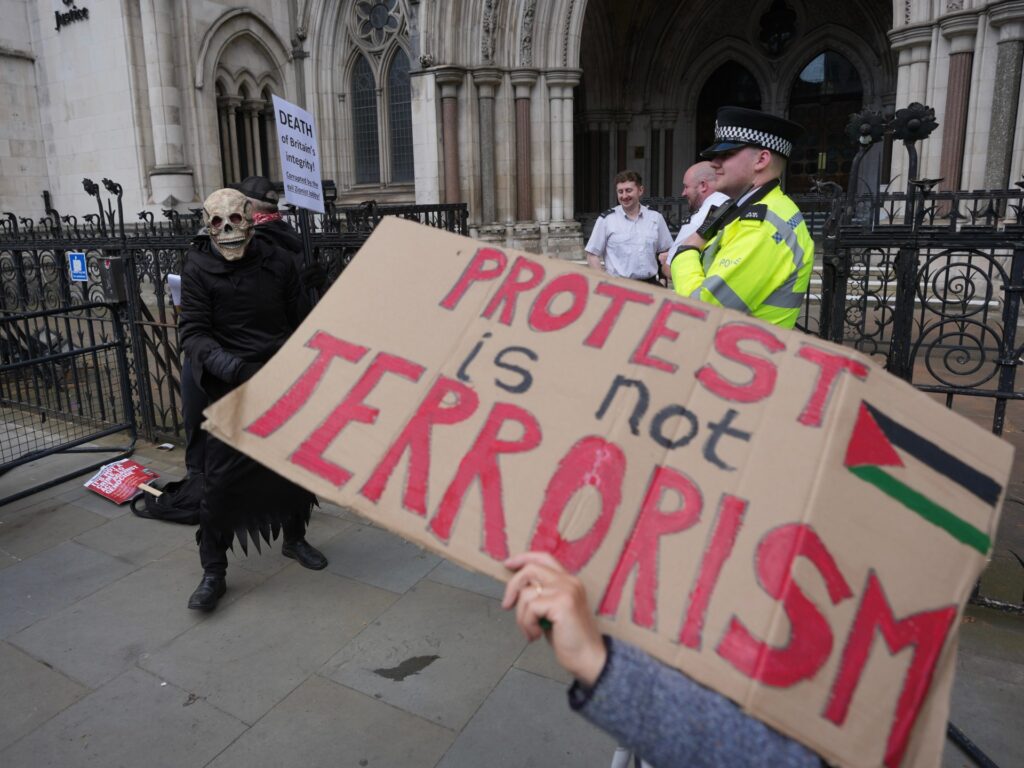
In a landmark decision, a UK court has ruled that the proscription of Palestine Action as a terrorist organization was lawful under British law. The ruling comes amid a wider crackdown on groups alleged to incite violence and promote extremist activities within the country.
Palestine Action, a group known for its active stance in support of Palestinian causes, faced proscription by the UK government, which designated it as a terrorist entity. This designation allows law enforcement to take significant measures against its members, including arrests and the seizure of assets.
The court evaluated evidence presented by both sides, including intelligence reports and testimonies about the group’s activities. Authorities argued that Palestine Action engaged in violent protests, sabotage, and other activities that threatened public safety and national security.
Opponents of the ban contended that the group’s actions were political demonstrations rather than terrorism and that the proscription infringed upon rights to free speech and lawful protest. However, the court found sufficient evidence that the group’s tactics crossed into illegal and dangerous territory.
The Ministry of Home Affairs welcomed the verdict, stating it reinforced the government’s stance against extremist organizations using violence to advance their objectives. They emphasized that the decision protects communities and upholds the rule of law.
Human rights advocates expressed concern over the implications for activism and civil liberties, urging careful scrutiny of how such proscriptions are applied in the future.
Legal experts noted that this ruling could set a precedent for how similar groups are treated, potentially influencing broader counter-terrorism and national security strategies.
Palestine Action’s leadership has yet to comment publicly on the court’s decision but is expected to explore further legal avenues.
This ruling signals a stringent approach by UK authorities towards organizations linked to political violence and highlights ongoing debates about balancing security with democratic freedoms.