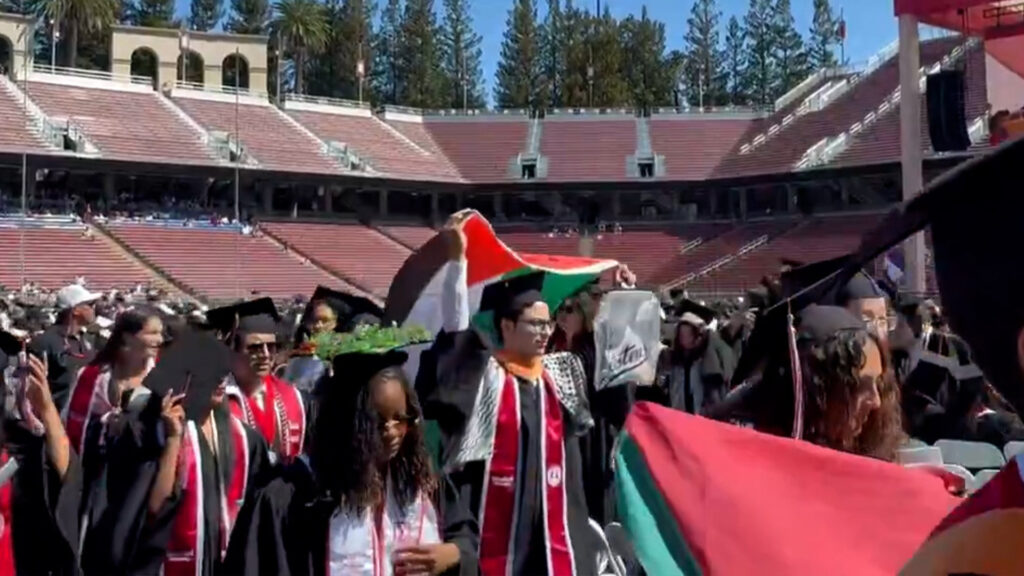
During a highly anticipated commencement address at Stanford University, Google CEO Sundar Pichai faced an unexpected protest when a group of Stanford graduates staged a walkout in demonstration of their support for Palestine. The event, which was initially focused on celebrating the achievements of the graduating class and inspiring graduates as they transitioned into their professional careers, was momentarily disrupted as protesters carried out their planned walkout to voice political concerns.
The walkout came during Pichai’s speech, which covered themes of innovation, responsibility, and the future of technology in society. However, the graduates’ demonstration was aimed to draw attention to the ongoing Israeli-Palestinian conflict, championing solidarity with Palestinian rights and urging greater awareness and action from influential leaders and corporations alike.
Participants of the walkout held signs and chanted slogans that highlighted their call for justice and peace in the region. Organizers of the protest emphasized that their actions were designed to raise consciousness about human rights issues and push for greater corporate and governmental accountability regarding their roles in global conflicts.
Stanford University, known for its politically active student body, has been a hub for many social and political movements, and this incident reflects the campus community’s continued engagement with international affairs and activism. The administration acknowledged the walkout, noting the importance of free speech and peaceful protest while encouraging dialogue and understanding among all members of the university community.
Sundar Pichai, who has previously spoken about technology’s potential to improve lives globally, addressed the disruption calmly and resumed his speech after a brief pause. He acknowledged the passionate stance of the students and emphasized that open dialogue is vital for progress.
This event highlights the intersection of academia, activism, and corporate leadership in contemporary society as young graduates assert their voices on global issues. The walkout at such a high-profile event underlines the continuing urgency felt by many younger generations to advocate for justice and human rights beyond campus borders.
As the Israeli-Palestinian conflict remains one of the most complex and enduring disputes in international relations, moments like this walkout remind us of the diverse and widespread calls for peace and equitable solutions. The protest at Stanford serves as a focal point for ongoing debates on how universities and corporations can engage responsibly with geopolitical issues.
The incident has also sparked conversations on social media and within public discourse about the role of technology leaders in political matters and the responsibilities they carry.
Ultimately, the walkout reflects the deeply held convictions of a generation eager to influence the world in meaningful ways while challenging institutions to act with greater awareness and sensitivity to global human rights concerns.