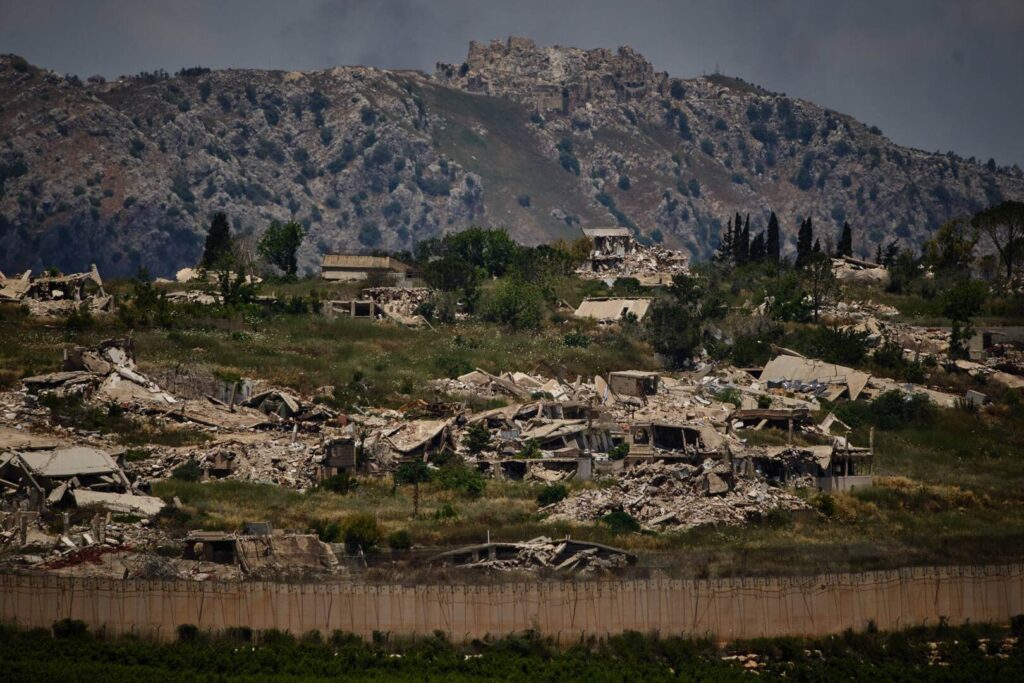
The Beaufort Castle stands on top of a hill near destroyed buildings in southern Lebanon as viewed from northern Israel, Monday, June 15, 2026. (AP Photo/Leo Correa)
Israeli Prime Minister Benjamin Netanyahu has declared that Israeli forces will maintain a security presence in Lebanon, Syria, and the Gaza Strip. This announcement underscores Israel’s strategic intent to safeguard its borders and influence in these volatile regions.
Netanyahu specifically mentioned the establishment of a ‘security zone’ in occupied Lebanon, signaling a firm stance on Israeli military involvement beyond its recognized borders. The declaration comes amid ongoing tensions and conflicts in the region, where Israel faces threats from various militant groups and complex geopolitical challenges.
The Prime Minister’s statement is likely aimed at reinforcing Israel’s commitment to national security and deterring hostile activities emanating from these neighboring territories. The security zone in Lebanon, particularly, has been a focal point of contention, given the presence of armed groups such as Hezbollah.
Israel’s engagement in Syria is also notable, considering the prolonged civil war there and the involvement of multiple international actors. Maintaining a presence in Syria allows Israel to monitor and counter threats from Iranian-backed militias and other hostile factions.
In Gaza, Israel’s policies and military operations have historically been a source of significant conflict with Palestinian groups like Hamas. Netanyahu’s commitment to maintaining control reflects ongoing security concerns and efforts to prevent attacks on Israeli civilians.
The international community has expressed varied reactions to Israel’s stance. Some view it as a necessary measure for self-defense, while others criticize it as an infringement on the sovereignty of Lebanon, Syria, and the Palestinian territories.
The declaration has implications for regional stability. It may exacerbate tensions with neighboring countries and impact peace negotiations. Moreover, it highlights the complex dynamics that Israel navigates in ensuring its security while managing diplomatic relations.
Analysts suggest that Netanyahu’s announcement aligns with broader Israeli security doctrines that prioritize proactive defense strategies. These include controlling critical border areas and preemptively addressing perceived threats.
However, sustaining prolonged military presence in foreign territories poses challenges, such as international legal scrutiny, local resistance, and the risk of escalating conflicts. The humanitarian situation in affected regions may also deteriorate due to ongoing military activities.
Israel’s domestic audience may interpret Netanyahu’s firm approach as a demonstration of strong leadership focused on protecting the nation. This stance could influence internal political dynamics and public opinion amid concerns about security.
The situation remains fluid, with potential for both escalation and diplomatic developments. International diplomatic efforts continue to seek solutions to the enduring conflicts that frame Israel’s security policies.
In summary, Netanyahu’s announcement about maintaining Israeli forces in Lebanon, Syria, and Gaza reflects a strategic choice aimed at enhancing national security. The move carries complex consequences for regional politics, security, and humanitarian conditions, as Israel asserts its role in a highly contested environment.