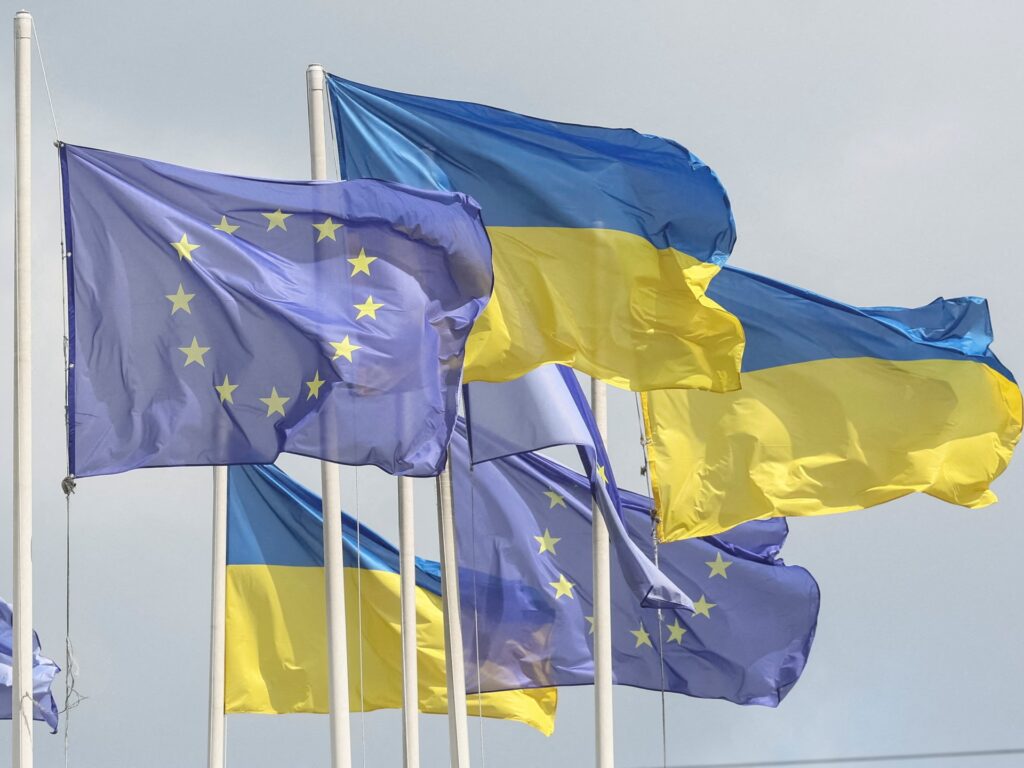
The European Union has formally initiated the accession processes for Ukraine and Moldova, marking a significant milestone in the two countries’ bids to join the bloc. This move represents a clear signal of support from the EU amidst ongoing geopolitical tensions in Eastern Europe, particularly the conflict involving Russia’s invasion of Ukraine.
For Kyiv, EU membership is more than just an economic or political alignment; it is viewed as a crucial security guarantee. Access to the EU bloc offers Ukraine a stronger framework for defense cooperation and integration with Western institutions, which is seen as essential in deterring future aggression. Alongside security considerations, the accession process also symbolizes Ukraine’s commitment to restructure and align itself with Western democratic values and governance standards.
Moldova, which shares similar aspirations to solidify its position within the European community, also sees EU accession as a path to stability and prosperity. The accession process requires both countries to meet stringent criteria related to governance, economic reforms, human rights, and the rule of law.
The EU’s decision to begin formal proceedings signifies its readiness to embrace these Eastern European neighbors during a time of great uncertainty and conflict in the region. EU officials have emphasized that the integration of Ukraine and Moldova is not only a geopolitical strategy but also a testament to shared values and the promise of a peaceful, prosperous future for the region.
The accession process, however, is complex and typically spans several years, involving detailed assessments and reforms. Ukraine and Moldova will need to work closely with EU institutions to fulfill all accession criteria. This process is expected to bring substantial transformations in both countries’ political and economic landscapes.
This historic step underscores the EU’s commitment to expanding its borders in a direction that supports democracy, stability, and security. For Ukraine and Moldova, it marks an important chapter in their journey towards closer European integration and a decisive move away from spheres of influence dominated by external powers.
As the accession process unfolds, the international community and the EU will closely monitor developments to ensure that the objectives of democratic reform, economic development, and security cooperation are met. This strategic enlargement reflects the EU’s broader policy to foster unity and resilience among its neighbors in the face of ongoing regional challenges.