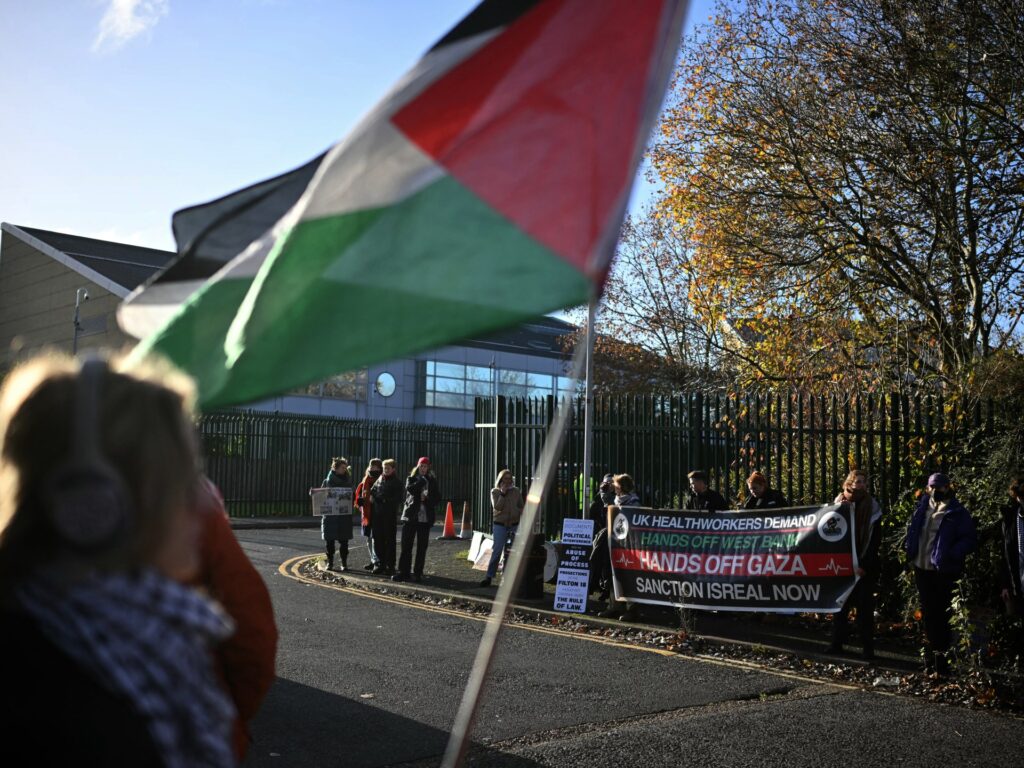
A UK court has sentenced four activists from Palestine Action on charges related to criminal damage and grievous bodily harm (GBH), but a judge controversially classified their actions as a ‘terrorist act.’ The defendants, members of the grassroots organization Palestine Action, were involved in a high-profile raid on a company in England supplying arms to Israel. The group targeted this arms manufacturer in a direct-action protest aimed at disrupting the flow of weapons believed to contribute to violence in the Palestinian territories. During the trial, the activists were convicted for causing extensive criminal damage to the premises and for causing GBH to security personnel present during the incident. However, the judge went further by labeling their raid as an act of terrorism, a characterization that has sparked extensive debate and criticism. Supporters of Palestine Action argue that the ruling misrepresents the motives behind the protest, which they say was a form of political activism against unlawful arms dealings rather than a terror offense. They claim that the activists’ intent was to prevent potential war crimes and to raise public awareness of the arms trade’s consequences on Palestine. The prosecution’s case centered on the physical damage caused during the raid and the alleged harm inflicted on security staff. They portrayed the activists’ behavior as not only unlawful but also as designed to instill fear and disrupt public order, fulfilling the legal definition of terrorism in the UK. Human rights organizations and campaigning groups have voiced their concern over the terrorism labeling, warning that such a precedent could criminalize civil disobedience and peaceful protest. The judge defended the classification by pointing to the premeditated nature of the raid, its impact on the targeted company, and the broader political implications. The controversial verdict raises important questions about the boundaries of activism and the UK government’s stance on protests related to international conflicts. This case signals a tough approach to actions perceived as threats to national security and highlights the ongoing tensions between state security policies and freedom of expression movements. The jailed activists remain steadfast, stating that their actions were motivated by a commitment to ending violence and injustice in Palestine. The outcome of the trial has prompted calls for review from civil liberties advocates who fear that labeling such activism as terrorism could have chilling effects on democratic engagement and dissent in the UK and beyond.