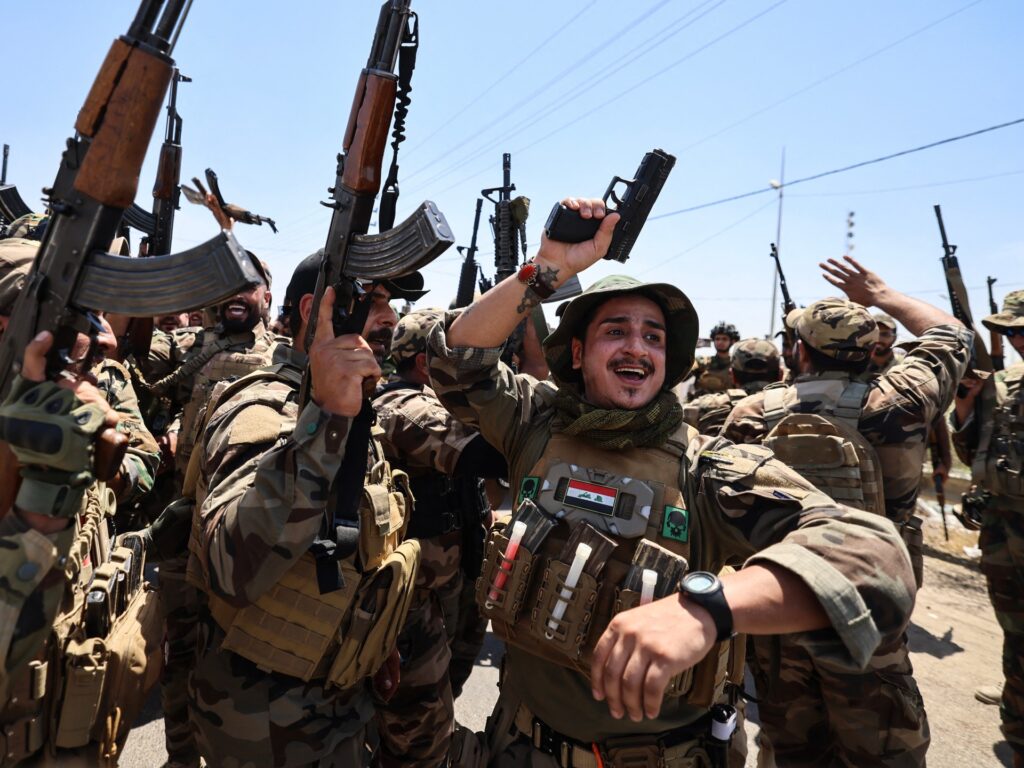
In recent developments, Iraq’s paramilitary groups, long dominant and influential in the country’s security landscape, have declared their intention to disarm and integrate into the formal state apparatus. This announcement comes with significant political and social implications, especially given the powerful role these groups have played since the rise of ISIS and in the sectarian and geopolitical struggles within Iraq.
At the forefront of this move is Muqtada al-Sadr, a prominent Shia political and religious leader whose influence extends deeply into various armed factions, notably the Popular Mobilization Forces (PMF). Al-Sadr’s endorsement of the integration proposal signals a potential shift in Iraq’s security paradigm, aiming for greater stability and state monopoly over violence.
These paramilitary groups, initially formed as militias to combat ISIS, grew into formidable players with independent agendas, often operating in parallel or at times at odds with the Iraqi government. Their integration is seen as a crucial step toward national reconciliation and a unified command structure.
However, the prospect of successful disarmament and integration is fraught with challenges. Many militias possess strong local and sectarian loyalties, making complete assimilation into national forces complex. Distrust between factions and political actors continues to impede dialogue and implementation.
Furthermore, the regional influence of foreign powers supporting different groups complicates efforts to consolidate military authority under Baghdad. Some paramilitaries maintain external backing, which emboldens their autonomy and resistance to disarm.
The government has initiated dialogue to facilitate the transition, proposing incentives such as official recognition, salaries for fighters within state forces, and roles in security operations. Yet skepticism remains widespread among Iraqis, who question if these forces will truly relinquish arms or merely rebrand under state control while retaining their agendas.
Political analysts emphasize that disarmament is less about the physical surrender of weapons and more about transforming loyalties and command structures. The legitimacy of Iraq’s security forces hinges on their impartiality and unified control, essential for enduring peace and stability.
Muqtada al-Sadr’s involvement is pivotal; his ability to influence and mobilize fighters could accelerate reform. However, his political ambitions also mean that any integration plan must navigate the balance of power carefully.
In conclusion, while the declaration to disarm and integrate paramilitary groups ushers in hope for a more centralized and peaceful Iraq, practical realities pose substantial obstacles. The success of this endeavor relies on sincere commitment from all factions, robust state institutions, and continued support from both domestic and international stakeholders.
The coming months will be critical as Iraq tests whether these promises can translate into concrete actions, potentially reshaping its future security and political landscape.