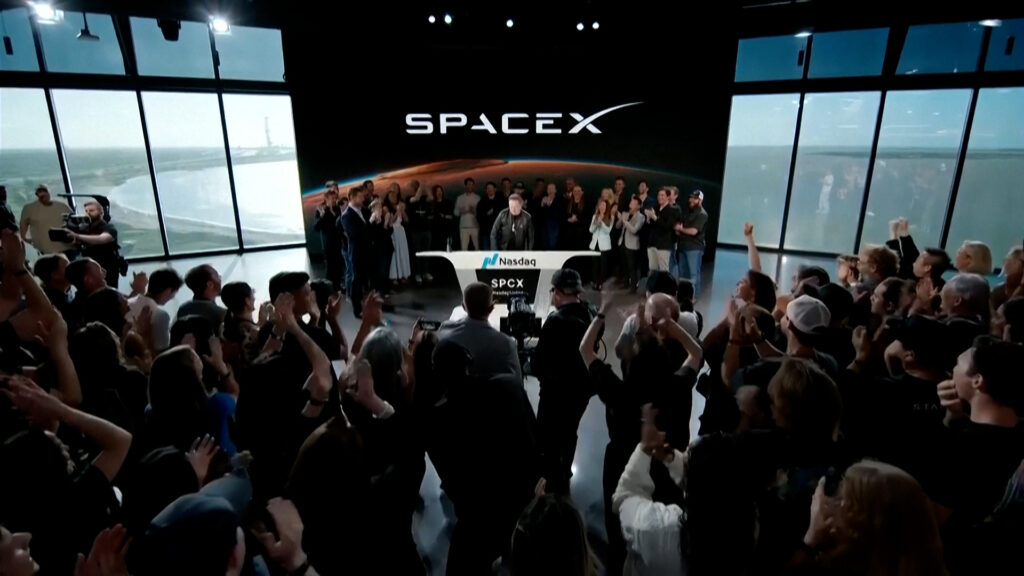
In a historic financial milestone, Elon Musk has become the world’s first trillionaire following the highly anticipated debut of SpaceX on the Nasdaq stock exchange. This significant event has sent shockwaves through the global markets, reflecting the growing influence of space exploration and private aerospace enterprises in the economy.
SpaceX, founded by Musk in 2002 with the vision of making life multiplanetary, has captured the imagination of investors and consumers alike. The company’s successful launch and sustained growth in commercial spaceflight, satellite deployment, and related technologies have positioned it as a pioneer in the industry.
The public offering of SpaceX shares on Nasdaq was met with enormous enthusiasm, resulting in a soaring stock price that catapulted Musk’s net worth beyond the trillion-dollar threshold. This milestone not only marks a personal achievement for Musk but also underscores the immense value investors place on innovative technology ventures with long-term growth prospects.
Market analysts have noted that the valuation of SpaceX reflects broader trends in technological advancement, sustainability, and infrastructure development needed for humanity’s expansion into outer space. The company’s ambitions, ranging from reusable rocket technologies to Starship interplanetary travel, resonate strongly with a future-oriented investment community.
Musk’s ascent to trillionaire status through SpaceX has sparked discussions on wealth accumulation, economic disparities, and the role of visionary entrepreneurs in shaping the future. Critics point to the concentration of wealth and encourage regulatory frameworks to balance innovation with social equity.
Meanwhile, supporters highlight the transformative potential of Musk’s enterprises, including Tesla and Neuralink, alongside SpaceX. By pushing the boundaries of what is technologically possible, these companies are redefining transportation, energy, and human-computer interaction.
The Nasdaq debut of SpaceX is also a pivotal moment for the space industry at large, signaling increasing confidence and financial viability in commercial space ventures. This shift could accelerate innovation and competition, fostering a new era of space exploration and accessibility.
Investors are now closely watching the company’s performance post-IPO, eager to see how SpaceX will scale its ambitious projects amid regulatory, technical, and competitive challenges. The success of SpaceX could pave the way for more aerospace startups to access public markets, diversifying investment opportunities.
In sum, Elon Musk’s journey to becoming the first trillionaire via SpaceX’s Nasdaq debut is a landmark event with far-reaching implications. It illustrates the power of visionary entrepreneurship, technological innovation, and the evolving dynamics of the global financial landscape as humanity looks toward the stars.
This milestone invites reflection on the balance between ambition and responsibility in the age of rapid technological advancement, underscoring the transformative impact one individual and his ventures can have on society and the economy.