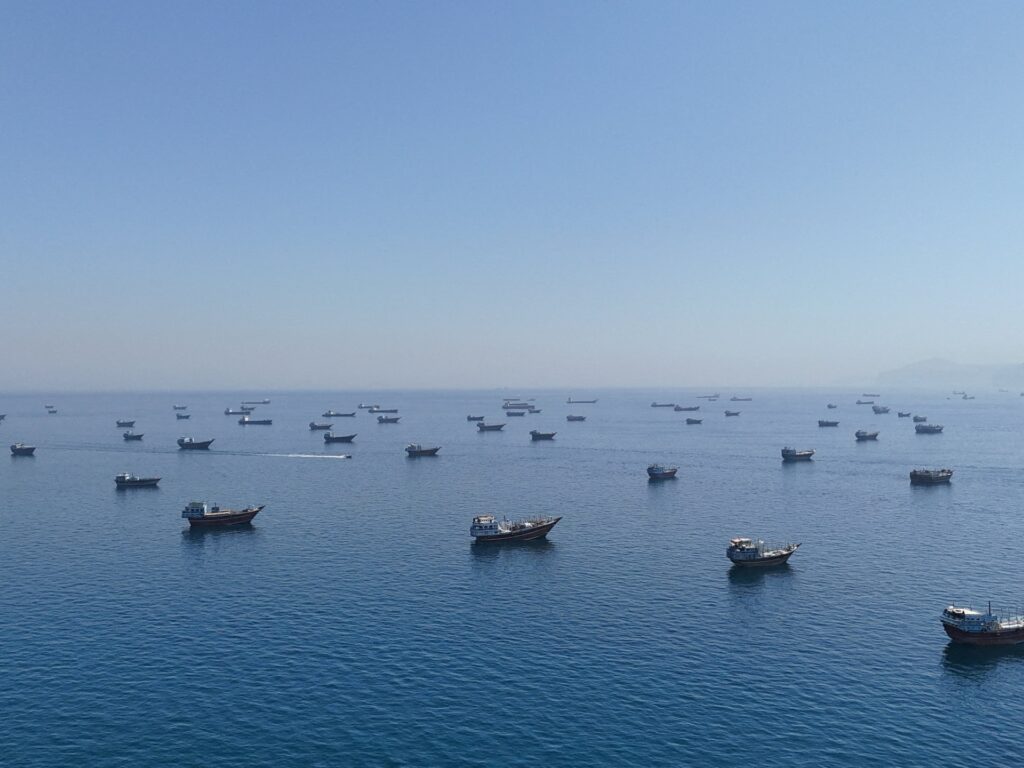
In recent statements, former President Donald Trump claimed that the United States had managed to sneak 100 million barrels of oil out of the Strait of Hormuz. This bold assertion sparked significant discussion and scrutiny, especially considering the strategic and economic importance of the strait in global oil shipments.
The Strait of Hormuz is a critical chokepoint through which about 20% of global petroleum passes. Any disruption or covert activity in this area has substantial implications for global markets and geopolitical stability. Given this context, Trump’s claim raises several questions about the feasibility and accuracy of such a large volume of oil extraction without detection.
Upon examination, the numbers do not seem to hold up under scrutiny. To put it into perspective, 100 million barrels of oil is an enormous quantity. For comparison, the total daily global oil production is around 100 million barrels. Hence, moving such a large amount covertly over a short period would require significant logistical coordination and risk.
Moreover, the US Department of Energy and other relevant agencies have protocols and transparency norms concerning oil reserves and shipments. While the US military and intelligence might operate discreetly, extracting and transporting such a vast quantity of oil clandestinely through the Strait of Hormuz presents substantial operational challenges.
Experts in the energy sector point out that while the US might have managed to secure and transport some oil through the Strait, the figure of 100 million barrels likely exaggerates the real scale. Satellite tracking, shipping logs, and international trade data do not corroborate the movement of such volumes covertly.
Additionally, the diplomatic fallout from such an act would be considerable. The Strait of Hormuz is bordered by Iran and Oman, and any attempts to covertly extract oil could lead to significant geopolitical tensions, potentially escalating conflicts in the already volatile region.
Economic analysts emphasize that covertly moving such a quantity would also impact oil prices dramatically, yet no corresponding significant price fluctuations were observed that would indicate such an event.
In conclusion, while it is plausible that the US has managed to maneuver some oil shipments through the Strait of Hormuz, the claim of 100 million barrels appears to be an overstatement. The logistical, geopolitical, and economic realities make the assertion unlikely to be entirely accurate.
This analysis underscores the importance of critically evaluating high-profile claims in the context of available data, expert opinions, and geopolitical considerations. The situation around the Strait of Hormuz remains a focal point for energy security and international relations, warranting continued observation and analysis.