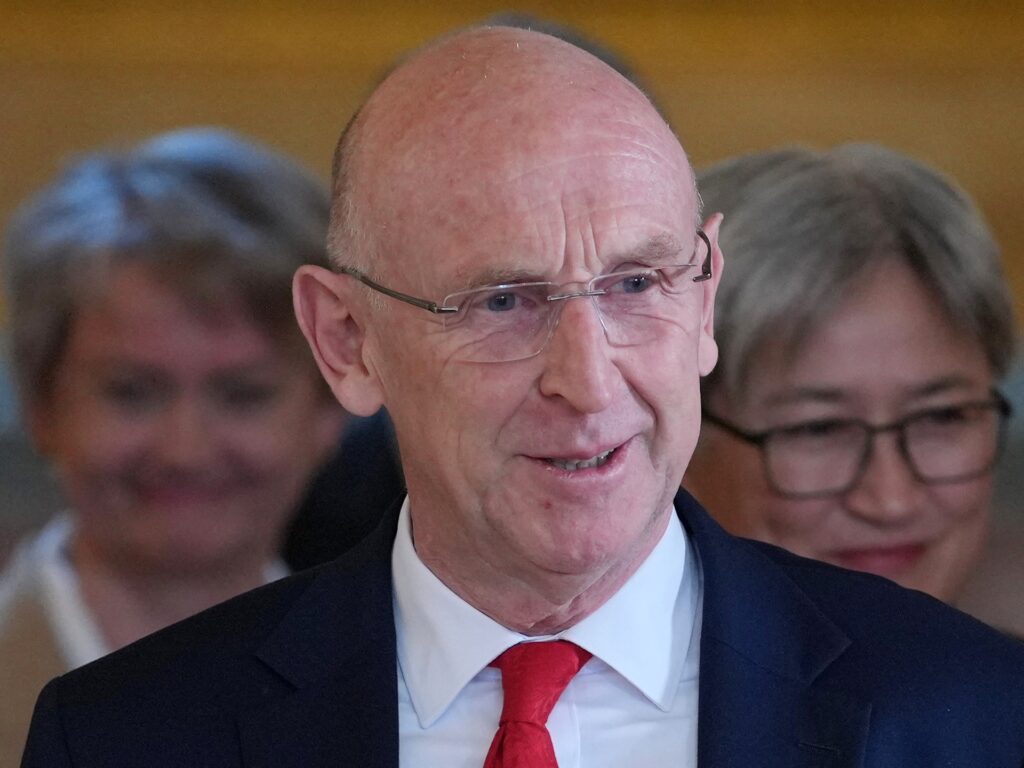
In a significant development that has further intensified the political turmoil facing UK Labour leader Keir Starmer, Britain’s Defence Secretary John Healey has resigned, citing disagreements over defence spending as the primary reason for his departure. Healey’s resignation marks a critical moment in the ongoing crisis within the Labour Party, highlighting the internal conflicts over military and defence budget priorities.
John Healey, a senior figure in the Labour Party and the government, announced his resignation amid increasing controversy and debate regarding the allocation of funds to the UK’s defence sector. This dispute has brought to light the broader strategic and ideological divides within the party about the nation’s military commitments and expenditures.
The resignation has sent shockwaves through the political establishment, signaling potential instability in the government’s approach to defence policy. Healey’s departure could also undermine the Labour Party’s position ahead of potential upcoming elections, as defence and national security remain key voter concerns.
Sources close to the Defence Secretary revealed that Healey had been at odds with other key figures in the government over cuts and spending levels on military capabilities. His resignation letter reportedly emphasized the need for a defence strategy that adequately equips the armed forces without compromising fiscal responsibility.
Political analysts suggest that this development exposes deeper fractures within the Labour Party, where balancing economic constraints with national security interests has become increasingly challenging. The dispute over defence spending reflects a broader debate about Britain’s role on the global stage, military modernization, and prioritization of resources.
The opposition and many political commentators have seized upon Healey’s resignation to criticize the current Labour leadership. Questions are now being raised about how the party will reconcile its internal contradictions and whether Starmer’s leadership can maintain cohesion during this critical period.
John Healey’s resignation comes at a time when defence issues are paramount, given the geopolitical tensions in Europe and beyond. The UK’s defence policy is under scrutiny as it seeks to respond to emerging threats and maintain its status as a significant military power.
In response to Healey’s resignation, Labour Party spokespersons have expressed regret at the loss but insist that the government remains committed to a robust defence policy. They stress the importance of a unified approach to defence amidst the challenging fiscal landscape.
Healey’s resignation leaves a vacancy that must be filled promptly to ensure continuity in defence policy and operations. The government is now tasked with appointing a successor who can navigate the complex issues at the intersection of strategic defence priorities and budgetary realities.
Overall, John Healey’s resignation over defence spending disagreements not only deepens the political crisis for Keir Starmer but also highlights the complexities of managing defence policy in a rapidly changing global environment. The coming weeks will be crucial in determining the future direction of the UK’s military spending and its broader implications for national security.