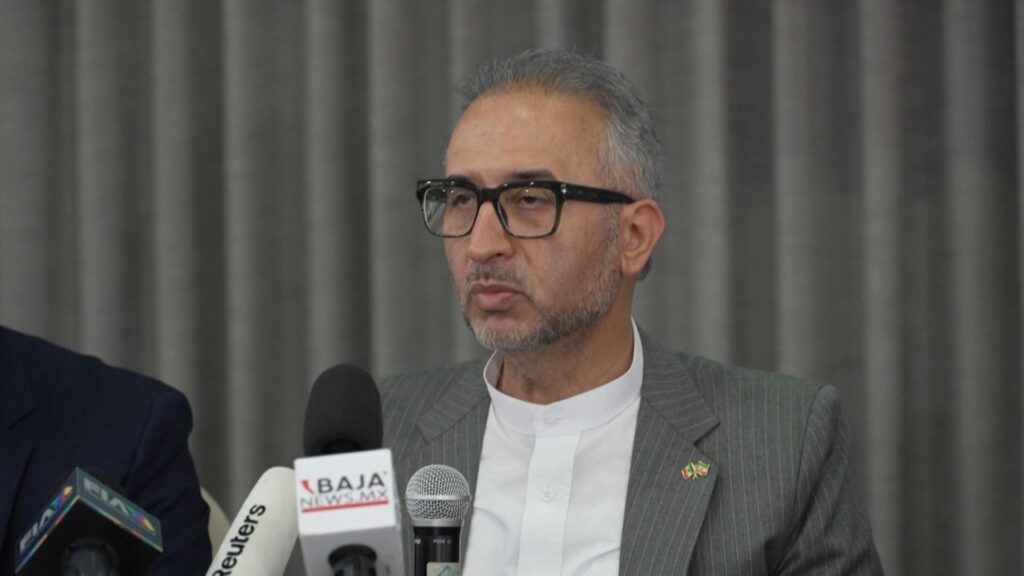
Iran has publicly criticized the United States government for refusing to grant visas to its delegation attending the World Cup events. The Iranian ambassador to Mexico conveyed strong concerns regarding the reported denial of visas, a move that has raised diplomatic tensions and questions about sportsmanship and international cooperation.
The incident revolves around the US government’s decision to deny visas to the members of Iran’s official World Cup delegation, which was expected to travel to the United States for related events and meetings. This refusal has been perceived by Iranian officials as a politicization of sports and a direct hindrance to Iran’s participation in important global soccer events.
Iran’s ambassador to Mexico highlighted the significance of the World Cup as a platform for unity and cultural exchange, criticizing the visa denial as a regrettable act that undermines these values. The ambassador pointed out that the delegation’s participation was crucial not only for sporting interests but also for fostering dialogue and goodwill among nations.
This development adds to existing tensions between Iran and the US amid broader geopolitical challenges and escalating diplomatic disputes. The refusal of visas for the sports delegation is seen as part of a wider policy approach that impacts various sectors, including culture and sports.
International sports organizations have typically advocated for the separation of politics and sports to ensure that athletic events remain inclusive and accessible to all participants regardless of political relations. However, in this case, the decision by US authorities appears to have conflicted with these principles.
The Iranian government has called for reconsideration of the visa refusal, urging the United States to respect the spirit of international sporting events and to facilitate the free movement of athletes and officials. They emphasized the importance of maintaining the World Cup as a neutral ground that celebrates human talent and global unity.
This incident has drawn attention from other nations and international bodies who monitor fair treatment and non-discrimination in sports. The global community will be watching closely to see how the US responds to these concerns and whether diplomatic efforts will resolve the visa issues.
In conclusion, the refusal by the United States to grant visas to Iran’s World Cup delegation has sparked significant criticism from Iranian officials and raised broader issues about the intersection of politics and sports. The situation underscores the need for diplomatic dialogue to preserve the integrity and inclusiveness of international sporting events like the World Cup.