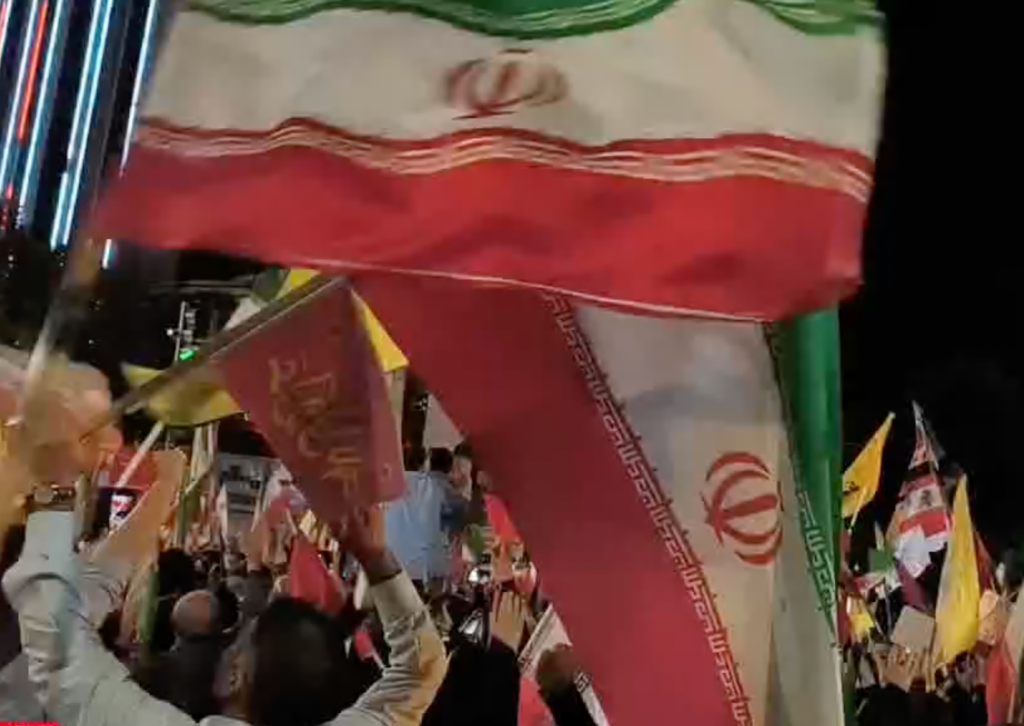
In a tense display unfolding recently, Iranian state television broadcast scenes showing celebrations in Tehran coinciding with missile launches destined for Israel. These images revealed crowds engaging in public festivities as the missiles flew overhead, indicating a significant moment of both military action and nationalistic fervor.
The incident marks a notable escalation in the ongoing hostilities involving Iran and Israel, highlighting the deep-seated conflict and geopolitical tensions in the region. The decision to publicly celebrate such an event on state TV underscores the Iranian government’s stance and its intent to showcase solidarity and support for its military initiatives.
Tehran’s celebrations were characterized by scenes of jubilation, with citizens gathering in public squares, amidst flags and banners promoting a strong message of resistance. The air was charged with a sense of defiance, reflecting the broader political and ideological divides that permeate the Middle East.
Missile launches are a critical component of Iran’s strategic military posture, often viewed as a deterrent or a show of force by regional analysts. This public demonstration of missile launches aimed at Israel is likely to exacerbate already heightened tensions and raises concerns about the potential for further escalations.
International reactions to the celebrations and missile activities have been mixed, with many world leaders expressing condemnation and urging restraint. The incident underscores the fragile security environment and the risks of conflict spillover.
Experts suggest that such acts of open military demonstration through media broadcast serve multiple purposes — rallying domestic support, signaling strength to adversaries, and attempting to influence international perceptions.
The path forward remains uncertain as diplomatic efforts continue alongside shows of military capability. The recent celebrations in Tehran, against the backdrop of missile flights towards Israel, represent a potent symbol of the ongoing complex and volatile dynamics in Middle Eastern geopolitics.
As the situation develops, international observers and analysts will be closely monitoring the implications of these demonstrations for regional stability and the prospects for peace. The visible public support captured by Iranian state media offers a glimpse into the internal narratives shaping the conflict and the challenges ahead for diplomatic resolution.