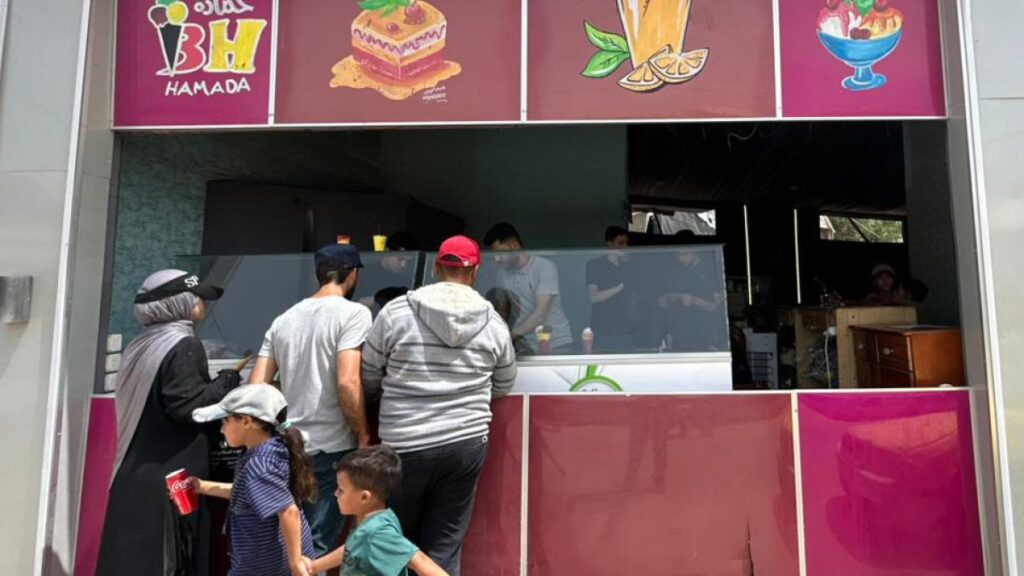
In the heart of Khan Younis, Gaza, a remarkable story of resilience and hope unfolds at a small ice cream parlour run by seven medical and dental students. In the midst of ongoing conflict and genocide, these students have turned to entrepreneurship, selling ice cream to fund their studies and keep their dreams alive.
Gaza has faced immense hardships, with the conflict severely impacting daily life, education, and economic opportunities. Despite these challenges, these seven young individuals remain committed to their education in medicine and dentistry, fields crucial for rebuilding their community’s health infrastructure.
The ice cream parlour, modest yet vibrant, has become more than just a business. It stands as a symbol of defiance against despair and a beacon of hope that education and determination can transcend even the most dire circumstances. Each scoop sold represents a step closer to achieving their professional aspirations.
Running the parlour is no small feat; the students balance their rigorous academic schedules with managing purchases, sales, and customer service. Their initiative exemplifies the entrepreneurial spirit and the powerful will to sustain their educational journey, despite financial and logistical challenges.
The funds raised through the parlour are vital. They cover tuition fees, purchase of books, and other educational materials. Without this income source, many of these students might have been forced to abandon their studies due to the lack of support and the ongoing economic crisis.
Community support has played a key role in their success. Local residents frequently visit the parlour, encouraged by the students’ determination and the quality of the ice cream. This local engagement not only fosters a sense of solidarity but also strengthens the community’s social fabric in difficult times.
The story of these seven students is a testament to human resilience and the power of hope. Despite living in one of the most volatile regions in the world, they refuse to be defined by their circumstances. Instead, they are crafting a new narrative—one of courage, ambition, and the pursuit of knowledge.
Their journey underscores the critical importance of supporting young people’s education and entrepreneurship in conflict zones. International organizations, humanitarian groups, and policymakers can draw inspiration from their example to develop initiatives that empower youth and nurture potential under trying conditions.
As these students continue to serve customers with smiles and ice cream, they inspire others in Gaza and beyond. Their story is a poignant reminder that even in the darkest times, hope can be found in the simplest acts of entrepreneurship and learning.
In a region scarred by conflict and hardship, this ice cream parlour not only satisfies sweet cravings but also feeds dreams—offering a glimpse of a brighter future for Gaza’s youth and beyond.