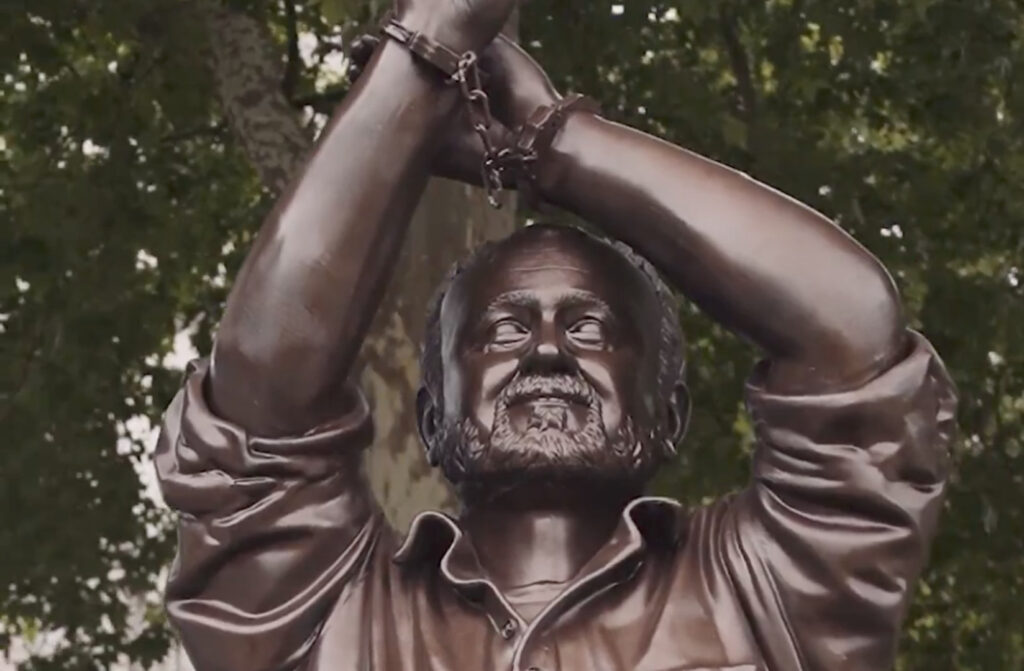
In a recent event in London, activists sought to erect a statue of Marwan Barghouti, a jailed Palestinian political figure, in the prominent Parliament Square. The attempt was quickly met with intervention by the police, who prevented the installation from taking place. Marwan Barghouti is a widely known leader within Palestinian politics, convicted and imprisoned, making his figure a focal point of both support and controversy internationally. Parliament Square in London is a high-profile location known for political and social demonstrations, often attracting significant public and media attention. The activists’ move to place a statue of Barghouti in such a visible location highlights ongoing tensions and debates surrounding his legacy and the broader Israeli-Palestinian conflict. This incident underscores the complexities of public memory and political expression in global cities, where local actions can resonate with international audiences. The police response reflects the authorities’ position on maintaining public order and the sensitivities involved in politically charged acts in symbolic spaces. As the situation evolves, it remains a subject of discussion among activists, political analysts, and the broader community about freedom of expression, political activism, and international solidarity movements. The thwarted attempt also raises questions about how historical figures and contentious legacies are commemorated, especially in places charged with historical and political significance. London’s Parliament Square has historically been a canvas for expressing political dissent and support, making it a strategic choice for activists aiming to make a statement. This event adds to the continuous dialogue on how societies deal with contentious issues and figures in public urban spaces. Further developments are anticipated as activists plan their next steps and authorities monitor the situation closely to balance public safety with democratic rights. The incident also prompts reflections on international perspectives of the Israeli-Palestinian conflict and its manifestations far beyond the region. The attempt to erect the statue is emblematic of broader efforts to raise awareness and provoke discussion about Palestinian leadership and the ongoing conflict. It also illustrates the global reach of political activism and the role of symbolic acts in shaping public discourse. Overall, the episode in London signifies the intersection of local action and global political narratives, illustrating the challenges and dynamics of contemporary activism in contested spaces.