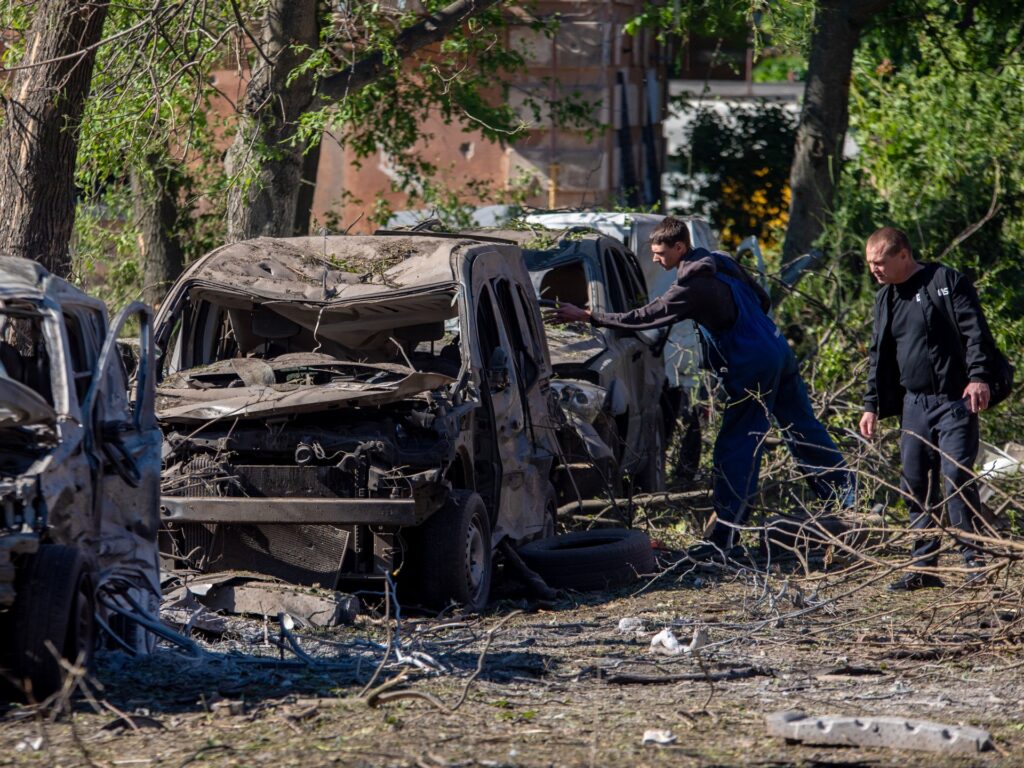
A drone attack in the Russian-held region of Donetsk has resulted in the deaths of seven individuals, marking a significant escalation in the ongoing conflict between Ukrainian forces and Russian-backed authorities. Denis Pushilin, the Russian-installed head of Donetsk, reported that a drone struck a bus traveling between Moscow and Simferopol, causing the fatal incident.
This attack underscores the heightened tensions and increasing use of unmanned aerial vehicles in the contested territories of Eastern Ukraine. The use of drones in military engagements has become more prevalent, allowing for strategic strikes with minimal risk to personnel. However, this development also raises the stakes in the conflict, potentially prompting retaliatory actions and further destabilizing the region.
The affected region, Donetsk, has been a focal point of conflict since 2014, when pro-Russian separatists declared independence from Ukraine, leading to a protracted war that has drawn international attention and condemnation. The situation remains volatile, with frequent exchanges of fire and shifting control of territory.
The bus targeted was reportedly on a route connecting Moscow to Simferopol, which is located in Crimea — an area annexed by Russia in 2014 but internationally recognized as part of Ukraine. The attack’s location and timing have yet to be fully explained by either side, but it demonstrates the expanding geographical scope of the conflict.
Casualty reports indicate that seven people lost their lives in the drone strike, highlighting the human cost of the ongoing hostilities. The identities and nationalities of the victims have not been fully disclosed, but such incidents exacerbate the humanitarian toll of the war.
International observers and governments have expressed concern over the increased use of drone technology in the Ukraine conflict, warning of the risks of escalation and the potential for civilian casualties. Efforts toward diplomatic resolutions have been overshadowed by continuous military actions and increasing violence.
The Russian-installed leadership in Donetsk has condemned the attack and vowed to strengthen defenses against such threats. Meanwhile, Ukrainian officials have neither confirmed nor denied responsibility for the drone strike, maintaining a strategic ambiguity common in modern conflicts.
This incident adds to a growing list of drone attacks and countermeasures in the region, illustrating the evolving nature of warfare in the 21st century. The use of drones symbolizes a shift towards remote and technologically advanced combat methods, which carry implications for international security and conflict management.
As the situation continues to develop, the international community watches closely, hoping for a de-escalation and a return to negotiations. However, the recent drone strike in Donetsk serves as a grim reminder of the persistent dangers and the high human cost associated with the ongoing conflict in eastern Ukraine.