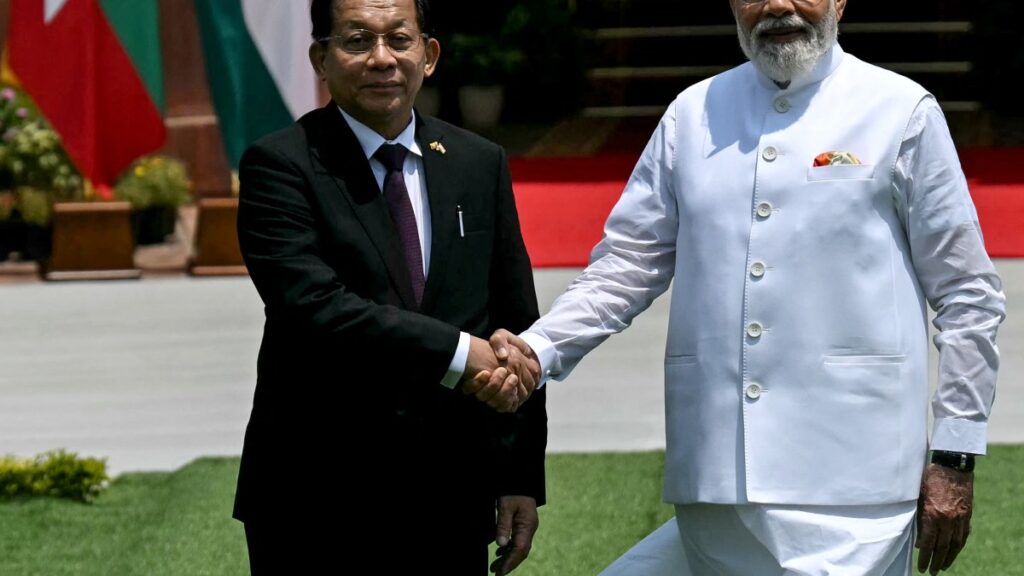
In a significant diplomatic move, Indian Prime Minister Narendra Modi recently held a meeting with Myanmar’s military government leader, Min Aung Hlaing, in New Delhi. This engagement marks a key interaction between India and Myanmar’s ruling military junta, which has been under intense international scrutiny and criticism following the military coup in Myanmar in February 2021.
The meeting has sparked a wave of criticism from opposition groups in Myanmar who are strongly opposed to the military regime. These groups have voiced concerns and condemned India for hosting Min Aung Hlaing, arguing that such engagements could be seen as legitimizing the military government that has been accused of severe human rights violations and suppression of democratic freedoms.
Despite the backlash, Indian officials have defended the decision to engage with Myanmar’s military leadership. They emphasize that maintaining dialogue is crucial to fostering peace and stability in the region. India believes that constructive engagement, rather than isolation, is the best way forward to influence positive outcomes and support the people of Myanmar.
India’s strategic interests in Myanmar include security concerns related to insurgency issues along the bordering regions, economic connectivity, and regional stability in Southeast Asia. Ensuring a working relationship with Myanmar’s current leadership is seen by India as essential to safeguarding these interests.
The diplomatic engagement also underscores India’s broader foreign policy approach of pragmatic and realistic interactions with various governments, irrespective of their global standing. By keeping the channels of communication open, India aims to contribute to a resolution of the crisis and promote dialogue among all stakeholders involved.
Myanmar opposition groups, including prominent leaders and democratic activists, however, continue to call for international isolation of the military regime. They advocate for stronger sanctions and diplomatic pressures to restore civilian rule and uphold democratic norms.
This meeting between PM Modi and Min Aung Hlaing in New Delhi reflects the complex balance India tries to maintain between its strategic imperatives and the ethical considerations highlighted by democratic movements within Myanmar.
As the situation in Myanmar remains volatile, India’s engagement could play a crucial role in shaping regional dynamics and influencing Myanmar’s future political trajectory. The world watches closely to see how India’s diplomatic efforts will unfold and what impact they will have on the ongoing struggle for democracy in Myanmar.