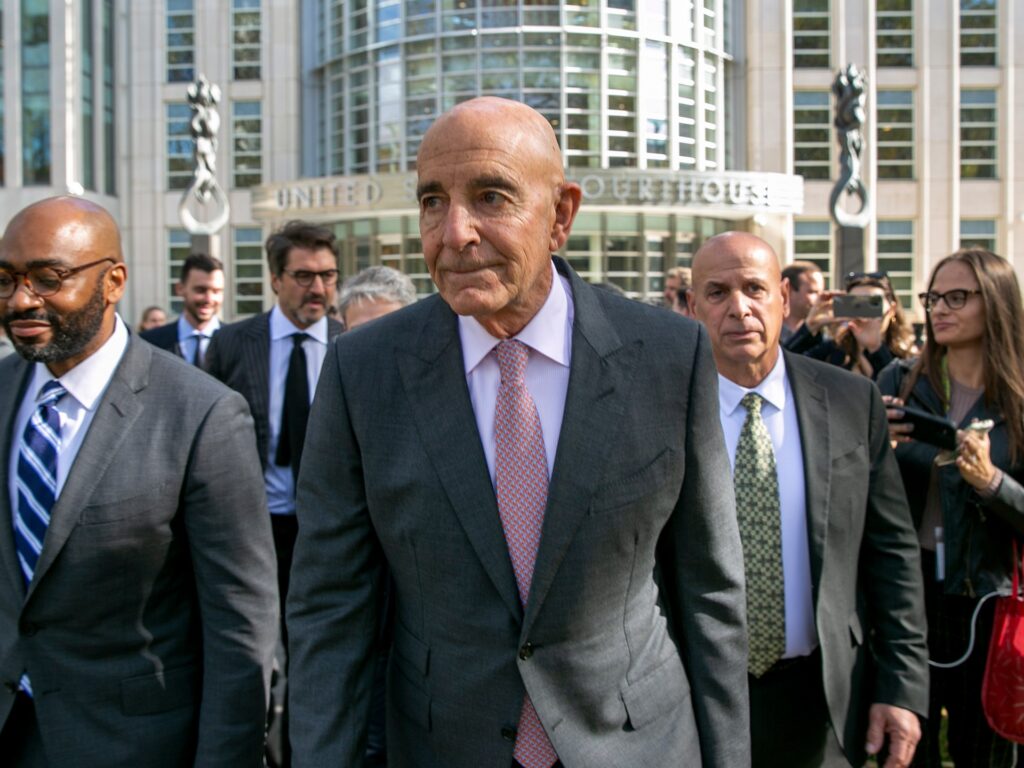
In a significant development in U.S. foreign policy, Tom Barrack, the Trump administration’s envoy to Syria, has announced his decision to step down from his formal post in Syria. Despite relinquishing this official role, Barrack will continue to hold a crucial position in managing U.S. policy related to Syria and Iraq.
Tom Barrack, known for his influential role during the Trump administration, played a pivotal part in shaping the U.S. approach towards the complex geopolitical landscape of Syria. His work involved coordinating with various factions and allies to maintain stability in the region and to counter threats posed by extremist groups.
The decision to step down from the formal Syria envoy post marks a transition in the administration’s diplomatic strategy. However, Barrack’s retention of a significant role in overseeing policy efforts in Syria and Iraq underscores the importance of continuity in U.S. engagement in the Middle East.
Syria remains a deeply challenging theater marked by ongoing conflict, humanitarian crises, and the involvement of multiple international actors. The U.S. has maintained a complex stance in the region, balancing military, diplomatic, and humanitarian interests.
By maintaining Barrack’s involvement, the administration aims to leverage his experience and relationships developed over years of engagement. His role will likely focus on high-level policy coordination, ensuring that U.S. objectives in Syria and Iraq are aligned with broader regional and global security goals.
This shift reflects a broader trend in U.S. foreign policy toward adapting to evolving realities on the ground, including the shifting dynamics among local forces, regional powers, and international stakeholders.
Observers note that Barrack’s exit from the formal envoy position might open avenues for fresh diplomatic approaches while preserving institutional knowledge critical to navigating the complexities of the Syrian and Iraqi theaters.
As global attention remains focused on the Middle East, the U.S. commitment through experienced figures like Barrack highlights the ongoing strategic importance of the region. The continued involvement in policy-making for Syria and Iraq signals sustained efforts to promote stability, counter terrorism, and support allies.
This development comes at a time when the U.S. and its partners face persistent challenges, including addressing the humanitarian situation, combating militant groups, and managing the influence of rival powers within the region.
In summary, while Tom Barrack steps down from his formal envoy role to Syria, his continued influence in shaping U.S. policy in Syria and Iraq ensures that experienced leadership remains at the forefront of U.S. engagement in one of the world’s most volatile regions.