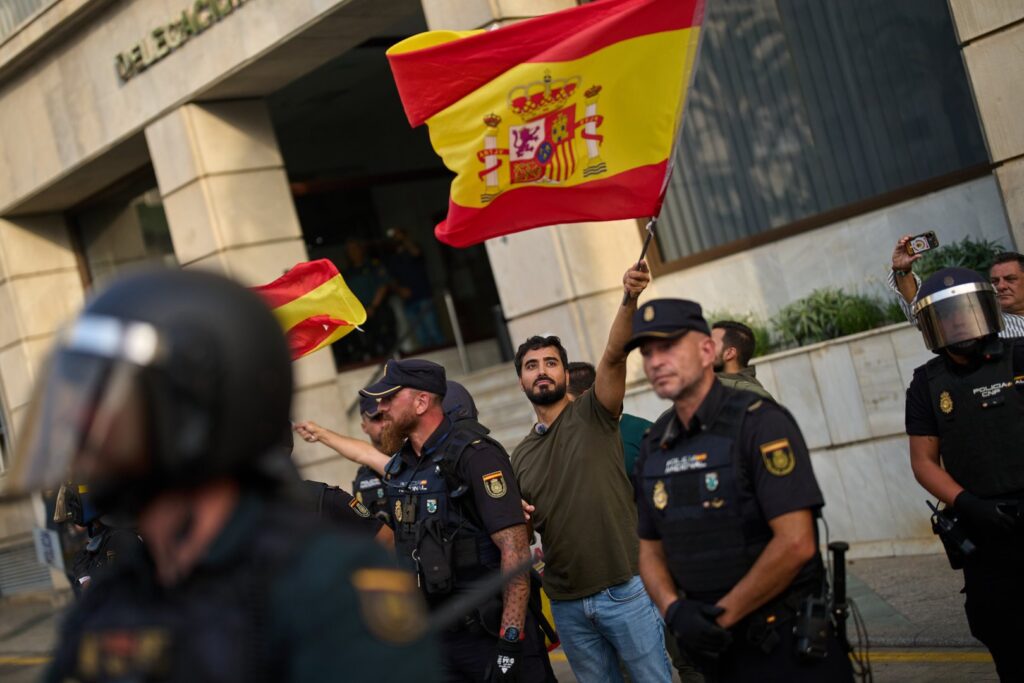
In a powerful display of community solidarity, hundreds of residents in Ceuta, a Spanish enclave on the North African coast, gathered to oppose a planned far-right rally targeted against migrants. The demonstration, which was organized by local anti-fascist groups and supported widely by the diverse population of Ceuta, effectively shut down the far-right event before it could gain momentum.
Ceuta, a small Spanish autonomous city on the northern coast of Africa, bordering Morocco, has long been a focal point of tension regarding migration and border control policies. The enclave frequently witnesses political and social debates related to immigration, given its unique geographical position as a gateway into Europe.
The far-right rally aimed to highlight anti-migrant sentiments, calling for stricter immigration controls and policies perceived as hostile toward newcomers. However, the strong turnout of residents, including families, youth groups, and civil society activists, represented a united front against such divisive rhetoric.
Organizers of the counter-demonstration emphasized values of tolerance, inclusion, and human rights. Many speakers at the event condemned the use of migration as a political tool and called for policies that respect the dignity and rights of all individuals, regardless of their origin.
This community response also reflects broader concerns about the rise of far-right movements across Europe, which often target migrant communities to stoke fear and polarization. By mobilizing quickly and effectively, Ceuta’s residents sent a clear message rejecting hate-filled discourse.
Authorities monitored the events to ensure public safety and prevent clashes between opposing groups. Despite heightened tensions, the crowd maintained peaceful vigilance, and no violent incidents were reported. Many local leaders praised the residents for their peaceful activism and commitment to coexistence.
The shutdown of the far-right rally by ordinary citizens underscores the critical role that community voices can play in shaping social and political outcomes. It showcases how collective action can challenge extremist narratives and promote unity in diverse societies.
Moreover, this episode shines a light on Ceuta’s complex identity as a multicultural crossroads. The residents’ active resistance against far-right agitation highlights their commitment to defending the city’s multicultural fabric. The city continues to grapple with ongoing migration flows, but the residents’ stance affirms a welcoming ethos.
Analysts note that the events in Ceuta may inspire other communities facing similar challenges from far-right groups. Grassroots mobilization and solidarity can be potent tools in combating xenophobia and sustaining peaceful coexistence.
In summary, the people of Ceuta demonstrated resilience and unity by successfully confronting a far-right anti-migrant rally, reflecting broader European societal struggles and the power of community-led resistance against intolerance.