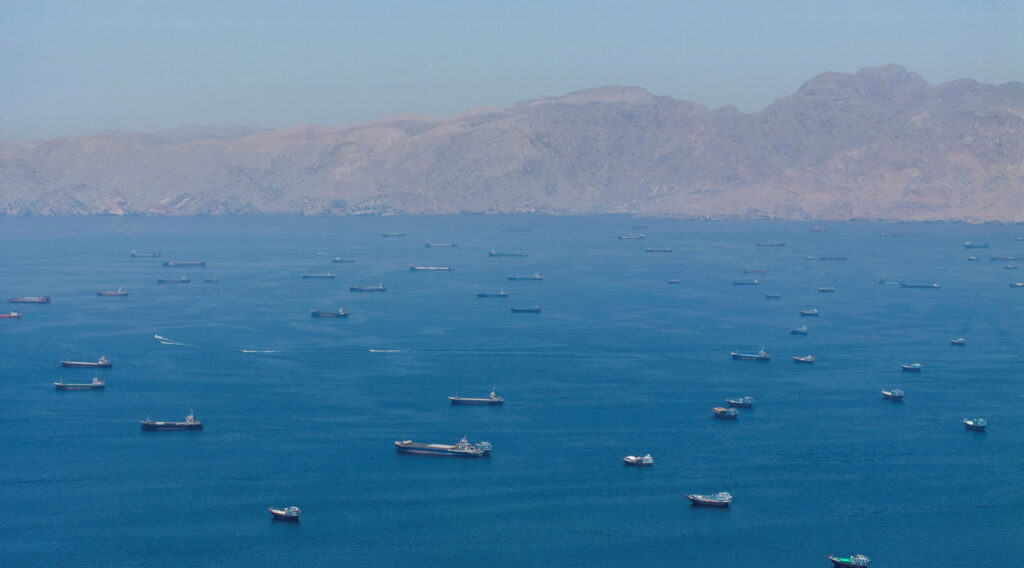
A drone view shows vessels anchored at the Strait of Hormuz, as seen from Musandam, Oman, May 25, 2026. REUTERS/Stringer TPX IMAGES OF THE DAY REFILE - CORRECTING INFORMATION FROM "VESSELS SAILING THROUGH THE STRAIT OF HORMUZ" TO "VESSELS ANCHORED AT THE STRAIT OF HORMUZ".
In a significant escalation in the region, the US military has launched new strikes on southern Iran, primarily targeting Iranian missile sites and mine boats. The US forces have stated that the attacks were carried out in “self defense,” following what they described as provocative actions by Iran. The recent strikes focus on disabling Iran’s capability to deploy missile and naval threats in the strategically crucial southern territories, a region that holds considerable importance for both regional and global security.
According to official US military statements, the operation was a preemptive move to neutralize threats posed by Iran’s military infrastructure. Iranian missile sites targeted in the strikes are believed to be part of Tehran’s ongoing efforts to bolster its offensive and defensive military reach. The US has accused the Iranian military of utilizing mine boats, which are vessels equipped to deploy naval mines that can disrupt maritime traffic, posing a significant danger to commercial and military vessels in the Persian Gulf and surrounding waters.
The US justification for these strikes rests on the premise of defending its forces and interests in the region, amid increasing tensions that have flared over recent weeks. Incidents involving Iranian missile launches and naval provocations have heightened concerns among US allies and the broader international community about the stability of the Gulf region.
The southern region of Iran, bordering the Persian Gulf, is a strategic maritime corridor through which a substantial portion of the world’s oil shipments pass. Control and security of this area are pivotal to maintaining global energy supplies and international maritime freedom.
Prior to the strikes, intelligence reports indicated an increased Iranian deployment of missile-equipped boats and the laying of mines in critical shipping lanes. This activity was seen as a deliberate attempt to exert pressure on maritime navigation and threaten the safety of international waters.
The US military’s strike campaign reportedly involved precision targeting to minimize collateral damage while aiming to significantly degrade Iran’s missile and mine deployment capabilities. Military analysts suggest that this move signals an uncompromising stance by the US to deter further Iranian aggression, particularly concerning the use of naval mines in a region vital for global commerce.
Iran has yet to issue a detailed response to the strikes, but the situation has raised alarm among international observers about the potential for a wider conflict. Regional powers and global stakeholders are calling for restraint and dialogue to prevent escalation.
The recent strikes come amidst a backdrop of persistent diplomatic challenges concerning Iran’s nuclear program, regional proxy conflicts, and ongoing US sanctions. The complexity of these factors contributes to a fragile security environment in the Middle East.
In conclusion, the United States’ recent military strike on southern Iran is a clear demonstration of its commitment to protecting its strategic interests and allies in the region. By targeting missile sites and Iranian mine boats, the US aims to neutralize imminent threats and maintain maritime security in a critical global passageway. The incident underscores the heightened volatility in US-Iran relations and serves as a reminder of the delicate balance of power in the Persian Gulf that demands careful management to avoid further conflict.