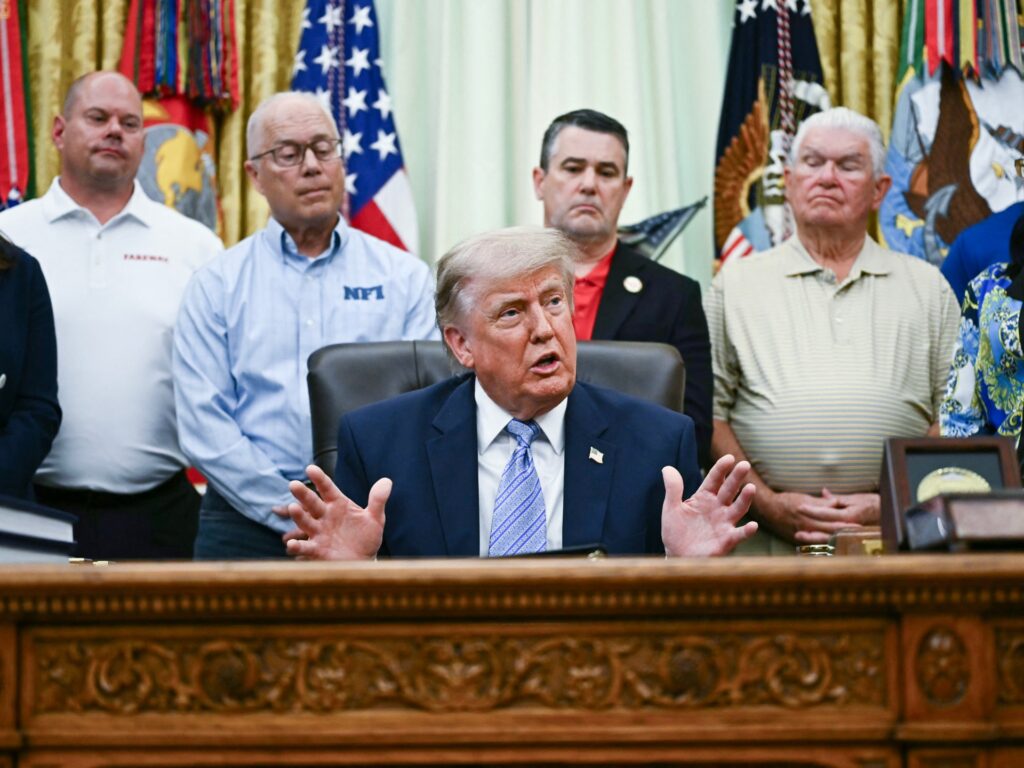
In recent developments surrounding the tense standoff with Iran, former President Donald Trump’s approach has oscillated significantly between diplomatic engagement and issuing stern threats. This dynamic strategy has sparked diverse interpretations among observers and supporters alike.
Supporters of Trump laud this unpredictability as a core strength in deal-making, suggesting that his willingness to pivot between conciliation and coercion keeps adversaries off balance. This flexibility, they argue, allows for adaptation to rapidly changing geopolitical circumstances and pressures Iran to negotiate seriously.
On the other hand, critics and some foreign policy analysts see this vacillation as symptomatic of a more profound strategic dilemma. The challenge lies in balancing hardline posturing with the need for genuine dialogue to avoid escalation into conflict. Trump’s alternating tones, they say, may undermine coherence in U.S. foreign policy and send mixed signals to allies and adversaries alike.
During his tenure, Trump adopted a notably confrontational stance toward Iran, withdrawing from the Joint Comprehensive Plan of Action (JCPOA) and imposing stringent sanctions. This pressure campaign aimed to curb Iran’s nuclear ambitions but also heightened tensions immensely.
Now, as tensions remain high, Trump’s recent rhetoric illustrates a continued strategy of keeping options open — oscillating between threatening military or economic consequences and suggesting openness to new negotiations. This dual approach aims to maximize leverage while avoiding outright war.
Supporters emphasize that such a stance reflects realpolitik; flexible diplomacy combined with credible threats can be more effective than a rigid policy. They point to instances where Trump’s unpredictability kept adversaries uncertain, potentially creating openings for negotiation.
However, many experts caution that this approach risks instability. Mixed messages can erode trust, complicate coalition-building with allies, and provoke unintended escalations. Strategic consistency is often viewed as critical in managing long-term international conflicts.
In sum, Trump’s Iran policy now appears as a balancing act — one where diplomacy and threats are both tools employed to navigate an extraordinarily complex geopolitical landscape. Whether this strategy ultimately yields success or further entanglement remains to be seen, but it unequivocally reflects the challenges of confronting Iran’s regional ambitions in an unpredictable era.