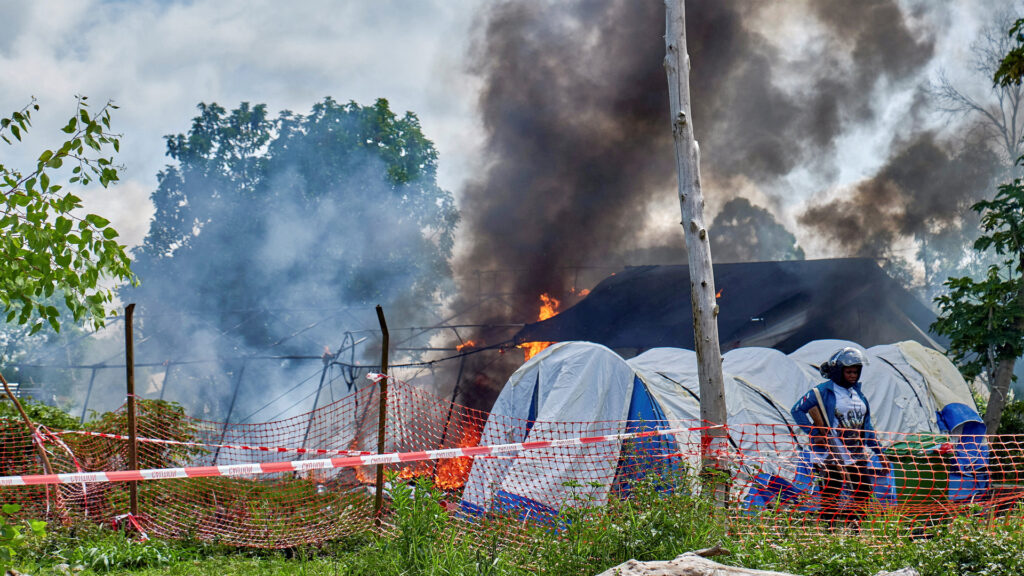
In a troubling development in the Democratic Republic of Congo (DRC), a hospital dedicated to treating Ebola patients was set on fire by protesters. This incident has added a new layer of complexity to the ongoing fight against the Ebola outbreak in the region.
The hospital, which played a critical role in containing the disease and providing care to those infected, was destroyed during a wave of unrest. Protesters, expressing frustration and fear, resorted to arson, creating a significant setback for health authorities and medical workers.
Officials have been working tirelessly to manage and contain the Ebola outbreak, which has seen a rise in cases in recent weeks. The destruction of the treatment center hampers efforts to provide timely medical intervention, isolation, and treatment necessary to prevent the virus’s spread.
The incident highlights the challenges faced by the DRC in controlling the outbreak amid public mistrust and misinformation about the disease and the treatment facilities. Healthcare workers have reported difficulties in engaging local communities, who sometimes view the response efforts with suspicion.
The Ebola virus is highly contagious and can cause severe hemorrhagic fever, often leading to death if untreated. Swift medical response and community cooperation are crucial to controlling its spread. The loss of the hospital not only reduces treatment capacity but also potentially discourages patients from seeking help.
Authorities have condemned the attack and called for calm, urging citizens to support the containment measures. International health organizations are also stepping up their involvement, providing additional resources and expertise to help curb the epidemic.
Efforts are now focused on rebuilding the destroyed facility or establishing alternative treatment centers to ensure continued care for patients. Meanwhile, public education campaigns aim to address fears and misinformation, seeking to build trust between communities and health workers.
This tragic event underscores the urgent need for coordinated responses that combine medical intervention with community engagement to effectively tackle Ebola outbreaks. The situation remains critical, with health officials warning of the potential for further spread if control measures are not strengthened.
As the DRC navigates this dual crisis of disease and social unrest, the international community watches closely, offering support in hopes of ending this deadly outbreak.