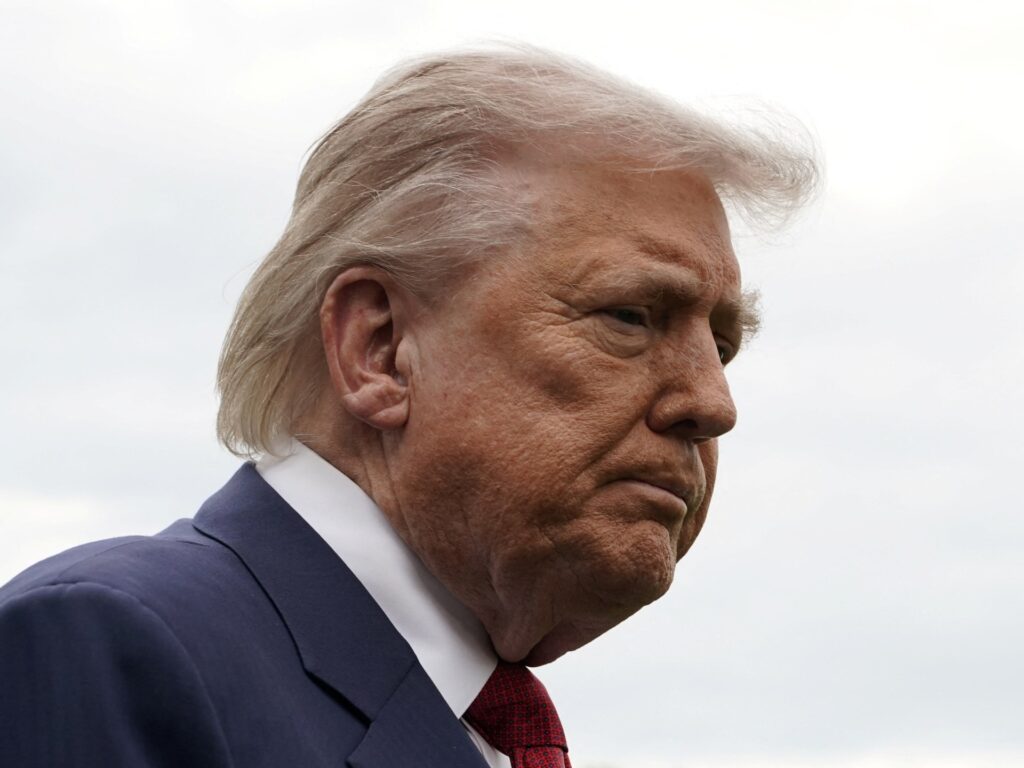
In a firm and unambiguous statement, President Donald Trump declared that the United States would not allow Iran to acquire enriched uranium, a critical material for nuclear weapons development. Trump emphasized that the U.S. has the nuclear materials within Iran closely monitored, asserting that any attempt to approach these materials would be met with decisive military action.
During recent remarks, Trump underscored Washington’s commitment to preventing Iran from advancing its nuclear program unchecked. He stated, “We have it surveilled, and if anyone gets anywhere near it, we will blow them up.”
This strong rhetoric highlights the ongoing tensions between the two nations, fueled by concerns over Iran’s nuclear ambitions and the potential threat they pose to regional stability and global security. The surveillance mentioned refers to the United States’ intelligence and reconnaissance efforts aimed at tracking Iran’s nuclear activities and ensuring compliance with international agreements.
Experts note that enriched uranium is a pivotal element in constructing nuclear weapons, making Iran’s possession and potential enrichment activities a focal point in international diplomacy. The Trump administration’s hardline stance signals a readiness to utilize military force if necessary to prevent Iran from achieving critical nuclear capabilities.
International observers have expressed concern over the escalating rhetoric, warning that such statements could increase the risk of confrontation in an already volatile region. Nonetheless, the administration maintains that preventing nuclear proliferation is paramount to maintaining peace and security.
The statement also serves as a message to other countries and actors potentially involved in Iran’s nuclear program, signaling that the U.S. will not tolerate any breach of its security red lines.
In summary, President Trump’s announcement reiterates the U.S. commitment to monitoring and controlling nuclear materials in Iran and provides a stark warning of the consequences of any attempts to progress toward weaponization. This development is likely to influence ongoing diplomatic negotiations and shape the regional security landscape in the foreseeable future.