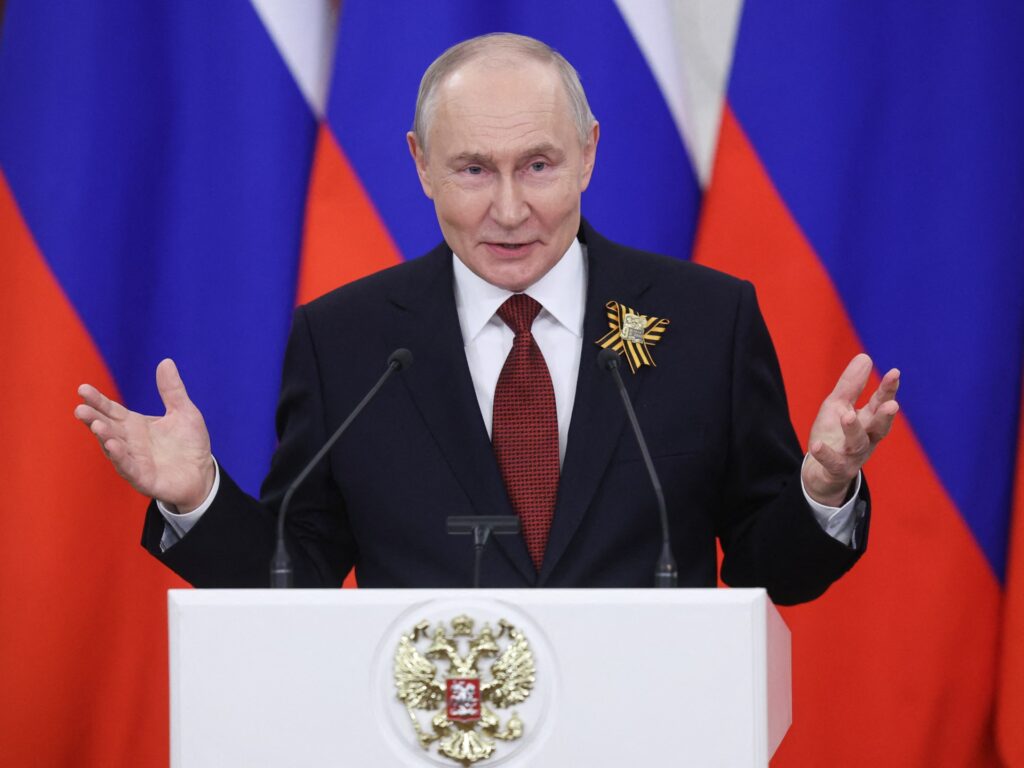
In a significant development regarding the ongoing conflict between Russia and Ukraine, Russian President Vladimir Putin has indicated that the war may be approaching its conclusion. Speaking publicly, Putin suggested that the hostilities, which have resulted in immense human and economic losses, are potentially ‘coming to an end.’ This statement marks a rare moment of optimism amid a protracted and brutal conflict that has drawn global attention and condemnation.
Putin further expressed his willingness to engage in dialogue with Ukrainian President Volodymyr Zelenskyy, proposing the prospect of a meeting in a third country. This offer, contingent on reaching a long-term peace agreement, signals a potential thaw in diplomatic relations and a pathway to negotiate terms that could bring lasting peace to the region.
The war, which began in 2014 and escalated dramatically with the full-scale invasion in early 2022, has been marked by fierce fighting, significant casualties, widespread displacement of civilians, and international sanctions against Russia. Both sides have entrenched positions, but the recent openness to negotiations could indicate a shift towards resolution.
International observers and diplomats have long urged for peaceful negotiations to end the conflict, emphasizing the devastating impact on both nations and regional stability. Putin’s statement aligns with these calls, suggesting that Russia may be seeking a way to de-escalate tensions and find a diplomatic solution.
The proposition for a meeting in a neutral, third country is notable as it reflects a mutual need for discreet, facilitative environments to discuss complex issues such as territorial disputes, security guarantees, and economic reparations. The choice of venue and the willingness of both leaders to engage in such talks will be closely watched by the international community.
Zelenskyy, who has steadfastly defended Ukraine’s sovereignty and territorial integrity, has previously expressed openness to dialogue under conditions that respect Ukraine’s independence. How he responds to Putin’s recent overture remains to be seen, but the potential for peace negotiations offers a glimmer of hope amidst years of conflict.
The humanitarian crisis resulting from the war continues to be severe, with millions displaced internally and as refugees across Europe. Infrastructure destruction has crippled many Ukrainian cities, and ongoing military engagements have caused wide-scale suffering.
Global powers have varied responses to the conflict; Western nations have largely supported Ukraine with military aid and sanctions against Russia, while others have called for restraint and diplomacy. Putin’s announcement may influence international dynamics, possibly opening doors for renewed peace efforts led by the United Nations and other neutral bodies.
As the situation evolves, the prospect of a peace deal and high-level talks could mark a turning point. The international community remains cautiously optimistic but aware of the complexities involved in resolving a conflict of this scale.
In conclusion, President Putin’s suggestion that the war in Ukraine is ‘coming to an end’ and his readiness to meet with Zelenskyy underlines a potential shift towards dialogue. While many challenges remain, this development could pave the way for diplomatic engagement and ultimately, peace in the region.