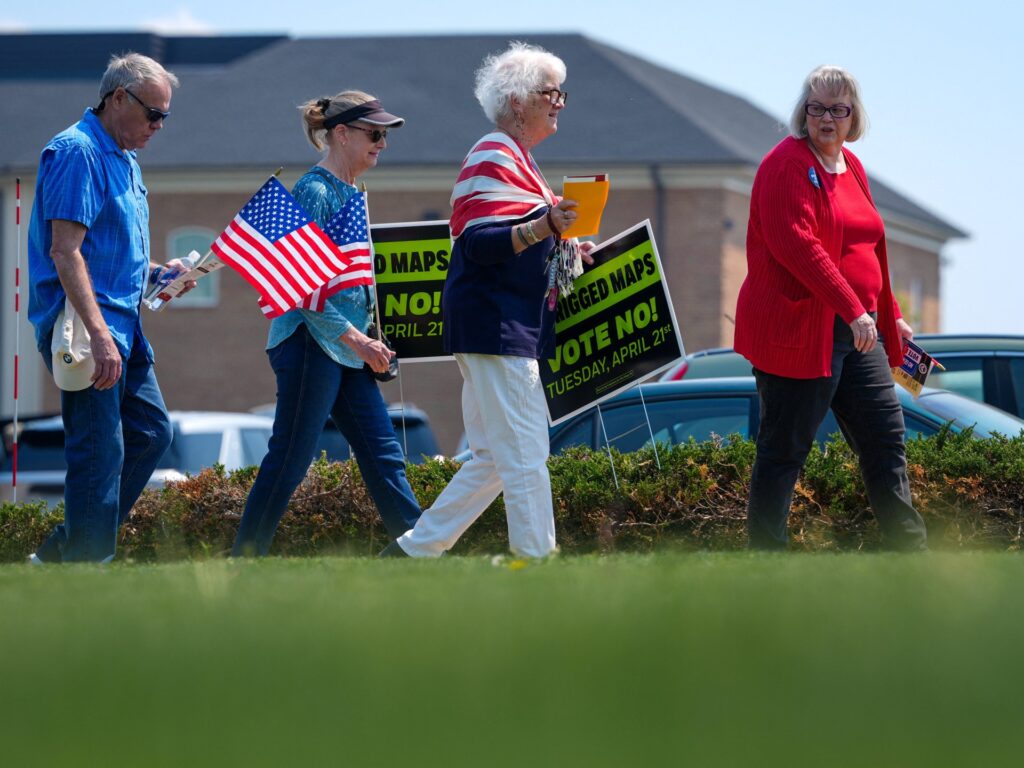
In a decisive move ahead of the upcoming midterm elections, the Virginia Supreme Court has struck down the Democrats’ redistricting plan, delivering a significant setback for the party and a critical victory for Republicans. The court’s decision effectively blocks the Democratic-led legislature’s attempt to redraw electoral boundaries, a process that has been a contentious issue in the state.
Redistricting, the redrawing of electoral district boundaries, typically occurs every ten years after the census to reflect population changes. However, it is often a politically charged process, with parties seeking to create maps favorable to their electoral prospects—a practice known as gerrymandering.
The Democrats, who have controlled the Virginia General Assembly and the governorship, crafted a redistricting proposal they argued was fair and balanced, aiming to reflect the state’s demographic shifts. However, Republicans challenged the plan in court, alleging that the districts were drawn to disproportionately favor Democrats, undermining fair representation.
The Virginia Supreme Court, in a ruling delivered recently, agreed with the Republican arguments, concluding that the Democratic redistricting plan violated constitutional provisions. The court emphasized the importance of fair district boundaries that ensure equal representation for all Virginians, regardless of political affiliation.
This ruling has profound implications for Virginia’s political landscape. With the redistricting plan invalidated, the state must revert to previous electoral maps or develop a new plan that garners bipartisan support. Republicans see this decision as a major win that could help them gain or maintain seats in future elections.
Democrats, on the other hand, have expressed disappointment, labeling the ruling a setback for efforts to create more diverse and representative districts. They argue that the decision hampers progress toward fair representation for minority communities and urban populations, which the proposed plan aimed to empower.
Political analysts note that this court decision adds uncertainty and complexity to the electoral process in Virginia. It underscores the ongoing national debate over redistricting reforms and the judicial system’s role in adjudicating politically sensitive matters.
The timing is crucial: with midterm elections approaching, the ruling means that candidates and parties must quickly adapt their strategies. Campaigns will need clarity on district boundaries to effectively mobilize voters and allocate resources.
Republican leaders have hailed the decision, asserting it restores fairness to Virginia’s elections. They contend that previous attempts at redistricting were partisan and detrimental to the democratic process.
Democrats are expected to explore legal options, including potential appeals or legislative actions to propose alternative maps that could withstand judicial scrutiny.
This development in Virginia reflects broader national tensions over redistricting, where courts frequently intervene to resolve disputes that have significant political consequences. The case also highlights the ongoing battle to achieve electoral maps that balance political interests with the principles of equity and representation.
As Virginia navigates this redistricting challenge, voters and political stakeholders alike await further developments, recognizing the high stakes involved in shaping the state’s electoral future.
In summary, the Virginia Supreme Court’s decision to strike down the Democrats’ redistricting plan marks a pivotal moment in state politics. It underscores the contentious nature of redistricting and the powerful role of courts in determining the boundaries that will influence elections for years to come.