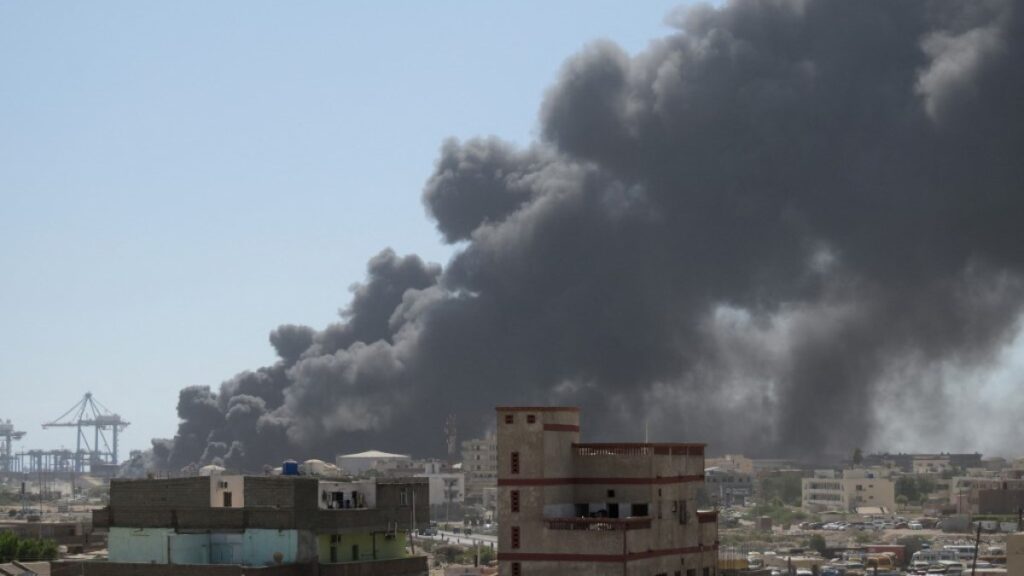
Sudan has recently accused Ethiopia and the United Arab Emirates (UAE) of being behind a series of drone attacks on its territory. According to Sudanese officials, there is evidence suggesting that four separate drone strikes were launched from Ethiopian soil. These strikes, they claim, involved drones supplied by the UAE.
The allegations come amid escalating tensions in the region, where geopolitical rivalries and conflicts have been intensifying. Sudan’s government has stated that these drone attacks have caused significant security concerns and threatened national stability.
Details about the specific targets of the drone strikes have not been fully disclosed by Sudanese authorities. However, the accusations indicate a serious level of involvement by Ethiopia, raising questions about the nature of relations between the two countries.
The UAE’s role is brought into sharp focus with Sudan’s claim that the drones used were supplied by the Gulf nation. This allegation adds another layer to the complex web of regional alliances and conflicts. The UAE has previously been involved in various military and diplomatic activities across the Horn of Africa and the Middle East, making these accusations particularly significant.
Ethiopia has responded to the accusations with denials, questioning the validity of Sudan’s evidence and emphasizing their commitment to peaceful and cooperative relations with neighboring countries. Similarly, the UAE has not officially commented on Sudan’s claims.
The situation is further complicated by ongoing conflicts within Ethiopia itself, particularly in the Tigray region, which has seen extensive violence and humanitarian crises over recent years. These internal conflicts have had regional spillover effects, impacting Sudan-Ethiopia relations.
Experts suggest that Sudan’s allegations may be part of a broader strategic attempt to draw international attention to its security challenges and to put pressure on Ethiopia and the UAE. Meanwhile, the use of drones in regional conflicts highlights the growing sophistication of military tactics and the increasing involvement of external actors.
International observers have called for an independent investigation to verify Sudan’s claims and to assess the situation impartially. Such an investigation could help de-escalate tensions and promote dialogue among the involved parties.
The broader implications of these accusations are significant for the Horn of Africa’s stability. The region is already fraught with political instability, economic challenges, and humanitarian issues. Allegations of foreign involvement in internal conflicts have the potential to exacerbate existing tensions, making diplomatic efforts even more critical.
Regional organizations and global powers have urged restraint and dialogue to prevent further escalation. The African Union and the United Nations have both emphasized the importance of respecting sovereignty, resolving disputes peacefully, and protecting civilian populations from harm.
As the situation develops, the international community is watching closely to see how Ethiopia, Sudan, and the UAE will respond to these serious accusations. The coming days and weeks will be crucial in determining whether diplomatic channels can prevail or if the region faces further escalations.
In summary, Sudan’s accusation that Ethiopia and the UAE are behind recent drone attacks marks a significant moment in regional relations. It underscores the complex interplay of national interests, regional rivalries, and international involvement in the Horn of Africa. The outcome will likely have lasting effects on peace, security, and diplomacy in the area.