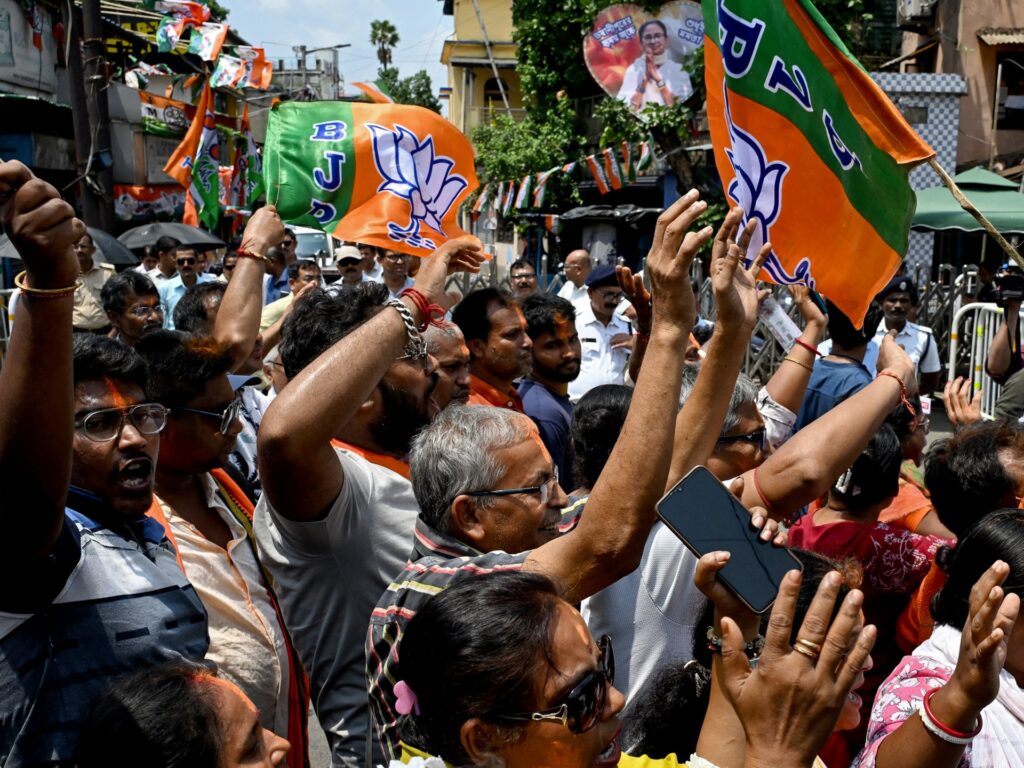
The Bharatiya Janata Party (BJP), led by Prime Minister Narendra Modi, is on track for significant victories in the ongoing state elections in India. With its lead established in two out of four crucial states, the party’s strong performance is anticipated to profoundly weaken opposition forces. These results are being closely watched as they not only reflect the current political landscape but also signal potential shifts in power dynamics ahead of the next general elections.
The BJP’s ascendancy in these state elections is credited to a mixture of strategic campaigning, strong leadership, and a focus on development agendas that resonate with voters. The party’s ability to capitalize on public sentiment and deliver on improvement promises in areas such as infrastructure, healthcare, and economic growth has further solidified its popularity.
Opposition parties, on the other hand, have struggled to mount a cohesive challenge, hampered by internal divisions and a lack of a unified vision. The BJP’s growing dominance is likely to lead to a significant recalibration of political forces within the country, raising questions about the future electoral viability of opposition alliances.
In addition to the political implications, these state elections serve as a barometer of public opinion on the BJP government’s performance at both the state and national levels. Success in these regions could reinforce Modi’s mandate and provide momentum for his party’s policies.
As votes continue to be counted and results finalized, the BJP’s projected wins underscore their entrenched position in Indian politics. Analysts predict that these outcomes will have far-reaching consequences, influencing policy directions, governance approaches, and the overall political environment in India for years to come.