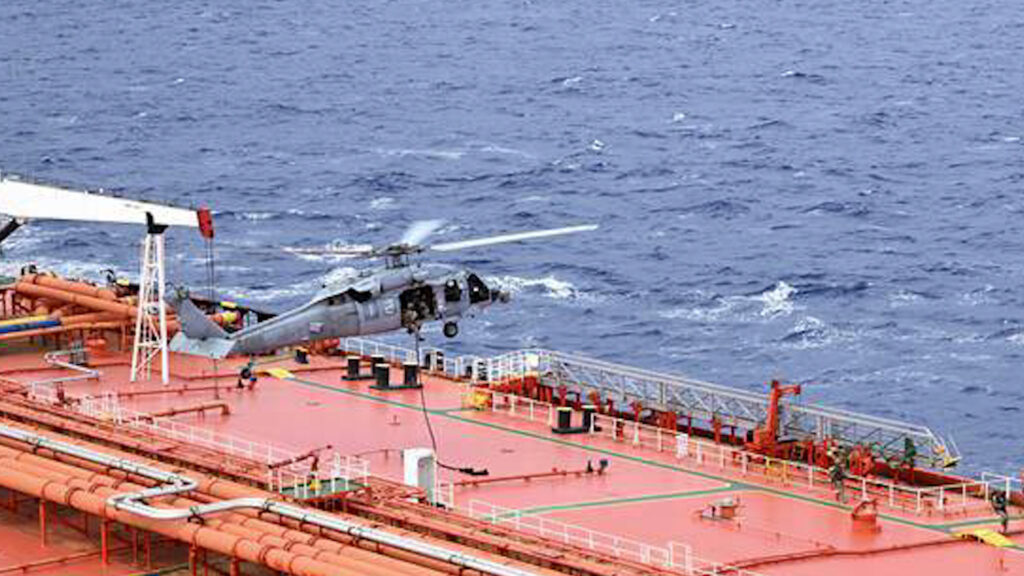
In a significant development highlighting ongoing geopolitical tensions in the Asia Pacific region, the United States Department of War has released a video showing US forces boarding a tanker that has been under sanctions. The tanker in question is reportedly involved in activities that violate international sanctions, prompting decisive action from US military personnel.
The released footage provides a rare glimpse into a high-stakes operation where US forces, in coordination with relevant maritime authorities, intercepted and boarded the tanker to enforce compliance with international law. While details about the specific sanctions and the nature of the tanker’s activities remain limited, the operation underscores the US commitment to uphold maritime security and sanction regimes in the region.
The Asia Pacific is a strategically vital area for global trade and geopolitical influence, often witnessing complex interactions among major powers. The US has been particularly vigilant in monitoring maritime traffic to prevent the transfer of illicit goods and enforce sanctions related to various international conflicts and disputes.
This operation is part of broader efforts to ensure that sanctioned entities do not exploit maritime routes to circumvent restrictions. By boarding the tanker, US forces demonstrate their readiness to act decisively to uphold international norms and security in the region.
Experts suggest that such actions serve both to deter illicit maritime activities and to send a clear message to other entities potentially involved in sanction violations. The US Department of War’s decision to release the video publicly may also be aimed at increasing transparency and showcasing enforcement capabilities.
While the immediate consequences of this boarding are yet to unfold, the incident is expected to further strain relations between the US and parties linked to the sanctioned tanker. It highlights the persistent challenges in maintaining security and order in a region marked by complex diplomacy and competing interests.
The US military has previously conducted similar operations in the Asia Pacific, targeting vessels suspected of carrying prohibited materials such as weapons embargoed under UN sanctions or goods restricted due to ongoing conflicts. The success of these missions relies heavily on intelligence gathering, precise execution, and international cooperation.
With the Asia Pacific continuing to be a focal point for strategic competition, actions like these underscore the importance of maritime domain awareness and the need for rigorous enforcement of international sanctions.
In conclusion, the video released by the Department of War not only documents a critical law enforcement action but also reflects the broader geopolitical dynamics at play. The US remains vigilant in its efforts to monitor and control sanctioned activities in key maritime regions, asserting its role in maintaining global security and the rule of law on the seas.