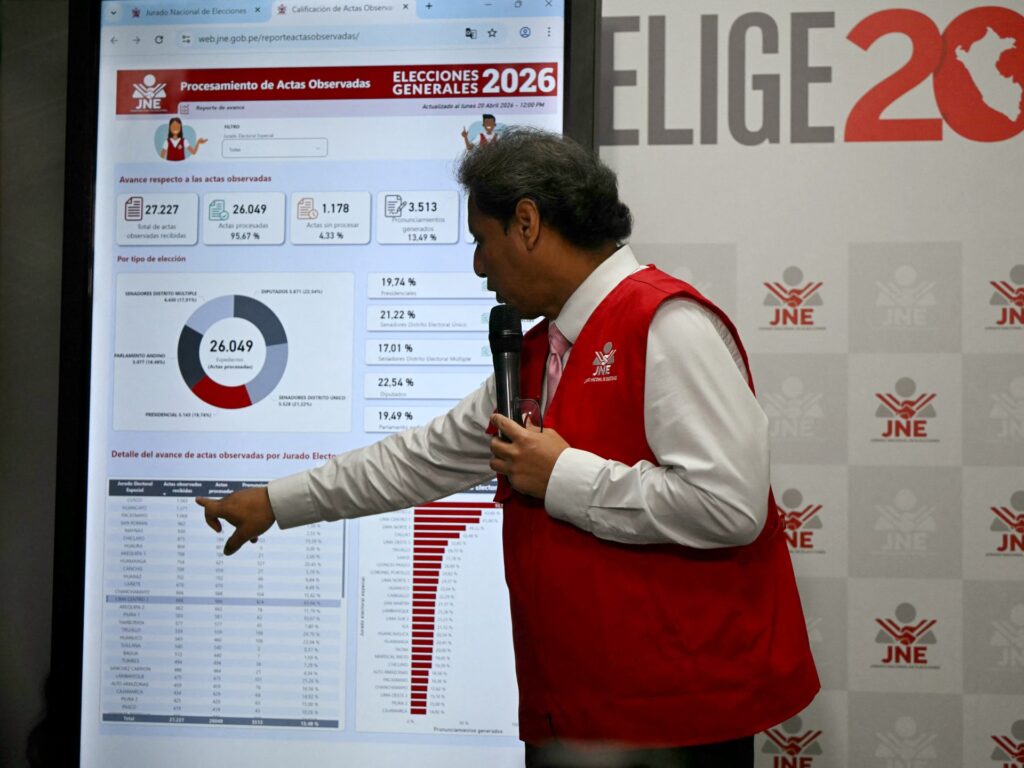
In the aftermath of Peru’s recent election, the country’s election chief has stepped down, a decision driven by widespread frustration over the protracted process of vote counting. The resignation highlights growing dissatisfaction with the electoral authorities, exacerbated by logistical challenges on election day.
Multiple issues, including significant delays in ballot delivery, have marred the electoral process. These delays not only slowed the counting but also sparked concerns about the efficiency and transparency of the election management.
Observers and voters alike expressed disappointment as initial results took longer than expected to materialize. The prolonged wait fostered uncertainty and eroded confidence in the electoral administration’s capabilities.
Election officials faced criticism over the handling of ballots, with some alleging mismanagement and lack of preparedness. The chief’s resignation is seen as a response to these mounting pressures and an acknowledgment of the need for reform.
Experts suggest that improving the logistics of ballot distribution and counting, investing in technology, and enhancing communication with the public are essential steps to restore trust.
The political environment in Peru remains tense, with various factions scrutinizing the election’s legitimacy. Transparent and timely processing of votes is critical to maintaining democratic stability.
This development signals a moment of reckoning for Peru’s electoral system, emphasizing the necessity of infrastructure and procedural upgrades to prevent similar issues in future elections.
Despite the challenges, the democratic process continues, with stakeholders calling for accountability and measures to ensure smoother elections ahead.
The resignation of the election chief underscores the importance of leadership responsibility in electoral matters and the impact of operational efficiency on public trust.
As Peru prepares for upcoming political events, attention now turns to how electoral institutions will address existing shortcomings and rebuild voter confidence.
The international community, too, watches closely, recognizing the significance of credible elections for regional stability.
In conclusion, Peru’s electoral process faces critical challenges highlighted by the recent resignation of its election chief amid vote count delays and missteps. Addressing these issues is vital for the health of its democracy and the assurance of fair electoral outcomes in the future.