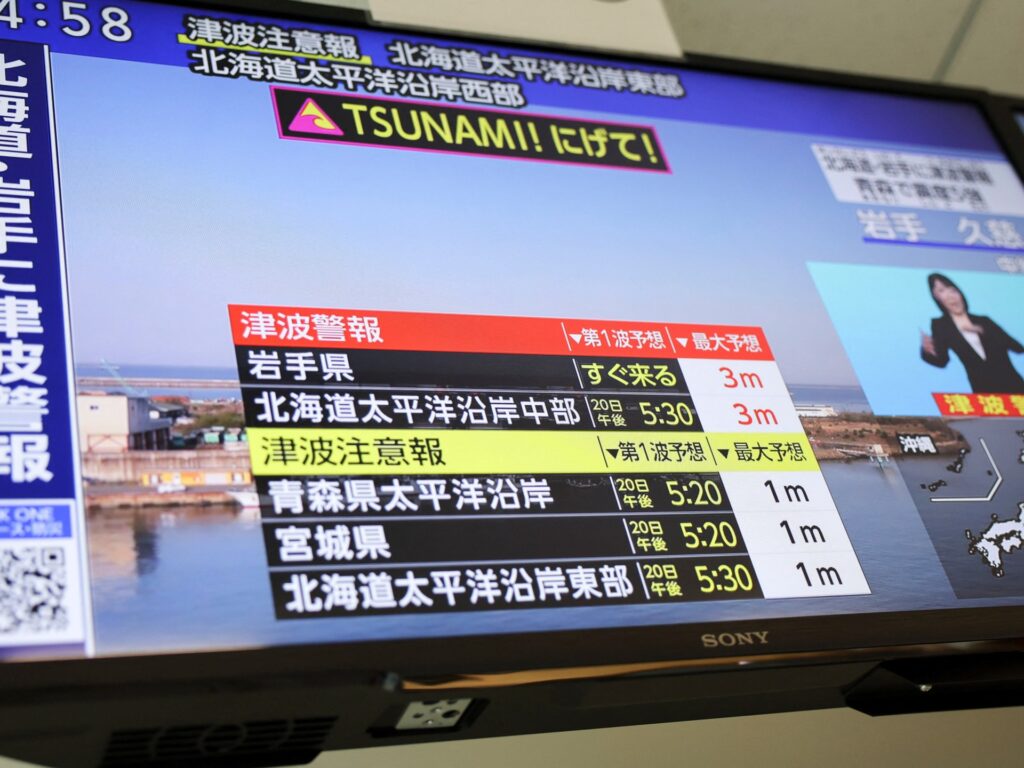
Japan experienced a significant seismic event, a magnitude 7.7 earthquake that shook parts of the country. Following the quake, authorities initially issued a tsunami alert, prompting coastal areas to prepare for potential impacts. However, this alert was later lifted, allowing residents and authorities to ease immediate concerns regarding tsunami risks.
Prime Minister Sanae Takaichi responded swiftly to the earthquake by announcing the establishment of a government crisis management team. This team is tasked with coordinating emergency responses, assessing the immediate situation, and ensuring safety measures are implemented across affected regions.
The earthquake, which is considered strong, tested the resilience of Japan’s disaster readiness protocols. The government’s quick action to form the crisis management team highlights its commitment to public safety and effective disaster response.
In the immediate aftermath, emergency services were mobilized to survey damage, assist affected populations, and provide necessary aid. While the tsunami threat was nullified, the potential impacts of the earthquake on infrastructure, buildings, and communities are still being evaluated.
Japan’s location along the Pacific Ring of Fire makes it highly susceptible to frequent seismic activity, and this latest event underscores the importance of ongoing vigilance and preparedness measures.
Officials have urged citizens to stay informed through official channels, maintain emergency kits, and be ready to follow any further instructions should the situation change.
The government continues to monitor seismic activity closely and is prepared to adapt its response as new information becomes available. The lifting of the tsunami alert represents a positive development, but caution remains a priority as aftershocks are still possible.
In summary, while the magnitude 7.7 earthquake caused significant concern, the effective management by Japan’s government, under Prime Minister Sanae Takaichi’s leadership, has helped mitigate additional risks such as tsunamis. Ongoing efforts aim to support affected communities and restore normalcy as quickly and safely as possible.