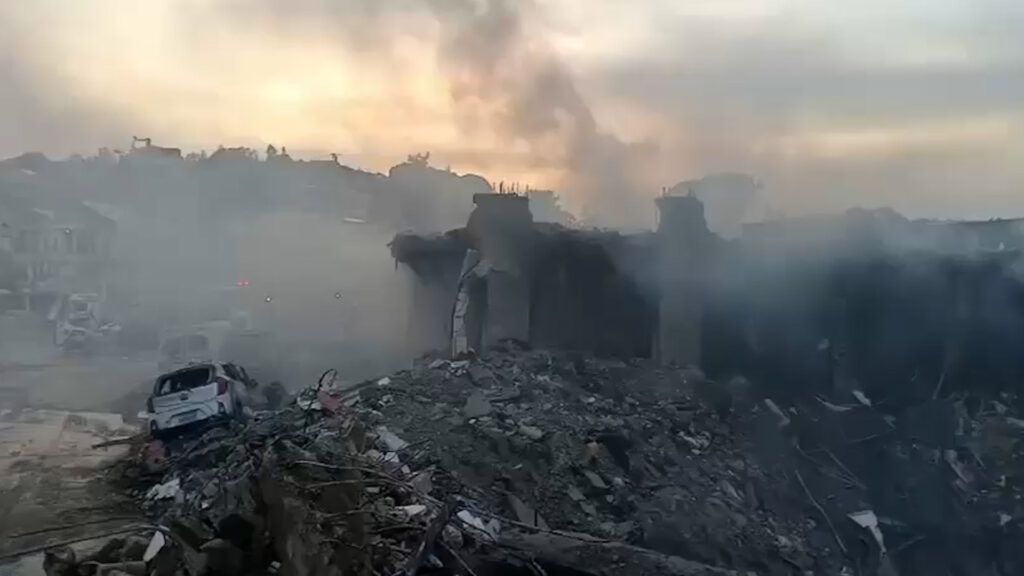
In a recent escalation of tensions in the Middle East, Israeli airstrikes have targeted areas around a hospital in southern Lebanon, resulting in the destruction of several buildings and emergency vehicles. The air attack occurred near a medical facility that serves as a critical center for emergency care in the region. The Israeli military conducted the strikes claiming strategic reasons related to security concerns, though the attack has raised significant alarm due to the proximity to vital healthcare infrastructure.
Witnesses in the area reported that the airstrikes caused extensive damage to the surrounding neighborhood, including damaged roads and the collapse of nearby buildings. Several emergency vehicles that were stationed around the hospital were also destroyed or severely damaged, complicating efforts to provide urgent medical care to those affected by the conflict.
Local authorities have condemned the attack, emphasizing the threat posed to civilian lives and critical health services. The destruction of emergency vehicles hampers rescue and relief operations, exacerbating the humanitarian situation in the region. The hospital itself reportedly remains operational but is under strain due to increased patient influx and compromised resources.
The international community expressed concern over the incident, calling for restraint and the protection of medical facilities in conflict zones according to international law. Humanitarian organizations have alluded to the urgent need for safe corridors to ensure the delivery of medical supplies and the evacuation of critically injured patients.
This incident marks a continuation of hostilities between Israel and groups operating in southern Lebanon, with periodic flare-ups impacting civilian areas. The attack near the hospital underscores the risks faced by non-combatants and the growing challenges in maintaining neutrality of healthcare services amid ongoing conflict.
Efforts to mediate a ceasefire and reduce tensions are underway, but the fragile security situation in southern Lebanon remains precarious. The affected communities have appealed for humanitarian aid and increased protection, highlighting the severe disruption caused by the recent airstrikes.
Analysts warn that the destruction of healthcare infrastructure can have long-term repercussions on public health, potentially leading to increased mortality and morbidity rates beyond the immediate conflict casualties. The attack draws attention to the broader implications of military actions on civilian life and the imperative for all parties to uphold international humanitarian standards.
As the situation develops, further updates are anticipated from both regional authorities and international observers monitoring the conflict. The hopes for a peaceful resolution remain critical to preventing further deterioration of stability and safeguarding essential services for the people of southern Lebanon.