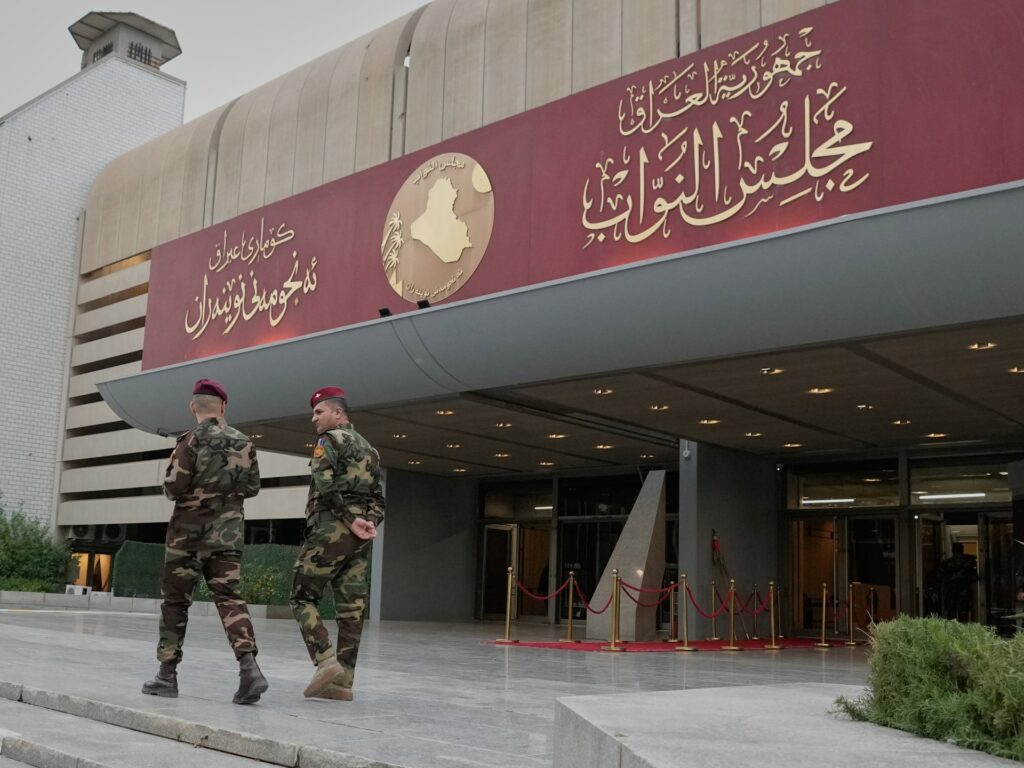
In a significant development in Iraq’s political landscape, the Iraqi parliament has elected Nizar Amedi, a Kurdish politician, as the country’s new president. Amedi secured a decisive victory by receiving 227 votes, bringing an end to a prolonged period of political deadlock that lasted for five months.
The election of Nizar Amedi marks a pivotal moment in Iraqi politics as his presidency is expected to usher in a new era of stability and governance. Amedi, who represents the Kurdish political faction, was chosen amidst intense political negotiations and efforts to resolve the deadlock that had paralyzed the country’s central government.
Upon his election, President Amedi pledged a forward-looking agenda centered on the principle “Iraq First.” This declaration underscores his commitment to prioritize national interests, unity, and the welfare of all Iraqi citizens over sectarian or regional considerations. His leadership is seen as critical in bringing cohesive governance and addressing longstanding challenges facing Iraq, including security issues, economic reforms, and political inclusiveness.
The five-month deadlock had been a source of concern both domestically and internationally. Iraq, a country rich in oil resources and strategic geopolitical importance, had been grappling with political fragmentation since the last parliamentary elections. The inability to agree on key leadership positions had stalled important government functions and reforms.
Nizar Amedi’s election is expected to help overcome these hurdles. His Kurdish background highlights the ongoing efforts to maintain ethnic and sectarian balance within Iraq’s federal government. The Kurdish political groups have played a pivotal role in Iraq’s power-sharing system, typically holding the presidency role to reflect the country’s diverse makeup.
Political analysts view Amedi’s presidency as an opportunity for Iraq to strengthen its democratic institutions and improve governance mechanisms. With his emphasis on national unity, there is hope for more effective cooperation among Iraq’s diverse ethnic and religious communities.
Furthermore, the election has been welcomed by international stakeholders who have advocated for a stable and inclusive Iraqi government. Stability in Iraq is seen as crucial not only for regional security but also for the global energy market and counterterrorism efforts.
President Amedi now faces the critical task of translating his “Iraq First” vision into practical policies. This includes addressing economic challenges such as unemployment, inflation, and dependence on oil exports. Social reforms, infrastructure development, and anti-corruption measures are also high on the agenda.
As Iraq moves forward with a newly elected president, the political deadlock that once threatened the nation’s progress appears to be resolved. The hope is that under Nizar Amedi’s leadership, the country will experience a new chapter of political stability, economic growth, and national reconciliation that benefits all Iraqis.