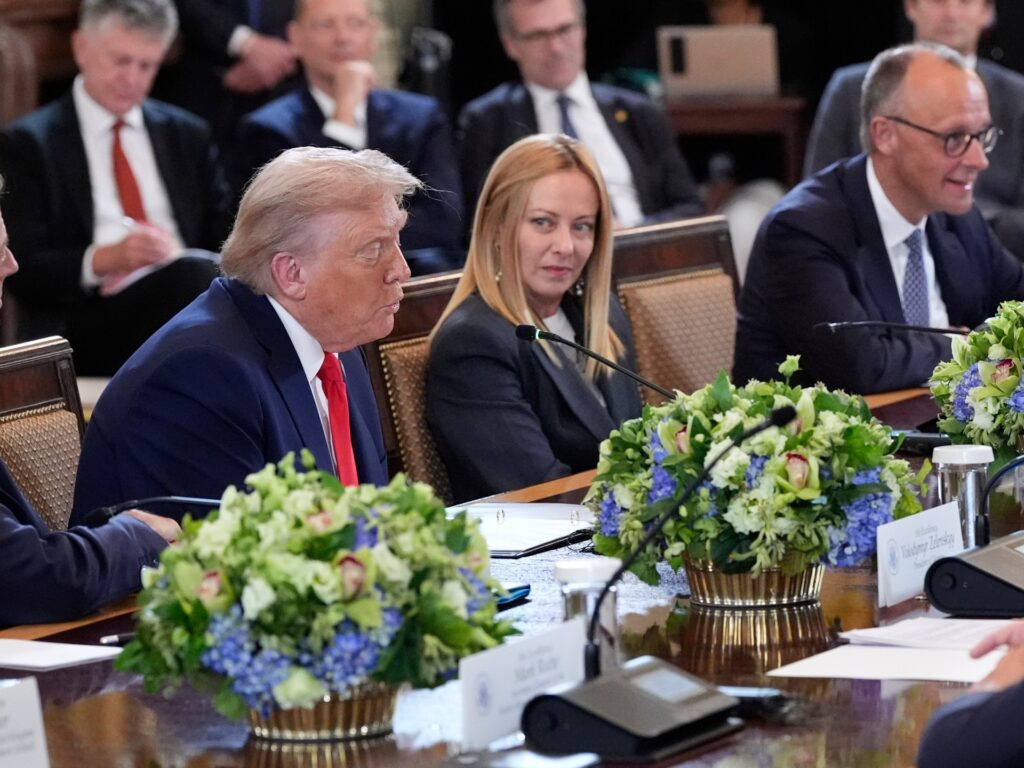
Italian Prime Minister Giorgia Meloni, once seen as a strong ally of former U.S. President Donald Trump, is now deliberately distancing herself from him as she navigates a complex political landscape ahead of crucial elections. This strategic move highlights the shifting dynamics and potential liabilities associated with close ties to Trump in the current international and domestic political environment.
Meloni’s initial alignment with Trump was marked by shared conservative values and mutual support on various fronts, including immigration and nationalism. Their affiliation was well received by certain voter bases, particularly those who favored right-wing policies and were skeptical of mainstream globalist agendas. However, as the political tide evolves, Meloni appears to be recalibrating her stance to better suit the changing sentiments of Italian voters and the broader European context.
The pivot away from Trump comes amid concerns that proximity to the controversial former U.S. leader could complicate Meloni’s political capital and electoral prospects. Trump’s polarizing figure, known for his populist rhetoric and divisive policies, has increasingly alienated moderate and centrist voters in Italy and across Europe, making associations with him potentially damaging for mainstream politicians.
Moreover, Meloni faces a delicate balancing act in managing Italy’s international relations. While maintaining strong ties with the United States remains crucial, particularly in matters of security and economic cooperation, overt alignment with Trump could jeopardize Italy’s standing within the European Union and NATO, where a more measured approach to global diplomacy is favored.
The upcoming elections are a critical juncture for Meloni and her political party. Analysts suggest that distancing herself from Trump is a calculated effort to broaden her appeal beyond the core right-wing base and to attract undecided and moderate voters who might be wary of extreme political alliances.
In summary, Meloni’s strategic distancing from Donald Trump illustrates the complexities leaders face when international alliances intersect with domestic political realities. As Italy approaches key elections, the Prime Minister’s recalibration serves as a reflection of broader political shifts, underscoring the challenge of balancing global partnerships with the imperatives of national electoral success.